Brief Introduction
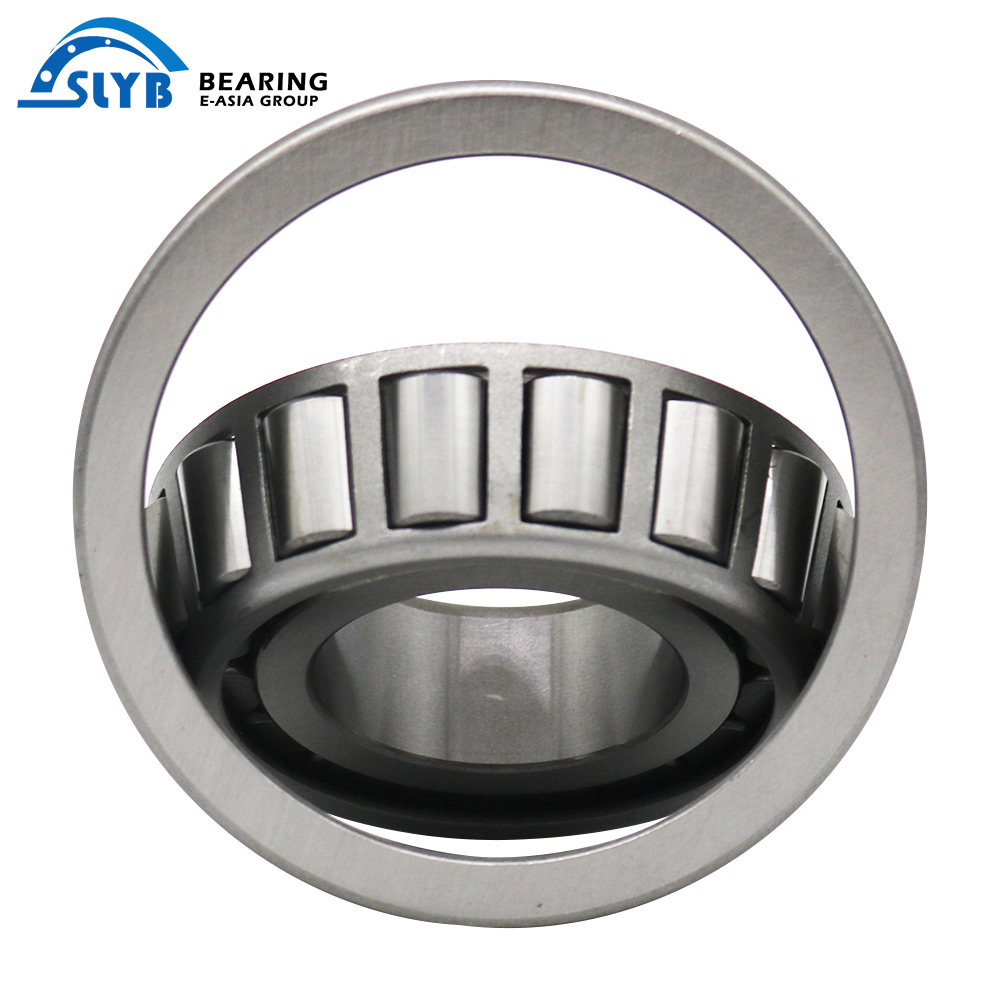
The HH234048/HH234010 tapered roller bearing represents a premium-grade precision component engineered for industrial applications requiring exceptional load management capabilities. This inch tapered bearing features a separable design comprising the HH234048 inner cone assembly and HH234010 outer cup, integrated with precision-ground tapered rollers positioned along conical raceways. The geometry enables simultaneous accommodation of combined radial and thrust loads, making this single row tapered bearing indispensable for heavy-duty operations across multiple sectors.
Manufactured from premium-grade chromium steel alloy and subjected to rigorous heat treatment processes, this bearing assembly delivers outstanding wear resistance, fatigue strength, and dimensional stability. The tapered roller bearing design optimizes contact stress distribution, extending operational lifespan while minimizing maintenance intervals. Industries worldwide trust E-ASIA BEARING for supplying quality-certified tapered bearings that meet or exceed international standards including ISO, DIN, and ABEC specifications.
Advanced Engineering Features
Optimized Load Distribution Technology
The tapered geometry of rolling elements and raceway surfaces creates linear contact patterns that distribute applied forces across expanded surface areas. This engineering principle enables the HH234048/HH234010 bearing to support substantial radial loads while simultaneously managing axial thrust forces. The contact angle optimization reduces peak stress concentrations, preventing premature material fatigue and extending bearing service life in applications experiencing fluctuating load patterns or shock loads.
Precision-Ground Raceway Surfaces
Manufacturing processes incorporate multi-stage grinding operations achieving surface finishes below Ra 0.2 micrometers. These ultra-smooth tapered bearing raceways minimize rolling resistance, reduce vibration amplitudes, and lower acoustic emissions during operation. Precision raceway geometry ensures consistent roller guidance, eliminating edge loading conditions that typically accelerate wear progression in lower-quality bearings.
Separable Component Architecture
The modular design featuring independent inner cone and outer cup assemblies simplifies installation procedures and enables shaft-mounted applications without disassembly of adjacent machinery components. This separable tapered roller bearing configuration facilitates rapid bearing replacement during maintenance operations, reducing equipment downtime. The design accommodates preload adjustment, allowing engineers to optimize internal clearances for specific application requirements.
Enhanced Material Metallurgy
Components utilize vacuum-degassed chromium steel alloys subjected to controlled heat treatment cycles that develop optimal microstructures. Through-hardened construction achieves surface hardness values between 58-65 HRC while maintaining core toughness, providing resistance against both surface-initiated and subsurface fatigue failures. The material composition meets stringent cleanliness standards, minimizing non-metallic inclusion content that could serve as crack initiation sites under cyclic loading.
Low-Friction Roller Profiling
Rollers feature logarithmic profile modifications at end sections, preventing stress concentrations along roller-rib contact zones. This precision roller design reduces friction losses, particularly during combined loading scenarios where axial forces generate roller-flange interactions. Reduced friction translates to lower operating temperatures, decreased lubricant degradation rates, and improved energy efficiency throughout the bearing's operational lifespan.
Industrial Application Sectors
Heavy Transportation Systems
The HH234048/HH234010 tapered bearing serves critical functions in commercial vehicle wheel end assemblies, including semi-trailers, heavy-duty trucks, and specialty transport vehicles. The bearing manages complex load combinations generated during vehicle maneuvering, including radial forces from cargo weight, axial thrust from cornering dynamics, and moment loads from braking operations. Its robust construction withstands road-induced shock loads and provides reliable performance across temperature extremes encountered in long-haul transportation routes. Learn more about our transportation bearing solutions.
Construction and Earthmoving Equipment
Construction machinery applications including hydraulic excavators, track-type tractors, articulated dump trucks, and mobile cranes rely on these heavy-duty tapered bearings for critical rotating assemblies. The bearings support swing mechanisms, undercarriage components, and boom pivot points where severe operating conditions—including high loads, contamination exposure, and vibration—demand exceptional durability. The bearing's capacity to handle combined loading enables compact machine designs while maintaining structural integrity under extreme working conditions.
Material Processing Industries
Manufacturing facilities employ this inch tapered roller bearing in rolling mills, crushers, conveyors, and processing equipment handling bulk materials. The bearing withstands impact loads from material flow irregularities, manages thermal expansion from process heat, and maintains alignment precision essential for product quality. Applications in steel mills, cement plants, aggregate processing, and recycling operations benefit from the bearing's resistance to contamination and ability to operate reliably despite challenging environmental conditions.
Power Transmission Equipment
Gearbox assemblies, speed reducers, and drive systems across diverse industrial sectors utilize HH234048/HH234010 bearings on input and output shafts where combined loads occur. The bearing accommodates gear mesh forces, manages misalignment from thermal growth or housing deflection, and provides precise shaft positioning essential for optimal gear engagement. Applications range from wind turbine gearboxes to industrial mixer drives, marine propulsion systems to mining conveyor drives.
Modern agricultural equipment including combine harvesters, tractor PTO drives, tillage implements, and harvesting machinery incorporate these tapered roller bearings in applications demanding reliability despite seasonal operation patterns and field condition variability. The bearings handle dynamic loads from uneven terrain, resist contamination from dust and crop debris, and maintain performance across wide temperature ranges characteristic of agricultural environments.
Material Engineering and Manufacturing Process
Manufacturing begins with premium-grade bearing steel conforming to SAE 52100, AISI 52100, or equivalent international standards (JIS SUJ2, DIN 100Cr6). Chemical composition control ensures optimal carbon content (0.98-1.10%), chromium levels (1.30-1.60%), and restricted impurity elements. Vacuum arc remelting or electroslag remelting processes produce clean steel with minimal inclusion content, establishing the foundation for superior bearing performance and extended fatigue life.
Precision Machining Operations
CNC turning operations establish basic component geometry with tight dimensional tolerances. Subsequent grinding processes utilize advanced abrasive technology to achieve final dimensions with tolerances measured in micrometers. Inner and outer raceway surfaces undergo profile grinding to establish precise contact angles and geometric accuracy. Roller manufacturing includes centerless grinding operations producing cylindrical accuracy and surface finish specifications critical for load distribution uniformity.
Components undergo controlled atmosphere heat treatment including austenitizing at elevated temperatures followed by oil quenching to develop martensitic microstructures. Tempering operations balance hardness and toughness properties. Induction hardening techniques may be applied to specific raceway zones, optimizing surface properties while maintaining core characteristics. Heat treatment parameters are validated through metallographic analysis and hardness testing, ensuring consistent material properties across production batches.
Surface Finishing and Quality Validation
Final superfinishing operations employ specialized abrasive processes removing microscopic surface irregularities, achieving mirror-like finishes that minimize friction and extend lubricant service life. Dimensional inspection utilizes coordinate measuring machines (CMM) verifying geometry against design specifications. Non-destructive testing including magnetic particle inspection detects potential surface discontinuities. Statistical process control monitors critical parameters, ensuring every tapered roller bearing meets rigorous quality standards before shipment.
Installation Guidelines and Operational Considerations
Proper Mounting Procedures
Installation requires clean working conditions preventing contamination introduction. Inspect mating surfaces for damage, burrs, or corrosion before mounting. The tapered bearing should be heated using induction heaters or oil baths to facilitate installation without applying excessive force. Maintain cone-cup alignment during assembly, ensuring proper seating against shoulders. Apply manufacturer-recommended torque values to locking devices, achieving specified preload conditions. Verify rotation smoothness before final machinery assembly.
Lubrication Strategy Implementation
Select lubricants compatible with operating temperature ranges, load conditions, and speed parameters. High-quality lithium-complex or polyurea-based greases suit most heavy-duty bearing applications, while synthetic oils serve high-temperature or high-speed installations. Initial fill should occupy approximately 30-50% of available bearing space, preventing excess lubricant churning that generates heat. Establish relubrication intervals based on operating duty cycles, typically ranging from 500-2000 operating hours depending on conditions. Visit our support resources for detailed lubrication specifications.
Operating Parameter Management
Monitor bearing operating temperatures during initial run-in periods, expecting temperature stabilization after 30-60 minutes of operation. Maintain operating temperatures below 100°C to prevent lubricant degradation and material property changes. Avoid exceeding dynamic load ratings published in technical documentation. For applications involving high axial loads, verify contact angle compatibility and consider bearing arrangement configurations (tandem, back-to-back, or face-to-face) optimizing load management.
Contamination Prevention Measures
Implement effective sealing systems protecting the tapered roller bearing from environmental contaminants including moisture, particulates, and corrosive substances. Labyrinth seals, contact seals, or shielded designs prevent ingress while allowing thermal expansion accommodation. In severely contaminated environments, consider external filtration systems or bearing housing designs incorporating flingers and deflectors. Regular inspection schedules should include seal integrity verification and contamination level assessment through lubricant analysis.
Comparative Analysis: Tapered vs. Alternative Bearing Types
Tapered Roller Bearings vs. Deep Groove Ball Bearings
While deep groove ball bearings offer simplicity and high-speed capability, tapered roller bearings provide superior load capacity, particularly for combined radial-axial loading. The line contact of tapered rollers distributes loads across larger surface areas compared to point contact in ball bearings, enabling higher load ratings in comparable envelope dimensions. Tapered bearings accommodate greater misalignment and offer adjustable preload capabilities unavailable in standard ball bearing configurations.
Tapered Roller Bearings vs. Spherical Roller Bearings
Spherical roller bearings excel in applications requiring significant misalignment accommodation, whereas HH234048/HH234010 tapered bearings deliver higher precision and lower friction in properly aligned installations. Tapered bearings provide superior axial load capacity in a single direction, making them preferable for applications with predictable load directions. Cost considerations often favor tapered bearings for applications not requiring extreme misalignment capabilities.
Tapered Roller Bearings vs. Cylindrical Roller Bearings
Cylindrical roller bearings handle high radial loads with minimal friction but cannot support axial loads without thrust collars or additional bearings. The single row tapered bearing integrates both load directions in one assembly, simplifying designs and reducing part counts. Applications requiring pure radial loading may benefit from cylindrical bearings' separation characteristics, while combined-load applications favor tapered configurations.
Frequently Asked Questions
What distinguishes inch series tapered bearings from metric series bearings?
Inch series tapered roller bearings utilize imperial dimensional standards (inches) common in North American and certain global markets, whereas metric bearings employ millimeter-based dimensions. The HH234048/HH234010 follows inch sizing conventions. Performance characteristics remain equivalent between measurement systems; selection depends on application design specifications and regional standardization. Interchangeability may exist between similar-sized bearings, though dimensional verification remains essential.
How do I determine appropriate preload for this tapered bearing?
Preload optimization balances competing requirements: excessive preload increases friction and reduces service life, while insufficient preload permits excessive clearance causing vibration and reduced accuracy. Applications requiring high rigidity benefit from moderate preload (0.001-0.003 inches axial displacement), while high-speed or thermal-expansion-sensitive applications require minimal preload. Preload adjustment involves mounting the cone-cup assembly and measuring axial play using dial indicators, then adjusting nut torque or shim thickness achieving target clearance values. Consult technical specifications for application-specific recommendations.
Can this bearing operate in vertical shaft orientations?
Yes, HH234048/HH234010 tapered bearings function effectively in vertical configurations provided proper lubrication systems maintain adequate lubricant supply to contact surfaces. Vertical applications may require oil circulation systems or specialized greases with superior adhesion properties preventing lubricant migration. Ensure bearing arrangement provides necessary axial load support combating gravitational forces on shaft assemblies. Mounting configurations should prevent cage instability issues sometimes encountered in vertical installations.
What are typical failure modes for tapered roller bearings?
Common failure mechanisms include: spalling (surface fatigue from cyclic stress), wear (from inadequate lubrication or contamination), cage damage (from improper installation or excessive speed), and thermal distress (from insufficient lubrication or overloading). Preventive measures include proper installation practices, appropriate lubricant selection, contamination control, and adherence to load-speed ratings. Regular condition monitoring through vibration analysis, temperature monitoring, and lubricant sampling enables predictive maintenance, preventing catastrophic failures.
How does E-ASIA BEARING ensure product quality?
E-ASIA BEARING implements comprehensive quality management systems certified to ISO 9001 standards, encompassing raw material verification, in-process inspection, and final product validation. Advanced testing equipment verifies dimensional accuracy, material properties, and performance characteristics. Our corporate commitment to sustainability extends quality assurance throughout product lifecycles. Each tapered roller bearing undergoes rigorous inspection before shipment, backed by technical documentation and performance certifications.
Why Choose E-ASIA BEARING
Six Decades of Bearing Industry Expertise
Since our establishment, E-ASIA BEARING has accumulated extensive knowledge in bearing technology, application engineering, and global distribution. Our 60-year heritage reflects continuous innovation, quality commitment, and customer partnership. This experience translates to superior product selection guidance, technical support, and reliable supply chain performance benefiting customers worldwide.
Comprehensive Product Portfolio
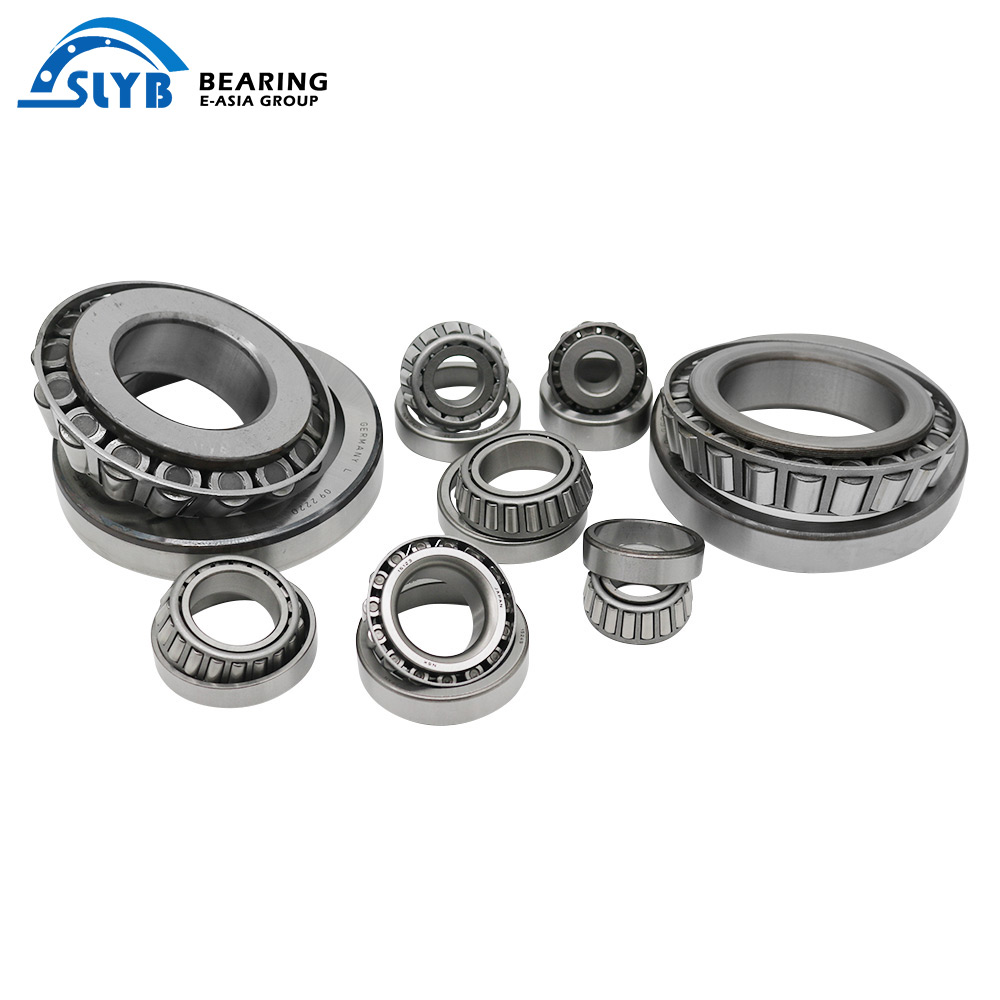
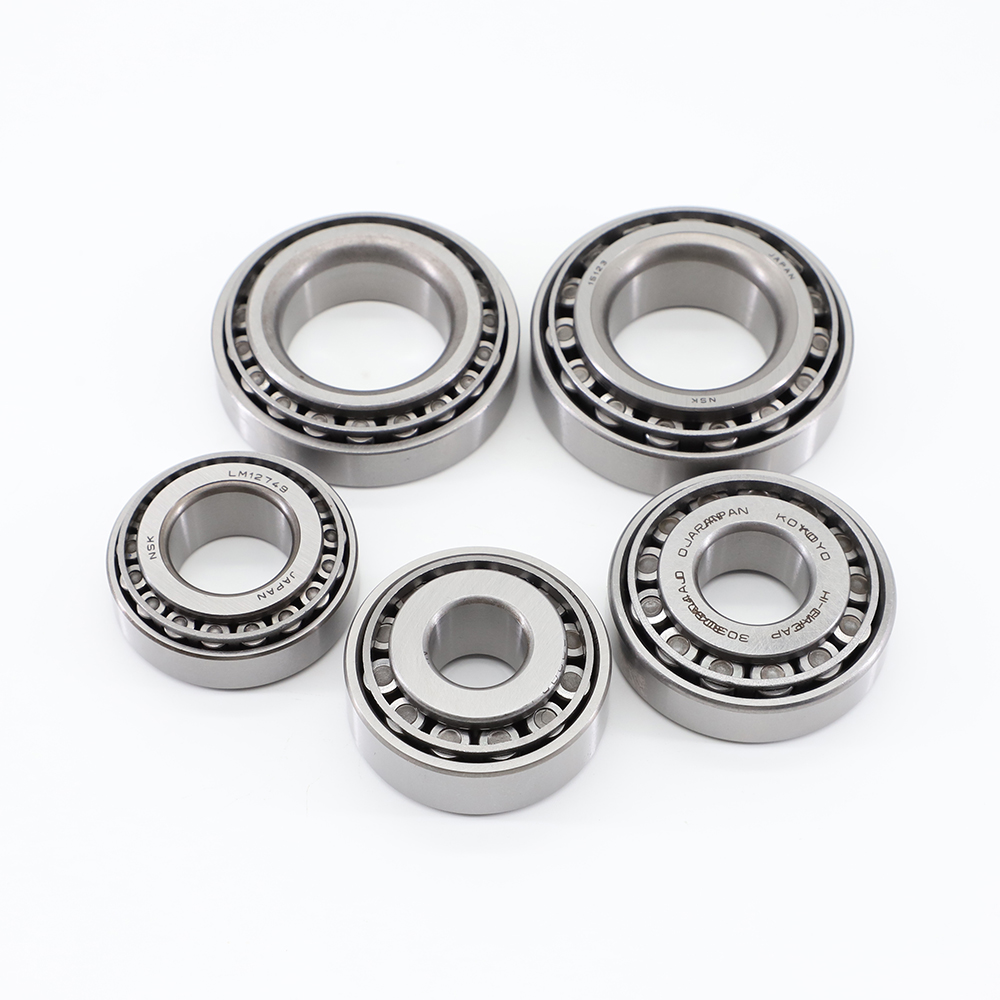
Our extensive inventory encompasses thousands of tapered roller bearing configurations serving diverse industrial applications. From miniature precision bearings to large-scale heavy-duty units, E-ASIA BEARING provides comprehensive solutions. Multi-brand availability including SLYB and JSS proprietary labels offers flexibility matching specific application requirements and budget parameters. One-stop sourcing simplifies procurement processes, reducing administrative burden and ensuring component compatibility.
Competitive Cost-Performance Balance
Strategic manufacturing partnerships and efficient supply chain management enable competitive pricing without compromising quality standards. We understand that total cost of ownership extends beyond initial purchase price, encompassing installation efficiency, operational reliability, and maintenance intervals. Our cost-effective bearing solutions deliver optimal value propositions, reducing lifecycle costs while maintaining performance standards essential for demanding applications.
Global Logistics Capabilities
With substantial warehouse inventory and established logistics networks, E-ASIA BEARING ensures rapid order fulfillment worldwide. Standard tapered bearings ship within 24 hours of order confirmation, while specialized configurations maintain reasonable lead times. Multiple shipping options—express courier, air freight, ocean freight, and land transport—accommodate various urgency levels and cost considerations. Regional distribution partnerships facilitate local inventory availability in key markets.
Technical Support and Engineering Resources
Our engineering team provides application analysis, bearing selection assistance, and troubleshooting support throughout product lifecycles. We offer training programs covering installation procedures, maintenance best practices, and failure analysis techniques. Technical documentation including CAD models, performance curves, and application guidelines supports engineering and maintenance teams. 7×24-hour customer service ensures responsive support regardless of time zone or operational schedule.

 English