+86-15996058266
Home / Products / Bearing Accessories / High-Temp Chemical-Resistant Fluorosilicone Grease

Product Catalog

loading

Share to:
facebook sharing button
twitter sharing button
line sharing button
wechat sharing button
linkedin sharing button
pinterest sharing button
whatsapp sharing button
sharethis sharing button

High-Temp Chemical-Resistant Fluorosilicone Grease

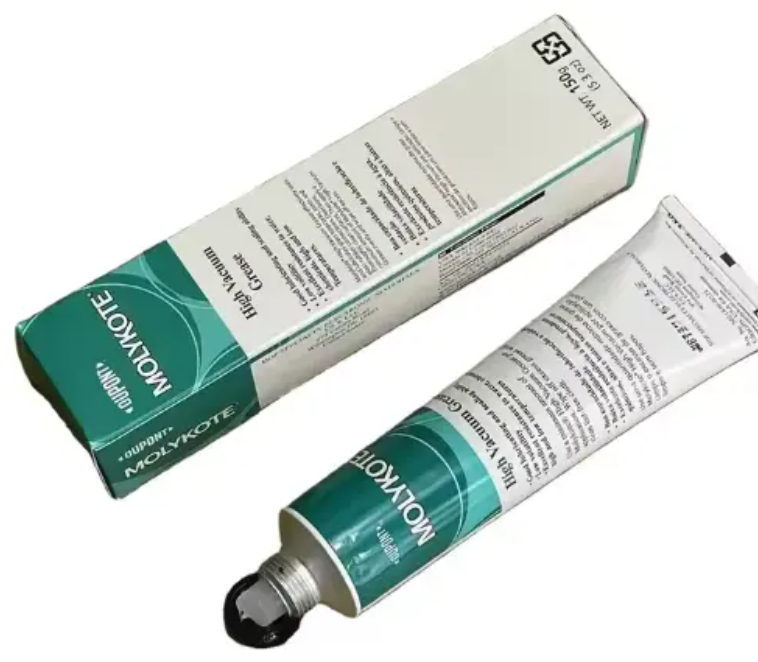
MOLYKOTE 3451 Fluorosilicone Grease is a high-performance lubricant and sealing solution designed for use in harsh environments, specifically for applications involving high temperatures, pressure, and extreme chemical exposure. This unique grease combines the excellent chemical stability and high-temperature resistance of fluorosilicone with outstanding lubrication properties, making it ideal for industrial sectors such as aerospace, automotive, electronics, and chemicals.

The MOLYKOTE 3451 grease demonstrates exceptional temperature resistance, operating efficiently within a temperature range of -40°C to +200°C. It provides long-lasting, reliable lubrication in even the most demanding conditions. Additionally, its superior water resistance, anti-oxidation properties, and chemical corrosion resistance ensure optimal performance in environments that are difficult on standard lubricants.

This grease is suitable for lubricating and protecting various sealing elements, O-rings, sliding parts, and bearings, helping to reduce friction, prevent wear, and extend the life of equipment. It comes in a 100g aluminum tube, which makes it easy to store and use over time.
  • 3451

  • molykote

  • 84821021

  • Bearing Steel

  • DIN, GB, ISO, JIS

  • carton

  • OEM service provided

  • 3-10 days, depends on quantity needed

Availability:
Quantity:

Product Overview

E-ASIA deep groove ball bearings represent a fundamental solution for rotational motion support across diverse industrial machinery and equipment. These precision-engineered components combine proven design principles with manufacturing excellence to deliver dependable performance in standard operating conditions. Built with 60 years of bearing industry expertise, each unit undergoes rigorous quality control to meet international standards including ISO 9001 certification. The design accommodates both radial and axial loads, making these bearings suitable for electric motors, pumps, gearboxes, and general machinery applications where reliability directly impacts productivity. Available in single-row and double-row configurations, our deep groove ball bearings serve as the backbone of countless mechanical systems worldwide.


Technical Specifications

Dimensional Range

Our deep groove ball bearing portfolio spans bore diameters from 3mm to 320mm, covering micro-precision applications through heavy industrial requirements. Outer diameter options extend from 10mm to 580mm, with width variations designed to match specific load requirements and installation constraints. Metric and inch series designations follow international bearing nomenclature standards, ensuring seamless cross-referencing with equipment specifications.

Load Capacity Parameters

Dynamic load ratings range from 0.5 kN for miniature bearings to 250 kN for large industrial units, calculated per ISO 281 methodology. Static load capacity specifications account for stationary or slow-oscillating applications, with values proportionally scaled to bearing size. Limiting speed ratings vary based on bearing series, lubrication method, and cage material, with grease-lubricated units typically rated for 60-80% of oil-lubricated speeds.

Material Composition

Rings and balls utilize high-carbon chromium bearing steel (GCr15/52100/SUJ2) processed through vacuum degassing to minimize inclusions. Heat treatment protocols achieve surface hardness of 58-65 HRC, providing wear resistance while maintaining core toughness. Cage materials include pressed steel for standard applications, brass for higher speeds, and polyamide for reduced noise levels. Special variants offer stainless steel construction (AISI 440C or 316) for corrosive environments or food-grade requirements.

Seal and Shield Options

Open bearings allow maximum heat dissipation and accommodate external sealing systems. Metal shield configurations (designated Z or ZZ) protect against solid contaminants while permitting air circulation. Rubber seal variants (RS or 2RS) provide contact sealing against moisture and dust ingress, pre-filled with lithium-based grease for maintenance-free operation. Hybrid designs combine one shield and one seal to balance protection with heat management.

Performance Advantages

Optimized Load Distribution

The deep raceway groove geometry, typically having a radius 52-53% of ball diameter, ensures conformity that distributes contact stress across maximum ball-to-raceway interface area. This design enables simultaneous handling of radial forces and moderate thrust loads from either direction without requiring additional bearing pairs. The resulting load distribution extends fatigue life compared to shallow-groove alternatives under equivalent operating conditions.

Low Friction Characteristics

Precision-ground ball surfaces maintain sphericity within 0.5 micrometers, minimizing rolling resistance and energy loss during operation. Crown-finished ball geometry prevents edge stress concentrations at raceway contact points. High-quality cage designs maintain consistent ball spacing, eliminating ball-to-ball contact that would increase friction and wear. These factors combine to produce starting torque values as low as 1-2 Ncm for small bearings, reducing motor power requirements.

Thermal Stability

Controlled heat treatment processes establish dimensional stability across operating temperature ranges from -30°C to +120°C for standard bearings. High-temperature variants extend this range to +200°C through specialized steel alloys and heat treatment cycles. Cage materials resist thermal degradation within specified limits, maintaining structural integrity during sustained operation. Proper lubrication selection further enhances thermal performance, with synthetic oils enabling continuous operation at elevated temperatures.

Maintenance Efficiency

Sealed bearing configurations eliminate routine relubrication requirements, reducing maintenance costs and minimizing downtime. Pre-filled grease quantities balance protection against churning losses that would elevate operating temperatures. Standard open bearings accept supplementary lubrication through automated systems or manual intervals determined by application severity. Bearing life calculations per ISO 281 methodology enable predictive maintenance scheduling, replacing components before failure impacts production.

Industrial Applications

Electric Motor Industry

Deep groove ball bearings serve as the primary shaft support solution for electric motors ranging from fractional horsepower units to 500 kW industrial drives. The balanced radial and thrust load capability accommodates magnetic pull forces and belt tension in single-bearing motor designs. Low friction characteristics enhance motor efficiency, particularly important in variable frequency drive applications where precise speed control depends on predictable mechanical resistance. Standard frame motors from NEMA 42 through NEMA 580 utilize these bearings, with appropriate sizing ensuring L10 life exceeding 40,000 hours at rated load.

Automotive Systems

Beyond wheel hub applications, deep groove ball bearings support alternators, air conditioning compressors, transmission components, and engine accessories. Sealed variants prevent contamination from road debris, moisture, and temperature extremes encountered in underhood environments. Reduced weight compared to roller bearings contributes to fuel efficiency improvements, while low noise characteristics meet increasingly stringent NVH (noise, vibration, harshness) requirements for passenger comfort.

Agricultural Equipment

Farm machinery subjects bearings to shock loads, contamination exposure, and variable operating speeds from harvesting to transport modes. Robust cage designs withstand impacts from field debris, while seal configurations adapted for agricultural service maintain lubrication integrity despite dust-heavy conditions. Applications include combine harvesters, tillage equipment, irrigation systems, and material handling conveyors where bearing failure can halt critical seasonal operations.

Pump and Compressor Applications

Centrifugal pumps, positive displacement pumps, and air compressors rely on deep groove ball bearings to maintain shaft alignment while accommodating hydraulic thrust forces. Chemical pumps utilize stainless steel bearings resistant to process fluid exposure. High-speed compressors demand precision-grade bearings with minimal runout to prevent vibration that could damage seals or create pressure pulsations. Extended grease life formulations reduce maintenance intervals in installations where access requires system shutdown.

Material Handling Systems

Conveyor rollers, belt drives, and sorting equipment incorporate sealed deep groove ball bearings to ensure continuous operation in warehouse and distribution environments. Mounting arrangements accommodate thermal expansion in long conveyor runs while maintaining belt tracking. Package handling systems demand bearings that operate quietly to meet workplace noise regulations while providing predictable service life for maintenance planning.

Manufacturing Process

Precision Forging and Machining

Ring blanks begin as hot-forged components shaped near-net to final dimensions, reducing material waste and establishing grain flow patterns that enhance fatigue strength. CNC turning operations achieve dimensional tolerances of ±5 micrometers on critical surfaces. Raceway grinding utilizes multi-stage processes, progressing from rough grinding to fine finishing that produces surface roughness values below Ra 0.2 micrometers.

Heat Treatment Protocol

Rings undergo carburizing or through-hardening based on load requirements and design specifications. Quenching in controlled atmospheres prevents oxidation and decarburization that would compromise surface integrity. Tempering cycles relieve internal stresses while achieving target hardness profiles. Final dimensions account for heat treatment distortion, with subsequent grinding operations restoring geometry to specification.

Ball Manufacturing

Ball blanks start as cold-headed wire segments, then progress through multiple lapping stages using progressively finer abrasive compounds. Sphericity measurements verify deviation remains within 0.5 micrometers maximum. Batch sorting segregates balls into grade levels (G10, G16, G20, etc.) based on diameter variation, ensuring sets within individual bearings maintain uniform size distribution for balanced load sharing.

Assembly Quality Control

Automated assembly lines position components with precision, maintaining specified internal clearances (C2, C0, C3, C4) appropriate for application thermal expansion and fit tolerances. Vibration testing identifies assemblies with microscopic defects before shipment. Dimensional verification confirms bore, outer diameter, and width meet published tolerances. Final inspection includes visual examination for surface defects and packaging verification.


High-Temp Chemical-Resistant Fluorosilicone Grease

Installation Guidelines

Shaft and Housing Preparation

Mounting surfaces require specific finish quality, with roughness values typically Ra 1.6 micrometers or better to prevent fretting corrosion. Shaft diameter tolerances follow ISO 286 recommendations, with h6 fits common for rotating inner rings and g6 for stationary applications. Housing bore tolerances range from H7 for temperature-stable conditions to H8 for thermal expansion accommodation. Fillet radii must provide adequate clearance for bearing corner radii to prevent binding.

Mounting Techniques

Cold mounting uses bearing heaters or hot oil baths to expand rings for interference fits, avoiding mechanical force that could damage raceways. Hydraulic mounting tools apply pressure through inner ring faces, distributing force evenly around the circumference. Mechanical press installations require support on the fitted ring only, never transferring force through balls which would create Brinelling damage. Adapter sleeves enable mounting on stepped shafts or shaft ends where press fitting proves impractical.

Lubrication Requirements

Initial grease fill should occupy 30-40% of available bearing space for moderate-speed applications, increasing to 50-60% for slow speeds or shock loading. Excess grease creates churning resistance and temperature rise. Oil lubrication systems must deliver adequate flow rates to dissipate friction heat, with minimum viscosity at operating temperature typically 12-15 mm²/s. Oil mist, oil jet, and oil bath methods each suit different speed and load combinations.

Alignment Verification

Shaft deflection under load should not exceed 0.003 radians to prevent edge loading on raceways. Coupling alignment procedures establish concentricity within 0.05mm and angular alignment within 0.1 degrees. Temperature monitoring during initial operation identifies misalignment through abnormal heat generation, typically indicating need for adjustment before permanent damage occurs.

Comparison with Alternative Bearing Types

Deep Groove vs Angular Contact Bearings

While angular contact designs offer higher thrust capacity, deep groove bearings provide bidirectional thrust capability without preload requirements. Installation simplicity favors deep groove types where moderate thrust loads permit their use. Angular contact bearings demand paired mounting and precise preload control, adding complexity unsuitable for general machinery applications.

Deep Groove vs Cylindrical Roller Bearings

Cylindrical roller bearings deliver higher radial capacity within equivalent envelope dimensions but lack thrust load capability. Deep groove ball bearings accommodate combined loading in single-bearing arrangements, reducing component count. Speed capability generally favors ball bearings due to lower friction, though large cylindrical roller bearings can match ball bearing speeds with appropriate design.

Deep Groove vs Spherical Roller Bearings

Spherical roller bearings excel in accommodating shaft misalignment and deflection but require larger radial space. Deep groove ball bearings suit precision-aligned systems where space constraints prevent spherical roller use. Cost considerations typically favor deep groove ball bearings for applications within their load capacity range.

Frequently Asked Questions

What determines appropriate bearing clearance selection? 


Bearing clearance selection depends on fit interference, operating temperature differential between inner and outer rings, and load characteristics. Applications with tight shaft fits or high-speed operation typically require C3 clearance to compensate for fit reduction and thermal expansion. Standard C0 clearance suits moderate speeds with normal fits. Consult clearance reduction calculations that account for fit interference and temperature effects.


How do I calculate expected bearing life? 


Basic rating life follows the formula L10 = (C/P)^3 × 10^6 revolutions, where C represents dynamic load rating and P equals equivalent dynamic load. Converting to operating hours requires dividing by shaft speed in RPM and multiplying by 60. Modified life calculations per ISO 281 incorporate lubrication condition factors and contamination effects for realistic service life prediction under actual operating conditions.


Can these bearings operate in wet environments? 


Sealed bearing variants with rubber seals provide protection against water splash and moisture exposure typical in food processing, pharmaceutical equipment, and outdoor applications. Stainless steel construction offers corrosion resistance for sustained wet operation or washdown environments. Standard carbon steel bearings with shields require external sealing and corrosion-preventive lubricants for occasional moisture exposure.


What causes premature bearing failure? 


Common failure modes include inadequate lubrication causing surface distress, contamination introducing abrasive particles, excessive loading beyond capacity ratings, improper installation creating misalignment, and corrosion from moisture or chemical exposure. Regular condition monitoring through vibration analysis, temperature measurement, and lubricant sampling enables early detection of developing problems before catastrophic failure occurs.


Are custom bearing modifications available?


E-ASIA offers modified bearings including special clearances, cage materials suited for specific conditions, and seal configurations optimized for particular contaminants. Bearing rings can be manufactured with non-standard widths, special heat treatments for extreme temperatures, and surface coatings for corrosion resistance. Minimum order quantities apply for custom specifications, with engineering support available to validate suitability for intended application.

Why Choose E-ASIA Deep Groove Ball Bearings

Six Decades of Manufacturing Excellence

Since establishing operations in 1965, E-ASIA has accumulated extensive bearing production knowledge refined across three generations of manufacturing technology. Our quality management systems evolved alongside international standards, achieving ISO 9001 certification and maintaining continuous improvement protocols. This heritage ensures product consistency and reliability backed by comprehensive application engineering support.

Comprehensive Quality Assurance

Every bearing undergoes 100% dimensional inspection using automated measuring systems that verify bore, outer diameter, width, and radial play against published tolerances. Vibration testing identifies units with microscopic defects invisible to visual inspection. Material certification traces raw steel to mill test reports confirming composition and mechanical properties. Statistical process control monitors manufacturing parameters, triggering corrective action before variation affects output quality.

Cost-Effective Supply Solutions

Direct factory sourcing eliminates intermediary markups, delivering competitive pricing without compromising quality standards. Volume production capabilities support both large OEM programs and small distributor orders. Inventory availability for common sizes enables same-day shipment for urgent requirements. Technical support assists with bearing selection, mounting procedures, and troubleshooting to maximize value throughout the product lifecycle.

Global Distribution Network

Warehouse facilities positioned across major industrial regions ensure local stock availability and rapid delivery. Regional technical representatives provide application assistance in local languages and time zones. Logistics partnerships support air freight, ocean shipping, and land transport options scaled to order urgency and volume. Customs documentation expertise facilitates international shipments with minimal delay.

Application Engineering Support

Our technical team collaborates with customers to optimize bearing selections for specific operating conditions, calculating life expectancy and recommending mounting practices. Failure analysis services investigate returned bearings to identify root causes and prevent recurrence. Training programs educate maintenance personnel on proper handling, installation, and condition monitoring techniques that extend bearing service life and reduce unplanned downtime.


Contact E-ASIA Bearing for technical specifications, volume pricing, or application assistance. Our bearing specialists stand ready to support your equipment reliability objectives with products proven across diverse industrial sectors worldwide.


Previous: 
Next: 
Inquiry
60 years history from foundation, E-ASIA bearings have obtained SLYB, JSS brands.
Contact Us
  NO.88, E-ASIA building 1-6 floor, Jingjiang industries park, jiangsu province, china
  sales@zwz-skf.com
  +86-15996058266
  rachelsun168

Products

Quick Links

Copyright © 2025 E-ASIA Bearing Co.,Ltd.  Sitemap Supported By Leadong  苏ICP备2025208765号-1