Brief Introduction
Deep groove ball bearings represent the most widely utilized bearing type in modern industrial applications, offering exceptional versatility across countless mechanical systems. Manufactured by E-ASIA Bearing with over 60 years of industry expertise, these precision-engineered components feature simple yet robust construction that delivers reliable performance in demanding operational environments. The deep groove ball bearing design incorporates optimized raceway geometry and high-grade rolling elements that enable efficient load distribution while maintaining minimal friction coefficients. E-ASIA's commitment to quality manufacturing ensures each bearing meets stringent international standards, utilizing premium bearing steel and advanced heat treatment processes. These bearings excel in applications requiring high rotational speeds, quiet operation, and long service intervals. From agricultural machinery to semiconductor manufacturing equipment, deep groove ball bearings serve as fundamental components that keep industrial operations running smoothly and efficiently across multiple sectors worldwide.
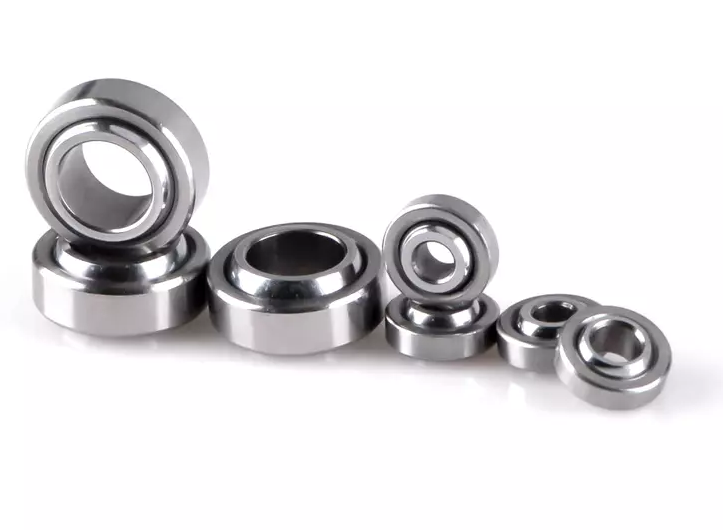
Core Features
Universal Application Versatility
Deep groove ball bearings demonstrate remarkable adaptability across diverse industrial sectors, from agricultural bearings in farm equipment to precision applications in semiconductor manufacturing equipment. E-ASIA's comprehensive product range ensures optimal bearing solutions for virtually any rotating machinery requirement, whether handling light loads in office equipment or heavy radial loads in construction machinery. This versatility stems from the bearing's fundamental design principles, which accommodate various mounting arrangements, lubrication methods, and operational speeds without sacrificing performance reliability.
Superior Friction Reduction
The deep groove ball bearing design inherently minimizes rolling resistance through optimized contact geometry between balls and raceways. E-ASIA's precision grinding processes ensure raceway surface finishes below Ra 0.2μm, dramatically reducing friction coefficients during operation. This friction reduction translates directly to lower energy consumption, reduced heat generation, and improved mechanical efficiency in applications ranging from electric motors to industrial compressors. Lower operating temperatures extend lubricant service life and prevent thermal degradation of bearing components.
Extended Service Life
Through advanced metallurgical processes and strict quality control protocols, E-ASIA deep groove ball bearings achieve extended operational lifespans that reduce total cost of ownership. The L10 bearing life calculations demonstrate consistent performance exceeding industry benchmarks, with many installations delivering 5-10 years of continuous service in properly maintained systems. Premium bearing steel composition resists subsurface fatigue crack initiation, while precision manufacturing eliminates stress concentrations that compromise durability in inferior products.
Minimal Maintenance Requirements
Deep groove ball bearings require minimal intervention during their operational lifespan when properly specified and installed. Pre-greased sealed versions eliminate relubrication needs for extended periods, particularly beneficial in food & beverage bearings where contamination prevention is critical. E-ASIA's bearing designs incorporate optimized internal clearances that accommodate thermal expansion and minor misalignments without generating excessive stress, reducing premature failure incidents and unplanned downtime.
Low Noise Operation
Precision manufacturing techniques employed by E-ASIA ensure deep groove ball bearings operate with minimal acoustic emissions, essential for noise-sensitive applications in medical devices industries and office equipment. Carefully controlled ball set waviness specifications and raceway geometry optimization eliminate vibration sources that generate structure-borne noise. Sound pressure levels typically remain below 60 dB(A) at rated speeds, creating comfortable working environments while protecting sensitive measurement equipment from vibration interference.
Bidirectional Axial Load Capacity
While primarily designed for radial load applications, deep groove ball bearings effectively handle axial loads in either direction simultaneously with radial loading. This bidirectional capability proves particularly valuable in pumps & compressors bearings where combined loading conditions frequently occur. The contact angle under pure radial loading remains zero degrees, progressively increasing as axial load components grow, providing predictable load-displacement relationships for engineering calculations.
Cost-Effective Performance
E-ASIA's streamlined manufacturing processes and strategic sourcing relationships enable competitive pricing without compromising quality standards. Deep groove ball bearings deliver exceptional price-performance ratios compared to more complex bearing types, making them the economical choice for applications where specialized features remain unnecessary. This cost effectiveness extends throughout the product lifecycle, with reduced energy consumption, minimal maintenance costs, and extended replacement intervals contributing to favorable total ownership economics.
Industrial Applications
Agricultural Machinery Systems
Agricultural bearings in farming equipment face harsh environmental conditions including dust, moisture, and shock loads from field operations. E-ASIA deep groove ball bearings with specialized sealing configurations protect internal components from contaminant ingress while maintaining reliable performance in combines, tractors, and harvesting equipment. The bearings withstand seasonal temperature variations and intermittent operation patterns characteristic of agricultural machinery, ensuring equipment readiness during critical planting and harvest periods when downtime directly impacts productivity and profitability.
Construction Equipment Operations
Construction machinery bearings endure extreme vibration, heavy radial loads, and exposure to job site contaminants. Deep groove ball bearings in excavators, bulldozers, and material handling equipment provide dependable rotation support for boom assemblies, wheel systems, and hydraulic components. E-ASIA's robust bearing designs resist shock load transmission from ground impacts and operational stress cycles, maintaining dimensional accuracy despite harsh working conditions that rapidly degrade inferior components.
Electric Motor Applications
Electric motors bearings represent the highest volume application for deep groove ball bearings, spanning fractional horsepower motors to large industrial drives. These bearings accommodate axial magnetic forces, thermal expansion, and continuous operation requirements while maintaining quiet performance essential for HVAC systems and automated production equipment. E-ASIA supplies motor manufacturers worldwide with bearings optimized for specific voltage ratings, enclosure types, and duty cycles, ensuring reliable motor operation across residential, commercial, and industrial installations.
Food Processing Equipment
Food & beverage bearings must satisfy stringent hygiene standards while delivering reliable performance in washdown environments and temperature extremes. Deep groove ball bearings with stainless steel construction and food-grade lubricants prevent contamination risks in mixing equipment, conveyor systems, and packaging machinery. E-ASIA's FDA-compliant bearing solutions support safe food production while minimizing maintenance interruptions that reduce production efficiency and increase operational costs in competitive food processing industries.
Material Handling Systems
Material handling bearings in conveyor rollers, sortation equipment, and automated storage systems require consistent performance across millions of rotation cycles. Deep groove ball bearings provide smooth rotation with minimal resistance, reducing power consumption in extensive conveyor networks while maintaining precise tracking accuracy. E-ASIA's bearing selection guidance helps material handling engineers specify optimal bearing sizes, lubrication types, and sealing configurations for specific load profiles and environmental conditions encountered in warehouse and distribution operations.
Mining Industry Equipment
Mining machinery bearings operate in extremely abrasive environments with heavy shock loads and continuous duty cycles. Deep groove ball bearings in crushing equipment, screening machinery, and material transport systems withstand operational stresses that rapidly consume lesser components. E-ASIA supplies mining operations with heavy-duty bearing designs incorporating enhanced radial clearances, robust cage designs, and specialized heat treatments that extend service intervals between replacements, reducing maintenance costs and improving equipment availability in remote mining locations.
Automotive Components
Wheel hub bearings and various automotive applications utilize deep groove ball bearings for reliable rotation support in demanding automotive environments. These bearings handle combined radial and axial loads from cornering forces, braking events, and road surface irregularities while maintaining precision rotational accuracy. E-ASIA collaborates with automotive manufacturers to develop bearing solutions meeting industry-specific performance requirements, including extended service life targets, weight reduction initiatives, and enhanced sealing effectiveness against water and road salt contamination.
Materials and Manufacturing Process
Premium Steel Selection
E-ASIA sources bearing steel from certified suppliers meeting international metallurgical standards, ensuring consistent chemical composition and cleanliness levels. The chrome steel utilized in deep groove ball bearings contains precisely controlled carbon, chromium, and manganese content that optimizes hardenability and rolling contact fatigue resistance. Vacuum degassing processes during steel production minimize non-metallic inclusions that serve as fatigue crack initiation sites, directly contributing to extended bearing life in service.
Precision Forging Operations
Bearing ring blanks undergo precision forging processes that align grain flow patterns with principal stress directions encountered during operation. This forging methodology enhances material strength characteristics compared to machined-from-bar construction, particularly improving resistance to subsurface fatigue crack propagation. E-ASIA's forging partners utilize progressive die sequences that achieve near-net shapes, reducing subsequent machining requirements while improving material utilization efficiency.
Heat Treatment Protocols
Controlled atmosphere heat treatment furnaces transform bearing steel microstructure, achieving optimal hardness distribution while minimizing dimensional distortion. The quenching and tempering cycle produces fine martensitic structures with retained austenite levels below 8%, ensuring dimensional stability during operational temperature fluctuations. E-ASIA's heat treatment specifications incorporate rapid quenching rates that achieve full through-hardening in section thicknesses typical of bearing rings, followed by precision tempering that relieves residual stresses while maintaining surface hardness requirements.
Grinding and Superfinishing
Multi-stage grinding operations create raceway surface geometries with tolerances measured in micrometers, ensuring uniform load distribution across all rolling elements. E-ASIA employs CNC grinding centers with in-process measurement systems that automatically compensate for wheel wear, maintaining consistent dimensional accuracy throughout production runs. Superfinishing processes further refine surface textures, eliminating micro-roughness that generates noise and accelerates wear initiation during bearing operation.
Quality Verification Testing
Each production batch undergoes comprehensive testing protocols including dimensional verification, hardness testing, metallurgical examination, and functional performance validation. E-ASIA's quality assurance laboratories utilize coordinate measuring machines, vibration analyzers, and acoustic emission testing equipment to verify bearing specifications. Statistical process control methodologies ensure manufacturing consistency while identifying potential quality deviations before products reach customers, maintaining E-ASIA's reputation for reliable bearing performance.
Installation Guidelines and Best Practices
Pre-Installation Inspection
Examine bearing packaging for damage indicators suggesting possible handling impacts during shipment. Verify bearing part numbers match application specifications, confirming bore diameter, outside diameter, and width dimensions. Inspect shaft and housing dimensions using calibrated measurement equipment, ensuring tolerances comply with ISO 286 recommendations for selected fits. Clean all mating surfaces thoroughly, removing burrs, nicks, or corrosion products that interfere with proper bearing seating and generate stress concentrations.
Mounting Procedures
Deep groove ball bearings require careful mounting techniques that prevent rolling element damage and maintain internal geometry integrity. Press fits should apply force uniformly against the ring with interference fit, never transmitting installation forces through rolling elements. Heating bearings to 80-100°C using induction heaters or oil baths facilitates installation on shafts with interference fits, allowing thermal expansion to temporarily reduce assembly forces. Cooling installations using dry ice or liquid nitrogen similarly simplify housing installations while avoiding mechanical damage risks.
Lubrication Application
Apply specified lubricant quantities immediately after installation to prevent corrosion and ensure adequate lubrication from initial startup. Grease-lubricated bearings typically require filling 30-50% of free internal space, avoiding over-greasing that generates excessive churning resistance and temperature rise. Oil lubrication systems need proper circulation flow rates maintaining minimum oil film thickness between raceways and rolling elements, with viscosity selection based on operating speed and temperature parameters calculated using bearing manufacturers' guidelines.
Operational Monitoring
Implement condition monitoring programs tracking bearing temperature, vibration levels, and acoustic emissions to detect developing problems before catastrophic failures occur. Baseline measurements during initial commissioning provide reference data for trend analysis identifying gradual performance degradation. Thermal imaging cameras identify abnormal temperature patterns suggesting lubrication inadequacy or misalignment conditions, while vibration analysis reveals characteristic frequency signatures associated with specific bearing defects requiring corrective action.
Competitive Advantages of E-ASIA Bearings
Six Decades of Industry Expertise
E-ASIA Bearing's 60-year history in bearing manufacturing demonstrates sustained commitment to quality and customer satisfaction across multiple industrial generations. This extensive experience encompasses technological evolution from manual manufacturing processes to advanced CNC production systems, accumulating application knowledge spanning virtually every industrial sector. Long-term customer relationships built over decades prove E-ASIA's reliability, with many original customers continuing partnerships today based on consistent product performance and responsive technical support.
Comprehensive Product Portfolio
E-ASIA maintains extensive inventory covering multiple bearing types, sizes, and specifications to support diverse customer requirements without lengthy lead times. The product range includes cylindrical roller bearings, spherical roller bearings, spherical plain bearings, stainless steel bearings, and specialized designs for specific industries. This comprehensive portfolio enables one-stop sourcing convenience, simplifying procurement processes while ensuring component compatibility across complete machinery systems.
Competitive Pricing Structure
Strategic manufacturing partnerships with over 1000 factories enable E-ASIA to optimize cost structures while maintaining rigorous quality standards. Volume purchasing leverage and efficient supply chain management translate to competitive pricing that improves customer profitability without sacrificing bearing performance or reliability. Transparent pricing policies eliminate hidden costs, with comprehensive quotations including bearing specifications, shipping logistics, and delivery timelines clearly communicated before order commitment.
Rapid Order Fulfillment
E-ASIA's extensive warehouse facilities support same-day order processing and shipping for standard bearing configurations, minimizing customer inventory carrying costs and improving production planning flexibility. Emergency orders receive priority handling with express shipping options available globally, preventing costly production downtime when unexpected bearing failures occur. The 24-hour delivery commitment for urgent requirements distinguishes E-ASIA from competitors requiring extended lead times for standard products.
Global Technical Support
E-ASIA provides worldwide technical assistance helping customers select optimal bearing specifications for specific applications, calculate service life expectations, and troubleshoot operational issues. Experienced application engineers understand industry-specific requirements across agricultural, construction, mining, and manufacturing sectors, offering practical solutions based on field-proven experience. On-site technical visits bring bearing expertise directly to customer facilities, supporting installation training, failure analysis investigations, and preventive maintenance program development.
Quality Assurance Commitment
Rigorous quality control protocols verify every bearing meets specifications before shipment, with comprehensive testing documentation available for critical applications requiring traceability. E-ASIA's quality management systems comply with international standards, providing customers confidence in consistent product performance. Warranty programs protect customers against manufacturing defects while responsive customer service teams address concerns promptly and professionally.
Frequently Asked Questions
What factors determine deep groove ball bearing selection for specific applications?
Bearing selection requires analyzing multiple parameters including load magnitude and direction, rotational speed, operating temperature, environmental conditions, and service life requirements. Engineers calculate equivalent dynamic loads combining radial and axial components, then compare against bearing dynamic load ratings to estimate L10 life. Speed limitations depend on bearing size, lubrication method, and internal clearance specifications. Environmental factors such as moisture, contaminants, or chemical exposure necessitate appropriate sealing solutions or material selections like stainless steel construction for corrosive environments.
How does proper lubrication extend deep groove ball bearing service life?
Adequate lubrication creates fluid films separating raceways from rolling elements, preventing metal-to-metal contact that causes adhesive wear and surface fatigue. Lubricant viscosity must remain sufficient at operating temperatures to maintain minimum film thickness calculated using elastohydrodynamic lubrication theory. Grease lubrication provides sealing benefits preventing contaminant ingress while simplifying maintenance requirements compared to oil systems. Regular relubrication intervals prevent lubricant degradation from oxidation, thermal decomposition, or mechanical shear, maintaining protective properties throughout bearing service life.
Can deep groove ball bearings accommodate shaft misalignment conditions?
Deep groove ball bearings tolerate minimal angular misalignment, typically less than 0.001 radians (approximately 0.06 degrees) without generating excessive stress concentrations in raceways. Greater misalignment magnitudes create non-uniform load distributions that accelerate wear and reduce bearing life significantly. Applications experiencing substantial misalignment from shaft flexing, thermal expansion, or mounting tolerances require self-aligning ball bearings or spherical roller bearings specifically designed to accommodate angular deviations. Proper shaft and housing machining tolerances, accurate alignment during installation, and rigid mounting arrangements minimize misalignment effects in deep groove ball bearing applications.

 English


