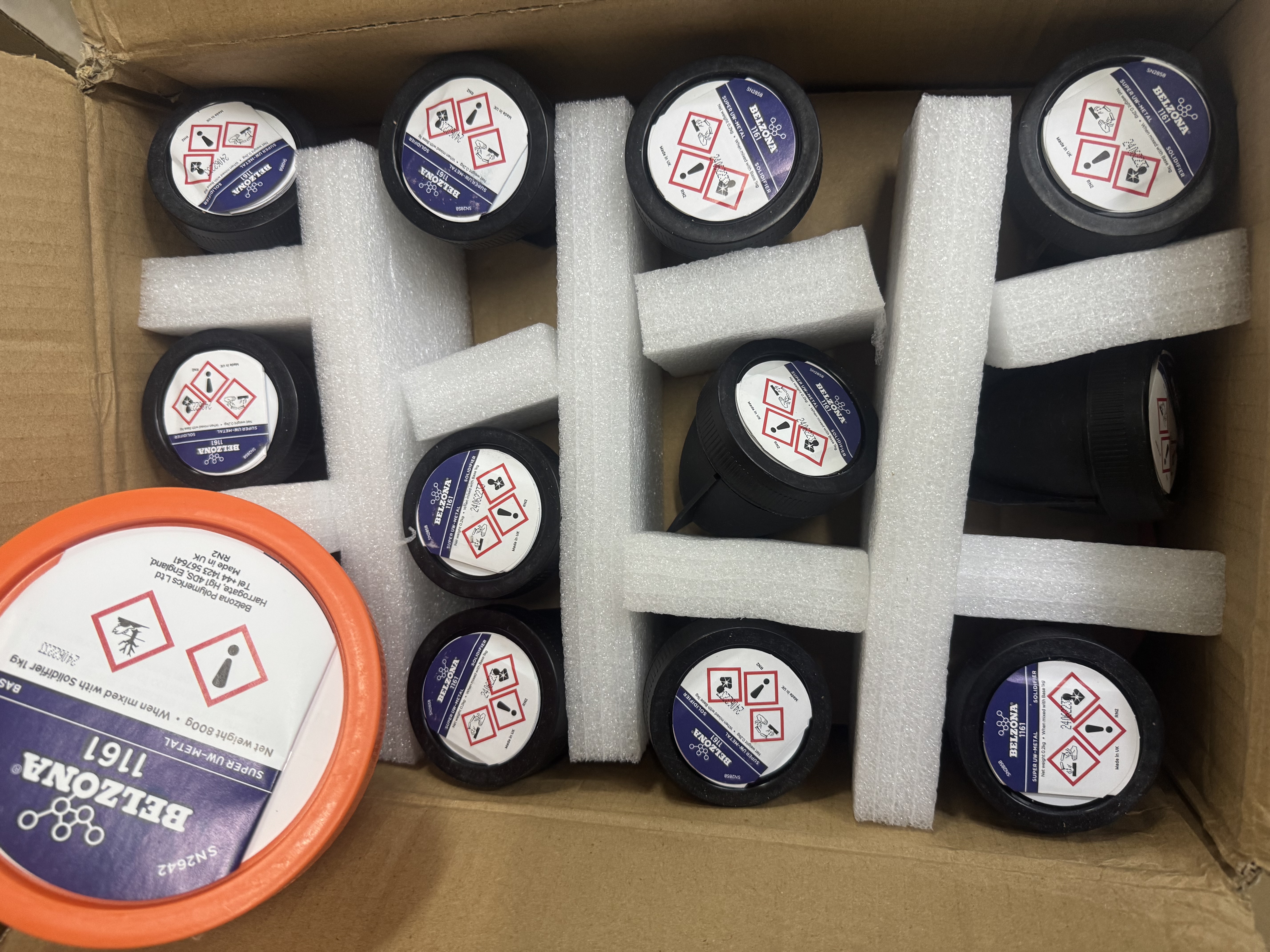
1121
Belzona
1121
epoxy
DIN, GB, ISO, JIS
Barreled, bagged, boxed, palletized or as customers' requirement
OEM service provided
8-15 days, depends on quantity needed
| Availability: | |
|---|---|
| Quantity: | |
Belzona 1121 Super XL-Metal represents a specialized epoxy-based metal repair compound engineered for industrial maintenance and asset protection. This two-component system addresses critical challenges in metal component restoration, delivering reliable solutions for cracked pipes, corroded tanks, and worn machinery parts across manufacturing, petrochemical, and marine sectors. The formulation combines superior metal bonding capabilities with chemical resistance, creating durable repairs that eliminate the need for costly component replacement. Its non-drip consistency enables precise application on challenging orientations, while rapid curing properties minimize operational downtime. Industries requiring dependable metal mending solutions—from food processing to power generation—rely on this compound to restore structural integrity and extend equipment service life.

This compound bonds effectively to various metallic substrates including carbon steel, stainless steel alloys, cast iron, aluminum, copper, and brass. The molecular adhesion mechanism creates metallurgical-grade bonds that match or exceed the strength of parent materials. This versatility allows maintenance teams to standardize repair procedures across different equipment types, reducing inventory complexity and training requirements.
The cured matrix resists degradation from petroleum products, hydraulic fluids, cutting oils, coolants, and dilute chemical solutions. This chemical inertness makes the compound suitable for equipment handling aggressive media—storage vessels in chemical plants, process piping in refineries, and fluid-handling components in wastewater treatment facilities. The barrier prevents further corrosion beneath the repair layer.
The non-sag rheology maintains position on vertical walls, overhead surfaces, and inverted orientations without slumping or dripping during cure. This property proves essential when repairing elevated tanks, suspended piping, vessel exteriors, and machinery housings where horizontal positioning is impossible. Technicians can apply uniform coatings without repeated passes or support structures.
Unlike traditional welding repairs requiring hot work permits, cooling periods, and post-weld treatment, this compound cures at ambient temperature within hours. The fast cure schedule allows rapid return to service—critical in continuous process industries where every hour of downtime represents significant production loss. No specialized heating equipment or extended shutdown windows are necessary.
Beyond immediate leak sealing, the compound provides ongoing protection against corrosive environments and mechanical wear. The hard, dense surface resists particle erosion in slurry handling systems, protects against atmospheric corrosion in outdoor installations, and withstands moderate impact in industrial settings. This dual protection extends repair longevity and reduces maintenance frequency.
The formulation remains workable in cooler environments where many repair compounds become too viscous. This cold-weather performance enables repairs during winter months, in refrigerated facilities, or on equipment that cannot be warmed—maintaining maintenance schedules regardless of seasonal conditions.
Corroded or cracked metal pipelines in industrial facilities face leaks that threaten production continuity and environmental compliance. This compound seals pinhole leaks, repairs wall thinning from internal corrosion, and rebuilds eroded pipe sections. Applications include process piping in chemical plants, steam condensate lines, compressed air distribution systems, and cooling water circuits. The repair procedure involves surface preparation through grit blasting or grinding, compound application to achieve required thickness, and curing before pressure testing. For more industrial bearing solutions that complement pipeline systems, visit our industries page.
Metal storage tanks develop leaks from bottom corrosion, seam failures, or mechanical damage. The compound repairs tank floors without requiring complete drainage, seals weld seam cracks, and rebuilds corroded wall sections on atmospheric and low-pressure vessels. Common applications include chemical storage tanks, fuel tanks, water reservoirs, and process vessels. The non-sag formula allows vertical wall repairs without scaffolding for material support.
Pump casings, impeller hubs, and shaft sleeves experience erosion from abrasive slurries and cavitation damage. The compound rebuilds worn surfaces, restores dimensional tolerances, and protects against further erosion. Centrifugal pump repairs involve filling cavitation pits, rebuilding suction side wear, and creating protective coatings on new components. The abrasion resistance extends component life in mining operations, dredging equipment, and mineral processing plants.
Tube sheet corrosion, shell side pitting, and flange face damage compromise heat exchanger integrity. The compound repairs these defects without disassembling tube bundles, seals shell penetrations, and rebuilds damaged flange sealing surfaces. Applications extend to pressure vessel nozzles, valve bodies experiencing seat erosion, and piping system components requiring code-compliant repairs in non-critical service.
Protective Gear: Wear chemical-resistant gloves, safety goggles, and a respirator (enclosed spaces) to avoid skin/eye irritation and fume inhalation.
Surface Prep: Clean repair surfaces thoroughly—remove rust, paint, or grease with a wire brush/solvent. Poor prep reduces adhesion.
Mixing Ratio: Follow the recommended mixing ratio exactly. Wrong ratios slow curing or reduce chemical resistance.
Ventilation: Apply in well-ventilated areas to disperse fumes. Avoid confined spaces without air circulation.
MSDS Reference: Consult the Material Safety Data Sheet (MSDS) for handling, first aid, and disposal guidelines—keep it accessible.
The compound consists of a solvent-free epoxy resin base combined with a reactive hardener containing proprietary curing agents. The resin component incorporates ceramic microspheres and metallic fillers that enhance thermal conductivity and dimensional stability. Upon mixing, the epoxy and hardener undergo exothermic polymerization, forming a cross-linked polymer network with embedded reinforcement particles.
Surface preparation involves mechanical abrasion to achieve minimum roughness profiles, solvent cleaning to remove contaminants, and immediate application while substrates remain clean. Mixing requires careful measurement of component ratios—deviation affects cure rates and final properties. Application techniques include troweling for thick buildup, spatula work for contoured surfaces, and brush methods for thin protective coatings.
Curing progresses through gel phase, where material transitions from liquid to semi-solid, then hardens to full mechanical strength. Temperature influences cure speed—warmer conditions accelerate polymerization while cooler environments extend working time. Post-cure conditioning at elevated temperatures (where equipment service allows) optimizes chemical resistance and mechanical properties. Learn more about our corporate quality standards.
A refinery crude distillation unit experienced severe corrosion on a 12-inch diameter atmospheric piping elbow, with wall thinning approaching minimum safe thickness. Replacement required unit shutdown during turnaround—six months away. The maintenance team applied this compound to rebuild wall thickness, following these steps:
Grit blasting corroded areas to white metal cleanliness
Mixing compound components per manufacturer specifications
Applying 6mm thick layer using trowel technique
Allowing 24-hour cure before insulation reinstallation
Monitoring through two turnaround cycles without degradation
The repair withstood 180°C operating temperature and crude oil exposure for three years, eliminating immediate shutdown risk and allowing scheduled replacement during planned maintenance. Cost savings exceeded $150,000 compared to emergency repair scenarios.
Traditional welding requires hot work permits, fire watch personnel, post-weld heat treatment, and non-destructive testing—adding time and cost. This compound applies cold, requires no special certifications, and cures without heat input. However, welding provides higher strength for structural applications and high-pressure systems.
Mechanical stitching uses metal pins to bridge cracks, offering structural repair capability but requiring specialized tools and skilled operators. The compound fills voids completely, seals against fluid penetration, and applies faster for thin-wall repairs. Stitching excels in cast iron restoration where dimensional accuracy matters.
General-purpose metal putties cure slower, offer lower chemical resistance, and exhibit poor adhesion to smooth surfaces. This engineered compound provides superior bonding, withstands industrial chemicals, and cures rapidly for faster return to service.
For comprehensive bearing and equipment maintenance support, explore our support resources.
What surface preparation is required for optimal adhesion?
Surfaces must achieve cleanliness equivalent to SSPC-SP10 (near-white blast) or thorough grinding to remove all rust, scale, paint, and contaminants. Solvent wiping with acetone or MEK follows mechanical cleaning. Minimum surface profile of 75 microns (3 mils) ensures mechanical keying. Application must occur within 4 hours of preparation to prevent surface recontamination or flash rusting.
Can this compound repair components in continuous service?
The compound requires dry, clean surfaces for proper bonding—wet or oily substrates prevent adhesion. For minor leaks, drain and clean the repair area, apply compound, and allow full cure before returning to service. Active leaks require temporary isolation. The material cannot cure underwater or displace fluids during application.
What thickness limitations apply to single-layer repairs?
Individual layers should not exceed 12mm (0.5 inches) to prevent excessive exothermic heat buildup during cure, which can cause cracking or incomplete polymerization. Thicker buildups require multiple layers with interim curing periods. Each layer must cure to firm consistency before applying subsequent layers—typically 3-6 hours between applications.
Does the cured compound require protective topcoats?
The cured surface resists most industrial chemicals and weathering without additional coating. However, applying compatible protective paint improves UV resistance for outdoor exposure, allows color matching to existing equipment, and provides additional chemical barrier for severe service. Sand the cured surface before painting to ensure topcoat adhesion.
How does temperature affect application and performance?
Working time decreases as temperature rises—30 minutes at 30°C versus 45 minutes at 20°C. Cold temperatures below 10°C extend cure times significantly and may prevent complete curing. Heat surfaces using heat lamps or hot air (not open flame) to achieve minimum 15°C surface temperature before application. Cured material withstands -30°C to +120°C continuous service.
What safety precautions are necessary during application?
Wear nitrile gloves to prevent skin contact with uncured components, which can cause sensitization. Safety glasses protect against splashes during mixing. Use respiratory protection in confined spaces or poorly ventilated areas to avoid inhaling vapors. Consult the Safety Data Sheet for detailed handling, first aid, and disposal procedures. Keep material away from ignition sources during application.
E-ASIA Bearing brings 60 years of industrial equipment expertise to maintenance and repair product distribution. Our technical team understands the operational challenges facing manufacturing, processing, and production facilities—from unexpected equipment failures to planned maintenance optimization. We provide not just products but complete solutions including application training, technical support, and inventory management for maintenance operations.
Our comprehensive approach ensures you receive the right repair compound for your specific application, backed by technical guidance on surface preparation, application techniques, and quality control procedures. Whether you operate a single facility or manage maintenance across multiple sites, our support infrastructure scales to meet your needs. Discover our commitment to sustainable industrial practices and how we help customers achieve operational excellence.
Beyond repair compounds, we supply the complete range of rotating equipment components—bearings, seals, lubricants, and maintenance tools—creating a single-source solution for industrial maintenance departments. This integrated approach reduces procurement complexity, streamlines inventory management, and ensures compatibility across maintenance materials. Learn more about our company and our dedication to customer success through technical excellence and responsive service.
Belzona 1121 Super XL-Metal represents a specialized epoxy-based metal repair compound engineered for industrial maintenance and asset protection. This two-component system addresses critical challenges in metal component restoration, delivering reliable solutions for cracked pipes, corroded tanks, and worn machinery parts across manufacturing, petrochemical, and marine sectors. The formulation combines superior metal bonding capabilities with chemical resistance, creating durable repairs that eliminate the need for costly component replacement. Its non-drip consistency enables precise application on challenging orientations, while rapid curing properties minimize operational downtime. Industries requiring dependable metal mending solutions—from food processing to power generation—rely on this compound to restore structural integrity and extend equipment service life.

This compound bonds effectively to various metallic substrates including carbon steel, stainless steel alloys, cast iron, aluminum, copper, and brass. The molecular adhesion mechanism creates metallurgical-grade bonds that match or exceed the strength of parent materials. This versatility allows maintenance teams to standardize repair procedures across different equipment types, reducing inventory complexity and training requirements.
The cured matrix resists degradation from petroleum products, hydraulic fluids, cutting oils, coolants, and dilute chemical solutions. This chemical inertness makes the compound suitable for equipment handling aggressive media—storage vessels in chemical plants, process piping in refineries, and fluid-handling components in wastewater treatment facilities. The barrier prevents further corrosion beneath the repair layer.
The non-sag rheology maintains position on vertical walls, overhead surfaces, and inverted orientations without slumping or dripping during cure. This property proves essential when repairing elevated tanks, suspended piping, vessel exteriors, and machinery housings where horizontal positioning is impossible. Technicians can apply uniform coatings without repeated passes or support structures.
Unlike traditional welding repairs requiring hot work permits, cooling periods, and post-weld treatment, this compound cures at ambient temperature within hours. The fast cure schedule allows rapid return to service—critical in continuous process industries where every hour of downtime represents significant production loss. No specialized heating equipment or extended shutdown windows are necessary.
Beyond immediate leak sealing, the compound provides ongoing protection against corrosive environments and mechanical wear. The hard, dense surface resists particle erosion in slurry handling systems, protects against atmospheric corrosion in outdoor installations, and withstands moderate impact in industrial settings. This dual protection extends repair longevity and reduces maintenance frequency.
The formulation remains workable in cooler environments where many repair compounds become too viscous. This cold-weather performance enables repairs during winter months, in refrigerated facilities, or on equipment that cannot be warmed—maintaining maintenance schedules regardless of seasonal conditions.
Corroded or cracked metal pipelines in industrial facilities face leaks that threaten production continuity and environmental compliance. This compound seals pinhole leaks, repairs wall thinning from internal corrosion, and rebuilds eroded pipe sections. Applications include process piping in chemical plants, steam condensate lines, compressed air distribution systems, and cooling water circuits. The repair procedure involves surface preparation through grit blasting or grinding, compound application to achieve required thickness, and curing before pressure testing. For more industrial bearing solutions that complement pipeline systems, visit our industries page.
Metal storage tanks develop leaks from bottom corrosion, seam failures, or mechanical damage. The compound repairs tank floors without requiring complete drainage, seals weld seam cracks, and rebuilds corroded wall sections on atmospheric and low-pressure vessels. Common applications include chemical storage tanks, fuel tanks, water reservoirs, and process vessels. The non-sag formula allows vertical wall repairs without scaffolding for material support.
Pump casings, impeller hubs, and shaft sleeves experience erosion from abrasive slurries and cavitation damage. The compound rebuilds worn surfaces, restores dimensional tolerances, and protects against further erosion. Centrifugal pump repairs involve filling cavitation pits, rebuilding suction side wear, and creating protective coatings on new components. The abrasion resistance extends component life in mining operations, dredging equipment, and mineral processing plants.
Tube sheet corrosion, shell side pitting, and flange face damage compromise heat exchanger integrity. The compound repairs these defects without disassembling tube bundles, seals shell penetrations, and rebuilds damaged flange sealing surfaces. Applications extend to pressure vessel nozzles, valve bodies experiencing seat erosion, and piping system components requiring code-compliant repairs in non-critical service.
Protective Gear: Wear chemical-resistant gloves, safety goggles, and a respirator (enclosed spaces) to avoid skin/eye irritation and fume inhalation.
Surface Prep: Clean repair surfaces thoroughly—remove rust, paint, or grease with a wire brush/solvent. Poor prep reduces adhesion.
Mixing Ratio: Follow the recommended mixing ratio exactly. Wrong ratios slow curing or reduce chemical resistance.
Ventilation: Apply in well-ventilated areas to disperse fumes. Avoid confined spaces without air circulation.
MSDS Reference: Consult the Material Safety Data Sheet (MSDS) for handling, first aid, and disposal guidelines—keep it accessible.
The compound consists of a solvent-free epoxy resin base combined with a reactive hardener containing proprietary curing agents. The resin component incorporates ceramic microspheres and metallic fillers that enhance thermal conductivity and dimensional stability. Upon mixing, the epoxy and hardener undergo exothermic polymerization, forming a cross-linked polymer network with embedded reinforcement particles.
Surface preparation involves mechanical abrasion to achieve minimum roughness profiles, solvent cleaning to remove contaminants, and immediate application while substrates remain clean. Mixing requires careful measurement of component ratios—deviation affects cure rates and final properties. Application techniques include troweling for thick buildup, spatula work for contoured surfaces, and brush methods for thin protective coatings.
Curing progresses through gel phase, where material transitions from liquid to semi-solid, then hardens to full mechanical strength. Temperature influences cure speed—warmer conditions accelerate polymerization while cooler environments extend working time. Post-cure conditioning at elevated temperatures (where equipment service allows) optimizes chemical resistance and mechanical properties. Learn more about our corporate quality standards.
A refinery crude distillation unit experienced severe corrosion on a 12-inch diameter atmospheric piping elbow, with wall thinning approaching minimum safe thickness. Replacement required unit shutdown during turnaround—six months away. The maintenance team applied this compound to rebuild wall thickness, following these steps:
Grit blasting corroded areas to white metal cleanliness
Mixing compound components per manufacturer specifications
Applying 6mm thick layer using trowel technique
Allowing 24-hour cure before insulation reinstallation
Monitoring through two turnaround cycles without degradation
The repair withstood 180°C operating temperature and crude oil exposure for three years, eliminating immediate shutdown risk and allowing scheduled replacement during planned maintenance. Cost savings exceeded $150,000 compared to emergency repair scenarios.
Traditional welding requires hot work permits, fire watch personnel, post-weld heat treatment, and non-destructive testing—adding time and cost. This compound applies cold, requires no special certifications, and cures without heat input. However, welding provides higher strength for structural applications and high-pressure systems.
Mechanical stitching uses metal pins to bridge cracks, offering structural repair capability but requiring specialized tools and skilled operators. The compound fills voids completely, seals against fluid penetration, and applies faster for thin-wall repairs. Stitching excels in cast iron restoration where dimensional accuracy matters.
General-purpose metal putties cure slower, offer lower chemical resistance, and exhibit poor adhesion to smooth surfaces. This engineered compound provides superior bonding, withstands industrial chemicals, and cures rapidly for faster return to service.
For comprehensive bearing and equipment maintenance support, explore our support resources.
What surface preparation is required for optimal adhesion?
Surfaces must achieve cleanliness equivalent to SSPC-SP10 (near-white blast) or thorough grinding to remove all rust, scale, paint, and contaminants. Solvent wiping with acetone or MEK follows mechanical cleaning. Minimum surface profile of 75 microns (3 mils) ensures mechanical keying. Application must occur within 4 hours of preparation to prevent surface recontamination or flash rusting.
Can this compound repair components in continuous service?
The compound requires dry, clean surfaces for proper bonding—wet or oily substrates prevent adhesion. For minor leaks, drain and clean the repair area, apply compound, and allow full cure before returning to service. Active leaks require temporary isolation. The material cannot cure underwater or displace fluids during application.
What thickness limitations apply to single-layer repairs?
Individual layers should not exceed 12mm (0.5 inches) to prevent excessive exothermic heat buildup during cure, which can cause cracking or incomplete polymerization. Thicker buildups require multiple layers with interim curing periods. Each layer must cure to firm consistency before applying subsequent layers—typically 3-6 hours between applications.
Does the cured compound require protective topcoats?
The cured surface resists most industrial chemicals and weathering without additional coating. However, applying compatible protective paint improves UV resistance for outdoor exposure, allows color matching to existing equipment, and provides additional chemical barrier for severe service. Sand the cured surface before painting to ensure topcoat adhesion.
How does temperature affect application and performance?
Working time decreases as temperature rises—30 minutes at 30°C versus 45 minutes at 20°C. Cold temperatures below 10°C extend cure times significantly and may prevent complete curing. Heat surfaces using heat lamps or hot air (not open flame) to achieve minimum 15°C surface temperature before application. Cured material withstands -30°C to +120°C continuous service.
What safety precautions are necessary during application?
Wear nitrile gloves to prevent skin contact with uncured components, which can cause sensitization. Safety glasses protect against splashes during mixing. Use respiratory protection in confined spaces or poorly ventilated areas to avoid inhaling vapors. Consult the Safety Data Sheet for detailed handling, first aid, and disposal procedures. Keep material away from ignition sources during application.
E-ASIA Bearing brings 60 years of industrial equipment expertise to maintenance and repair product distribution. Our technical team understands the operational challenges facing manufacturing, processing, and production facilities—from unexpected equipment failures to planned maintenance optimization. We provide not just products but complete solutions including application training, technical support, and inventory management for maintenance operations.
Our comprehensive approach ensures you receive the right repair compound for your specific application, backed by technical guidance on surface preparation, application techniques, and quality control procedures. Whether you operate a single facility or manage maintenance across multiple sites, our support infrastructure scales to meet your needs. Discover our commitment to sustainable industrial practices and how we help customers achieve operational excellence.
Beyond repair compounds, we supply the complete range of rotating equipment components—bearings, seals, lubricants, and maintenance tools—creating a single-source solution for industrial maintenance departments. This integrated approach reduces procurement complexity, streamlines inventory management, and ensures compatibility across maintenance materials. Learn more about our company and our dedication to customer success through technical excellence and responsive service.