Radial load capacity is one of the most important factors when selecting a ball bearing for industrial machinery. It determines how much force a bearing can support perpendicular to the shaft while still maintaining smooth rotation, low friction and stable service life.
For buyers, engineers and maintenance teams, the key question is not only what increases radial load capacity. The more practical question is:
How do I choose the right ball bearing for higher radial load, longer life and fewer failures in my equipment?
This guide explains the major factors that affect radial load capacity, how to compare different ball bearing options, and what information you should confirm before purchasing replacement or OEM bearings.
What Is Radial Load in a Ball Bearing?
Radial load is the force applied perpendicular to the shaft. In a ball bearing, this force is transferred from the inner ring to the balls and then to the outer ring.
Common radial load applications include:
Electric motors
Pumps
Fans and blowers
Gearboxes
Conveyors
Agricultural machinery
Construction equipment
Office equipment
Textile machinery
Industrial compressors
A ball bearing with insufficient radial load capacity may run hot, create noise, wear quickly or fail prematurely.
Why Radial Load Capacity Matters for Buyers
For purchasing teams, radial load capacity directly affects bearing life, machine uptime and maintenance cost.
A bearing may have the correct bore diameter, outside diameter and width, but still fail if the load rating is too low for the application.
When comparing ball bearings, do not select only by size or price. You should also check:
Dynamic load rating
Static load rating
Bearing series
Material
Internal clearance
Sealing type
Lubrication
Precision grade
Speed limit
Working temperature
Contamination level
Mounting condition
A low-cost bearing with the wrong load capacity can become more expensive if it causes downtime, shaft damage or frequent replacement.
Dynamic Load Rating vs Static Load Rating
Before choosing a ball bearing, buyers should understand the difference between dynamic and static load ratings.
| Load Rating Type | Meaning | When It Matters |
Dynamic load rating | Load capacity during rotation | Motors, pumps, fans, gearboxes, conveyors |
Static load rating | Load capacity when stationary or under slow movement | Heavy equipment, shock loads, intermittent motion |
If the bearing rotates continuously, dynamic load rating is usually the more important value.
If the bearing experiences heavy shock, vibration or stationary load, static load rating must also be checked carefully.
For example, a bearing in a high-speed motor may need good dynamic load performance. A bearing in construction machinery may need stronger static load capacity and impact resistance.
Bearing Size and Series: The First Factor in Radial Load Capacity
The physical size and series of a bearing strongly affect radial load capacity.
In general, a larger bearing can carry higher radial load because it has larger rolling elements and stronger raceways.
For deep groove ball bearings, common series include:
Bearing Series | General Feature | Typical Use |
6000 Series | Light load, compact size | Small motors, fans, office equipment |
6200 Series | Medium load, common industrial use | Motors, pumps, general machinery |
6300 Series | Higher radial load capacity | Gearboxes, conveyors, heavier equipment |
6800 / 6900 Series | Thin section, space-saving | Compact equipment, light-duty applications |
If radial load is high, moving from a 6000 series to a 6200 or 6300 series may improve load capacity, but installation space must be checked.
Buyers should confirm shaft diameter, housing size, speed and load before changing bearing series.
Ball Size and Number of Balls
The size and number of balls inside the bearing affect how load is distributed.
Larger balls usually provide stronger load carrying ability because they create a larger contact area with the raceway.
More balls can also distribute the load across more contact points. However, there is a design limit. Too many balls may reduce lubrication space and increase friction.
This is why ball bearing design is a balance between:
Load capacity
Speed
Friction
Heat generation
Cage design
Lubrication flow
Bearing life
A bearing should not be judged only by how many balls it has. The complete internal design matters.
Material: Chrome Steel, Stainless Steel and Ceramic Options
Material quality is one of the most important factors affecting radial load capacity and fatigue life.
Chrome Steel Ball Bearings
Chrome steel bearings are widely used in industrial applications because they provide good hardness, fatigue resistance and load capacity.
They are commonly used in:
Electric motors
Pumps
Gearboxes
Fans
General machinery
For most standard industrial radial load applications, chrome steel deep groove ball bearings are a practical and cost-effective choice.
Stainless Steel Ball Bearings
Stainless steel bearings are often selected when corrosion resistance is more important.
They are commonly used in:
However, stainless steel bearings may not always provide the same load performance as standard chrome steel bearings of the same size. Buyers should confirm load rating, material grade and operating environment before selection.
Ceramic Hybrid Ball Bearings
Ceramic hybrid bearings usually use ceramic balls with steel rings. They are often selected for high-speed, low-friction or special temperature applications.
They may help reduce heat and improve performance in demanding conditions, but they are not automatically the best option for every heavy radial load application.
For heavy industrial load, buyers should compare actual load rating, speed requirement, cost and working environment.
Internal Clearance and Radial Load Performance
Internal clearance is the space between the rolling elements and raceways inside the bearing.
Common clearance options include:
C2
Normal clearance
C3
C4
Internal clearance affects heat generation, vibration, load distribution and service life.
For electric motors and applications with heat expansion, C3 clearance is often used. For precision applications, normal or controlled clearance may be required.
Too little clearance can cause overheating. Too much clearance can increase vibration, noise and uneven load distribution.
When selecting bearings for higher radial load, internal clearance should match:
Shaft fit
Housing fit
Operating temperature
Speed
Load condition
Installation method
Raceways and Contact Geometry
The raceway design determines how the balls contact the inner and outer rings.
Better raceway geometry helps distribute radial load more evenly and reduces local stress.
Important design factors include:
Groove curvature
Contact area
Surface finish
Ring hardness
Roundness
Raceway precision
Even if two bearings have the same size, their load performance can be different if raceway quality and manufacturing precision are different.
This is why buyers should avoid choosing only by dimensions. Bearing quality and manufacturing control matter.
Cage Design and Load Stability
The cage, also called the retainer, separates the balls and guides their movement.
A good cage helps maintain stable ball spacing and reduces friction.
Common cage materials include:
Steel cage
Brass cage
Polyamide cage
Cage selection depends on speed, load, temperature and lubrication.
For high-speed applications, cage design can affect heat generation and vibration. For higher load or harsh industrial environments, stronger cage materials may be required.
A cage does not directly carry the main radial load, but poor cage performance can lead to instability, heat and premature failure.
Lubrication: Critical for Maintaining Load Capacity
Lubrication does not change the bearing’s basic load rating, but it strongly affects whether the bearing can actually perform under load.
Proper lubrication helps:
Reduce friction
Lower operating temperature
Protect raceways from wear
Prevent metal-to-metal contact
Reduce noise
Extend service life
Protect against contamination
For ball bearings, lubrication options usually include grease or oil.
Grease Lubrication
Grease is common in many industrial applications because it is easy to use and provides sealing support.
It is suitable for:
Electric motors
Fans
Pumps
Conveyors
General equipment
Oil Lubrication
Oil lubrication is often used when speed is high or heat removal is important.
It may be used in:
When purchasing bearings, confirm whether the bearing is supplied open, shielded, sealed, pre-greased or prepared for oil lubrication.
Seals and Shields: Protecting Load Capacity in Real Operation
Contamination is one of the most common reasons bearings fail before reaching their expected life.
Dust, moisture, metal particles and chemical exposure can damage raceways and reduce load capacity in real working conditions.
Common protection types include:
Type | Feature | Typical Use |
Open bearing | No seal or shield | Clean environments, oil lubrication systems |
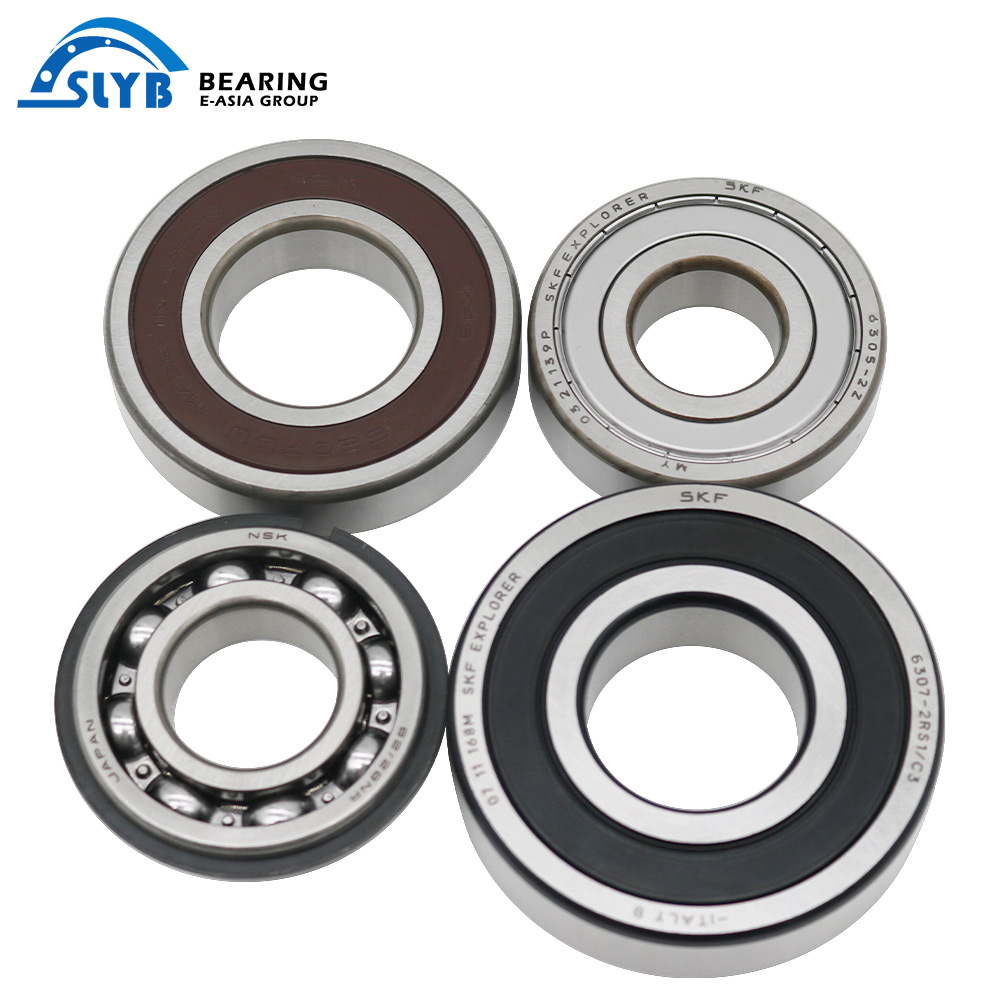
ZZ shielded bearing | Metal shields on both sides | Motors, fans, general dry environments |
2RS sealed bearing | Rubber seals on both sides | Dusty, humid or contaminated environments |
For clean, high-speed applications, shielded bearings may be suitable. For dusty or wet environments, sealed bearings may provide better protection.
However, seals can also increase friction and reduce speed capability. Buyers should balance protection, speed and temperature.
Speed and Heat: Why Higher Load Is Not the Only Requirement
A bearing with higher radial load capacity is not always the best choice if speed is high.
Higher load, tighter fits, excessive grease or wrong clearance can increase heat.
Heat can reduce lubricant life, change clearance and accelerate wear.
When selecting a ball bearing, always compare:
Radial load
Speed
Temperature
Lubrication
Clearance
Sealing type
Duty cycle
For example, a heavy-duty bearing may carry more load, but if it runs too hot in a high-speed motor, service life may still be poor.
Mounting and Fit: A Common Cause of Reduced Load Capacity
Even a high-quality bearing can fail early if it is installed incorrectly.
Common installation problems include:
Misalignment
Excessive shaft interference
Loose housing fit
Hammering the bearing directly
Pressing through the wrong ring
Contaminated installation environment
Incorrect preload or clearance reduction
For radial load applications, the bearing must be mounted so that load is transferred correctly through the rings and rolling elements.
Improper mounting can create internal stress and reduce effective radial load capacity.
Maintenance teams should use proper tools, clean working conditions and correct mounting procedures.
When to Choose a Deep Groove Ball Bearing
Deep groove ball bearings are the most common type of ball bearing for radial load applications.
They are suitable for:
They can also support limited axial load in both directions, depending on the design and application.
Choose deep groove ball bearings when the application has mainly radial load with moderate axial load and standard operating conditions.
When to Consider Angular Contact Ball Bearings
If axial load becomes significant, a standard deep groove ball bearing may not be the best choice.
Angular contact ball bearings are designed to handle combined radial and axial loads more effectively.
They may be needed when:
Axial load is high
Shaft positioning is important
Speed and rigidity are both required
Bearings are mounted in pairs
The application involves spindles, pumps or precision drive systems
If radial load is combined with strong axial thrust, buyers should review whether angular contact ball bearings are more suitable.
When to Consider Roller Bearings Instead of Ball Bearings
Ball bearings are efficient and suitable for many applications, but roller bearings may be better for heavier radial loads.
Roller bearings have line contact rather than point contact, which can increase load carrying capacity.
Consider roller bearings when:
Common examples include mining machinery, construction equipment, rolling mills and heavy industrial gearboxes.
A ball bearing should not be forced into a heavy-duty application if a roller bearing is more appropriate.
Maintenance Signs That Radial Load Capacity May Be Insufficient
A bearing may be overloaded or incorrectly selected if you notice:
Rising operating temperature
Abnormal vibration
Grinding or clicking noise
Grease leakage or discoloration
Early fatigue marks
Raceways with dents or pitting
Repeated bearing failure
Shaft movement
Reduced machine accuracy
If the same bearing position fails repeatedly, do not simply replace it with the same model. Review the load, speed, lubrication, sealing and installation conditions.
How to Extend Bearing Life Under Radial Load
To improve bearing life in radial load applications, maintenance teams should focus on the whole system.
Useful practices include:
Select the correct bearing series
Check dynamic and static load ratings
Choose suitable material
Use proper internal clearance
Protect the bearing from contamination
Select the correct grease or oil
Avoid over-greasing
Control operating temperature
Use correct mounting tools
Check shaft and housing tolerance
Inspect alignment
Monitor vibration and temperature
Replace damaged seals or housings
A bearing’s real working life depends not only on the bearing itself, but also on the surrounding machine conditions.
Information to Provide When Requesting a Quote
To help a supplier recommend the correct ball bearing for radial load, provide as much application information as possible.
Useful information includes:
Bearing model or existing part number
Bore diameter, outside diameter and width
Current bearing brand
Application equipment
Radial load condition
Axial load condition
Rotational speed
Working temperature
Lubrication method
Sealing requirement
Internal clearance requirement
Noise or vibration requirement
Quantity
Delivery schedule
Special environment such as dust, water, chemicals or high temperature
If the original bearing failed early, also provide failure symptoms and photos. This helps determine whether the problem is load, lubrication, contamination, installation or bearing selection.
Ball Bearing Selection Checklist for Higher Radial Load
Before purchasing ball bearings for radial load applications, check the following:
Selection Item | What to Confirm |
Bearing type | Deep groove, angular contact or another type |
Bearing series | 6000, 6200, 6300 or other series |
Load rating | Dynamic and static load rating |
Material | Chrome steel, stainless steel or special material |
Clearance | Normal, C3 or other requirement |
Seal type | Open, ZZ or 2RS |
Lubrication | Grease, oil or special lubrication |
Speed | Maximum and continuous operating speed |
Temperature | Normal, high temperature or low temperature |
Environment | Clean, dusty, wet, corrosive or high-impact |
Installation | Shaft fit, housing fit and alignment |
Maintenance | Relubrication interval and inspection plan |
This checklist helps reduce wrong bearing selection and improves purchasing accuracy.
Sourcing Ball Bearings from LOC Bearing
LOC Bearing supplies ball bearings for electric motors, pumps, gearboxes, fans, conveyors, agricultural machinery, compressors and general industrial equipment.
Available bearing options can include:
Deep groove ball bearings
Angular contact ball bearings
Stainless steel ball bearings
High-speed ball bearings
Sealed and shielded ball bearings
Standard and custom bearing solutions
Replacement bearing support for industrial machinery
If you are unsure which ball bearing can support your radial load requirement, provide your bearing model, equipment type, speed, load condition and working environment. Our team can help review the application and recommend a suitable bearing series, material, clearance and sealing option.
FAQ
What increases the radial load capacity of a ball bearing?
Radial load capacity is affected by bearing size, ball size, raceway design, material, heat treatment, internal clearance, lubrication, manufacturing precision and operating conditions.
Does a larger ball bearing always carry more radial load?
In general, a larger bearing can carry higher radial load, but selection also depends on speed, temperature, installation space, material and bearing design.
Which ball bearing series is better for higher radial load?
The 6300 series generally has higher radial load capacity than lighter series such as 6000 or 6200, but the final choice depends on shaft size, housing space, speed and application conditions.
Do sealed bearings have higher radial load capacity?
Seals do not usually increase the basic load rating, but they help protect the bearing from contamination. In dusty or wet environments, sealed bearings may last longer under real operating conditions.
Can lubrication increase radial load capacity?
Lubrication does not change the bearing’s basic rated capacity, but correct lubrication helps the bearing perform under load by reducing friction, heat and wear.
When should I choose a roller bearing instead of a ball bearing?
Choose a roller bearing when radial load is very high, shock load is frequent or the equipment is heavy-duty. Roller bearings are often better for heavy radial load applications.
Why do ball bearings fail under radial load?
Common causes include overload, wrong bearing selection, poor lubrication, contamination, misalignment, incorrect installation, excessive temperature and improper clearance.
What information should I send before buying ball bearings?
Send the bearing model, size, equipment type, radial load, axial load, speed, temperature, lubrication, seal requirement, clearance requirement and quantity. This helps the supplier recommend the correct bearing.
Ball bearings are fundamental components in a wide range of mechanical systems, from household appliances to industrial machinery. They facilitate smooth motion by reducing friction between moving parts and support both radial and axial loads. The radial load capacity of a ball bearing, in particular, is a critical parameter that determines the bearing's ability to withstand forces perpendicular to the shaft. Enhancing this capacity can lead to significant improvements in the performance and longevity of mechanical systems. This article explores the various factors that increase the radial load capacity of a ball bearing, providing insights into material selection, design considerations, and lubrication practices.
Material Selection
The choice of materials for both the balls and the raceways plays a crucial role in determining the radial load capacity. High-quality steels, such as chrome steel (SAE 52100), are commonly used due to their excellent hardness and fatigue resistance. These properties enable the bearing to endure higher loads without significant deformation. Advanced materials like ceramic balls, made from silicon nitride, offer even greater hardness and reduced density, resulting in lower centrifugal forces at high speeds and increased load capacity.
Heat treatment processes also enhance material properties. Through hardening and tempering, the material's surface hardness is increased while maintaining a tough core. This combination of a hard surface to resist wear and a ductile core to absorb shocks contributes to a higher radial load capacity in ball bearings.
Ball Size and Quantity
The size and number of balls within a bearing directly affect its ability to carry radial loads. Larger balls have a greater contact area with the raceways, distributing the load over a wider surface and reducing stress concentrations. This distribution allows the bearing to support higher loads before material fatigue or deformation occurs.
Increasing the number of balls also enhances load capacity. More balls mean that the applied load is shared among multiple points of contact, decreasing the load per ball. However, there is a practical limit to this approach, as too many balls can lead to excessive friction and heat generation due to reduced space for lubrication and increased contact between the balls themselves.
Optimized Bearing Geometry
The geometry of the ball bearing, including the curvature of the raceways and the conformity between the balls and raceways, significantly influences radial load capacity. A higher degree of conformity allows for better load distribution and reduces peak stresses. Engineers design the raceway grooves to match the curvature of the balls closely, which enhances contact and allows the bearing to sustain higher radial loads.
Additionally, the internal clearance—the space between the balls and raceways—must be optimized. Proper internal clearance accommodates thermal expansion and accounts for dimensional variations during operation, ensuring that the load is appropriately distributed among the bearing components.
Cage Design
The cage, or retainer, in a ball bearing separates and guides the balls, maintaining uniform ball spacing and preventing ball-to-ball contact. An optimized cage design reduces friction and wear, contributing to the overall load capacity of the bearing. Materials used for cages, such as polyamides, phenolic resins, or metals like brass and steel, offer different advantages.
A well-designed cage minimizes the stress on each ball by ensuring smooth motion and reducing the risk of misalignment or skewing under load. Advanced cage designs may incorporate features like pockets that accommodate thermal expansion or high-speed operation, further enhancing the radial load capacity.
Lubrication and Maintenance
Proper lubrication is essential for maximizing the radial load capacity of a ball bearing. Lubricants reduce friction between the balls and raceways, minimize wear, and help dissipate heat generated during operation. Selecting the right lubricant—whether grease or oil—depends on the operating conditions such as load, speed, temperature, and environmental factors.
Regular maintenance practices, including timely relubrication and contamination control, prevent degradation of the lubricant and the introduction of particles that can cause abrasion or indentation on the contact surfaces. Clean lubrication systems maintain the integrity of the bearing surfaces, allowing for optimal load distribution and increased capacity.
Surface Finish and Coatings
The surface finish of the balls and raceways affects the friction and wear characteristics of the bearing. Smoother surfaces result in lower friction coefficients, reducing the heat generated and the potential for surface fatigue under radial loads. Precision grinding and superfinishing techniques produce ultra-smooth surfaces that enhance bearing performance.
Applying specialized coatings can further increase the radial load capacity. Coatings like titanium nitride (TiN) or diamond-like carbon (DLC) provide hard, low-friction surfaces that resist wear and galling. These coatings extend the bearing's life under high-load conditions by protecting the underlying material from surface fatigue and corrosion.
Temperature Control
Operating temperatures impact the material properties and lubrication effectiveness in ball bearings. Elevated temperatures can reduce material hardness and alter clearances due to thermal expansion, decreasing the radial load capacity. Implementing cooling systems or using heat-resistant materials and lubricants ensures that the bearing operates within optimal temperature ranges.
Thermal management strategies include designing bearing housings with improved heat dissipation characteristics and selecting lubricants with appropriate viscosity-temperature behavior. Maintaining controlled temperatures helps preserve material strength and lubricant integrity, supporting higher radial loads.
Precision Manufacturing
The manufacturing precision of the bearing components influences its load-carrying capacity. Tighter tolerances in the dimensions and roundness of the balls and raceways enable more uniform load distribution. Advanced manufacturing techniques, such as CNC machining and laser measurement systems, ensure that the components meet stringent specifications.
Precision bearings are often subjected to rigorous quality control processes, including vibration analysis and load testing, to verify their performance under expected operating conditions. These measures detect defects or deviations that could compromise the radial load capacity, ensuring that only bearings meeting the highest standards are used in critical applications.
Application-Specific Design
Customizing the bearing design to suit specific application requirements can significantly increase radial load capacity. Factors such as load direction, rotation speed, and environmental conditions influence bearing selection and design modifications. For example, using angular contact ball bearings instead of radial ball bearings can accommodate combined radial and axial loads more effectively.
In applications where shock loads are common, bearings with increased internal clearances or specialized materials can absorb impacts without permanent deformation. Tailoring the bearing design to the application's unique demands ensures optimal performance and maximizes radial load capacity.
Proper Installation Practices
Even the highest-quality bearings can fail to achieve their maximum radial load capacity if improperly installed. Misalignment, incorrect mounting methods, or improper handling can introduce stresses and lead to premature failure. Utilizing proper installation tools and techniques ensures that the bearing is seated correctly and that loads are transmitted as intended.
Training personnel on best practices and following manufacturer guidelines reduces the risk of installation-related issues. Adhering to precise installation procedures maintains the bearing's structural integrity and allows it to perform at its designed load capacity.
Environmental Considerations
Environmental factors such as contamination, moisture, and corrosive elements can adversely affect a bearing's radial load capacity. Contaminants like dust or metal particles can cause abrasive wear or indentations, leading to stress concentrations and reduced load capacity. Sealing mechanisms, such as shields or seals, protect the bearing's internal components from environmental hazards.
Selecting materials with corrosion-resistant properties or applying protective coatings can combat the effects of moisture and chemicals. In harsh environments, stainless steel bearings or those with ceramic components provide enhanced durability and maintain load capacity over an extended service life.
Conclusion
Increasing the radial load capacity of a ball bearing involves a multifaceted approach that encompasses material selection, design optimization, precision manufacturing, and proper maintenance. By understanding and addressing the factors that influence load capacity, engineers and technicians can design bearings that meet the demanding requirements of modern machinery.
Advancements in materials science, manufacturing technology, and lubrication continue to push the boundaries of what ball bearings can achieve. As industries seek higher efficiency and reliability, the importance of maximizing radial load capacity becomes ever more critical. Through diligent application of best practices and continual innovation, the performance and longevity of ball bearings will continue to improve, supporting the advancement of mechanical systems across the globe.

 English


