Executive Summary
Gas turbines operate under some of the most demanding conditions in industrial applications, requiring bearings that can withstand extreme temperatures, high rotational speeds, and substantial loads while maintaining precision and reliability. Cylindrical roller bearings have emerged as the ideal solution for these challenging environments, offering superior radial load capacity, thermal stability, and operational efficiency. This comprehensive guide explores the unique characteristics that make cylindrical roller bearings indispensable for gas turbine applications, from their structural advantages to material innovations that enable them to perform reliably in extreme operating conditions.
Understanding Cylindrical Roller Bearings in Gas Turbine Applications
The Fundamentals of Gas Turbine Bearing Requirements
Gas turbines, whether used in power generation, aviation, or industrial mechanical drive applications, demand bearings that can perform reliably under extraordinary operational stresses. These rotating machines typically operate at speeds ranging from 1,500 to over 22,000 rpm, generating immense centrifugal forces and thermal loads that would quickly destroy conventional bearing systems.
The bearing systems in gas turbines must address several critical challenges simultaneously. They must support heavy radial loads from the rotor assembly weight while accommodating thermal expansion during startup and shutdown cycles. Additionally, they need to maintain dimensional stability at operating temperatures that can exceed 200°C in certain applications, all while minimizing friction to preserve turbine efficiency.
Cylindrical roller bearing manufacturers have developed specialized designs specifically engineered to meet these demanding requirements. Unlike ball bearings that make point contact with raceways, cylindrical roller bearings utilize line contact between cylindrical rolling elements and their raceways, distributing loads across a much larger surface area. This fundamental design characteristic enables them to handle the substantial radial forces generated by high-speed turbine rotors.
Key Performance Characteristics of Cylindrical Roller Bearings
Superior Radial Load Capacity
The primary advantage of cylindrical roller bearings for gas turbines lies in their exceptional radial load-carrying capability. The cylindrical geometry of the rolling elements creates a linear contact pattern with the inner and outer raceways, rather than the point contact found in ball bearings. This line contact distributes applied loads across a significantly larger surface area, reducing contact stress and enabling the bearing to support heavier radial loads without premature failure.
In gas turbine mainshaft applications, radial loads can reach several tons due to the combined weight of the rotor assembly and dynamic forces generated during operation. Research on high-speed gas turbine bearings has demonstrated that properly designed cylindrical roller bearings can achieve load capacities exceeding 4 MPa in continuous operation, making them suitable for the most demanding turbomachinery applications.
Full complement cylindrical roller bearings, which eliminate the cage and maximize the number of rolling elements, offer even higher load capacity for applications where space is limited. These designs are particularly valuable in compact turbine configurations where bearing envelope dimensions are constrained.
High-Speed Performance and Thermal Management
Gas turbines generate substantial heat during operation, and bearing systems must dissipate this thermal energy efficiently to maintain dimensional stability and prevent lubricant degradation. Cylindrical roller bearings offer inherent advantages for high-speed applications through several design features.
The separable cylindrical roller bearing design allows for optimized lubrication strategies. By enabling independent mounting of inner and outer rings, these bearings facilitate the implementation of directed lubrication systems that deliver precise quantities of oil exactly where needed. Recent innovations in under-race lubrication technology have reduced oil consumption by up to 75% compared to conventional jet lubrication methods, while simultaneously decreasing power losses by approximately one-third.
Modern precision cylindrical roller bearings designed for gas turbine applications can operate reliably at DN values (bearing bore diameter in millimeters × shaft speed in rpm) exceeding 2.5 million, with some specialized designs achieving values above 3.0 million. This high-speed capability is essential for aeroderivative gas turbines and other advanced turbomachinery where compact, lightweight designs demand smaller bearing envelopes operating at increased rotational velocities.
Material Innovations for Extreme Operating Conditions
Advanced Bearing Steel Compositions
The materials used in cylindrical roller bearing construction have evolved significantly to meet the demanding requirements of gas turbine applications. Traditional bearing steels provide an excellent balance of hardness, toughness, and cost-effectiveness, but specialized applications often require enhanced material properties.
High carbon steel cylindrical roller bearings utilizing premium grade AISI 52100 or equivalent compositions form the foundation for most standard applications. These materials undergo precise heat treatment processes to achieve hardness levels typically ranging from 58-64 HRC, providing excellent rolling contact fatigue resistance while maintaining adequate toughness to resist impact loads during startup and transient operating conditions.
For applications involving elevated temperatures or corrosive environments, heavy-duty alloy cylindrical roller bearings incorporate specialized steel alloys with enhanced thermal stability and oxidation resistance. These advanced materials maintain their hardness and dimensional stability at temperatures where conventional bearing steels would begin to temper and lose their load-carrying capacity.
Research has demonstrated that optimizing the hardness differential between rolling elements and raceways significantly impacts bearing fatigue life. Studies indicate that maximum bearing life is achieved when cylindrical rollers are approximately 1-2 points harder (Rockwell C scale) than the raceways, optimizing load distribution and minimizing stress concentrations.
Hybrid and Ceramic Bearing Technologies
The latest generation of high-performance gas turbine bearings incorporates hybrid designs combining traditional steel raceways with ceramic rolling elements. Silicon nitride (Si₃N₄) ceramic rollers offer several compelling advantages for gas turbine applications:
Reduced Weight: Ceramic rollers weigh approximately 60% less than steel equivalents, reducing centrifugal forces at high speeds
Thermal Stability: Superior dimensional stability across wide temperature ranges
Electrical Insulation: Prevention of electrical erosion damage in electrically driven turbines
Corrosion Resistance: Immunity to most lubricant degradation products and environmental contaminants
While hybrid bearings command premium pricing, their extended service life and improved performance under extreme conditions often justify the additional investment in critical gas turbine applications where unscheduled downtime carries significant economic penalties.
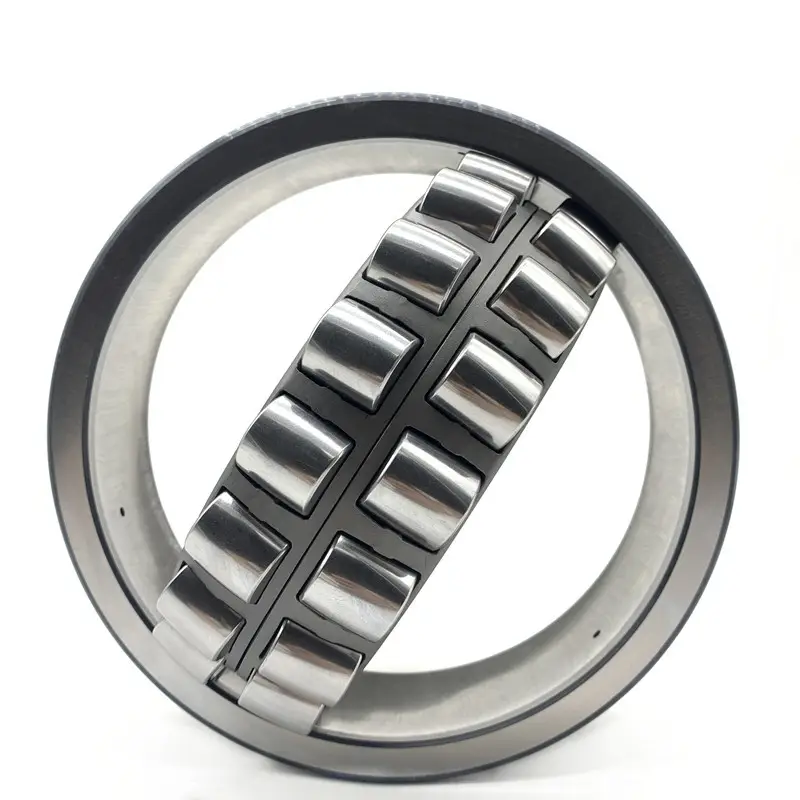
Design Configurations for Gas Turbine Applications
Bearing Arrangement Strategies
Gas turbine bearing systems typically employ a combination of bearing types strategically positioned to manage both radial and axial loads effectively. The most common configuration utilizes two journal bearings to support radial loads and one double-acting thrust bearing to control axial positioning of the rotor assembly.
Separable cylindrical roller bearings offer significant advantages for turbine bearing arrangements due to their ability to be mounted with interference fits on both shaft and housing. The separable construction allows independent mounting of inner and outer rings, simplifying assembly procedures and enabling precise control of internal clearances critical for optimal performance.
| Bearing Type | Primary Load Direction | Typical Position | Key Benefits |
| Single-row cylindrical roller | Radial | Drive end journal | High radial capacity, separable design |
| Double-row cylindrical roller | Radial (heavy) | Non-drive end journal | Enhanced load capacity, improved rigidity |
| Full complement cylindrical roller | Radial (maximum) | Space-constrained applications | Maximum load in minimal envelope |
| Tilting pad thrust | Axial | Between journal bearings | Stability, self-aligning capability |
Clearance and Preload Considerations
Proper internal clearance management is critical for achieving optimal performance from cylindrical roller bearings in gas turbine applications. Excessive clearance can lead to roller skewing, increased vibration, and accelerated wear, while insufficient clearance may result in preload conditions that generate excessive heat and reduce bearing life.
Gas turbine bearing systems must accommodate significant thermal expansion during operation. Shaft temperatures may increase by 50-100°C from ambient to full operating conditions, causing substantial dimensional changes that affect bearing internal clearances. Precision cylindrical roller bearings for turbine applications are typically specified with carefully calculated initial clearances that, when combined with thermal expansion effects and mounting stresses, achieve optimal running clearances under operating conditions.
Advanced bearing analysis software enables engineers to model these complex interactions, predicting operating clearances under various load, speed, and temperature conditions. This capability allows designers to optimize bearing specifications for specific applications, ensuring reliable performance across the entire operating envelope.
Lubrication Systems and Maintenance
Lubrication Technology for High-Speed Bearings
Effective lubrication is absolutely critical for cylindrical roller bearing performance in gas turbine applications. The lubricant must provide adequate film thickness to separate rolling surfaces, dissipate frictional heat, remove contaminants, and protect against corrosion—all while remaining stable at elevated temperatures and maintaining proper viscosity across the operating range.
Gas turbine bearing systems typically employ forced-feed lubrication systems using high-quality synthetic oils formulated specifically for high-temperature applications. These specialized lubricants maintain their properties at temperatures where conventional mineral oils would rapidly degrade, ensuring consistent bearing protection throughout the operating cycle.
Modern lubrication system designs incorporate several advanced features:
Directed Oil Delivery: Precisely targets oil flow to critical bearing surfaces, minimizing total oil consumption
Temperature Control: Thermostatically regulated oil temperatures optimize viscosity for prevailing operating conditions
Filtration Systems: Multi-stage filtration removes particulate contaminants that could damage bearing surfaces
Condition Monitoring: Sensors continuously monitor oil temperature, pressure, and quality to detect developing problems
Predictive Maintenance Strategies
The substantial investment in gas turbine equipment and the high cost of unscheduled downtime make predictive maintenance approaches particularly valuable. Modern condition monitoring systems enable maintenance personnel to track bearing health continuously, identifying developing problems before they progress to failure.
Key monitoring parameters for cylindrical roller bearings include:
Vibration Analysis: Detects bearing defects, misalignment, and abnormal operating conditions
Temperature Monitoring: Identifies lubrication problems and developing failures
Oil Analysis: Reveals bearing wear through detection of metallic particles
Acoustic Emission: Detects early-stage crack formation and material degradation
Implementing comprehensive condition monitoring programs enables maintenance teams to optimize bearing replacement intervals, extending service life while avoiding unexpected failures. Regular oil sampling and trending of vibration signatures provide early warning of developing problems, allowing scheduled maintenance during planned outages rather than emergency repairs during critical operating periods.
Applications Across Gas Turbine Types
Industrial Power Generation Turbines
Large frame industrial gas turbines used for electrical power generation represent one of the most demanding applications for cylindrical roller bearings. These massive machines, with rotor weights often exceeding several tons, operate continuously for extended periods between scheduled maintenance outages.
Heavy-duty alloy cylindrical roller bearings manufactured from premium materials provide the reliability these critical applications demand. The bearings must maintain precise rotor positioning to preserve optimal clearances between stationary and rotating components, as even minor misalignment can significantly impact turbine efficiency and potentially cause catastrophic damage.
Power generation turbines typically operate at relatively moderate speeds (3,000-3,600 rpm for 50/60 Hz generators), but the combination of heavy loads and continuous operation creates challenging conditions. Bearing systems for these applications commonly utilize double-row cylindrical roller bearings with optimized roller profiles to distribute loads evenly and maximize fatigue life.
Aeroderivative and Industrial Gas Turbines
Aeroderivative gas turbines, derived from aircraft engine technology, operate at significantly higher speeds and incorporate more compact bearing designs compared to their heavy frame counterparts. These machines demand precision cylindrical roller bearings capable of DN values exceeding 2.0 million while maintaining dimensional stability under rapid thermal transients during startup and shutdown.
The bearing systems in aeroderivative turbines must accommodate frequent start-stop cycles—sometimes multiple times daily—which generate thermal stresses absent in base-load power generation applications. Separable cylindrical roller bearings with specialized surface treatments and advanced lubrication systems enable these turbines to achieve target reliability metrics despite challenging duty cycles.
Industrial mechanical drive gas turbines serving compressor and pump applications present unique challenges. These machines often experience variable speed operation and load fluctuations that demand bearings capable of maintaining performance across wide operating ranges. The versatility of cylindrical roller bearing designs allows engineers to select configurations optimized for specific application requirements, whether prioritizing load capacity, speed capability, or operational flexibility.
Future Developments and Industry Trends
Advanced Materials and Coatings
The gas turbine industry continues to push toward higher operating temperatures and increased power densities, driving ongoing innovation in bearing technology. Advanced surface treatments and coating technologies promise to extend bearing capabilities further:
Diamond-like Carbon (DLC) Coatings provide exceptional hardness and low friction coefficients, enabling operation with reduced lubrication or under boundary lubrication conditions. These coatings show particular promise for applications involving temporary oil starvation or contaminated lubricants.
Thermal Barrier Coatings protect bearing surfaces from thermal damage during transient operating conditions, while anti-wear coatings extend bearing life in contaminated environments where conventional bearing materials would experience accelerated degradation.
Digital Integration and Smart Bearing Systems
The digital transformation of industrial equipment is extending to bearing systems, with integrated sensors enabling real-time condition monitoring and predictive maintenance capabilities. Next-generation cylindrical roller bearings may incorporate embedded sensors measuring temperature, vibration, and load directly within the bearing assembly, providing unprecedented insight into operating conditions and remaining useful life.
Machine learning algorithms analyzing sensor data from fleets of gas turbines can identify patterns indicating developing problems, enabling proactive maintenance interventions before failures occur. This digital integration represents a fundamental shift from traditional time-based maintenance toward truly condition-based strategies that optimize both reliability and maintenance costs.
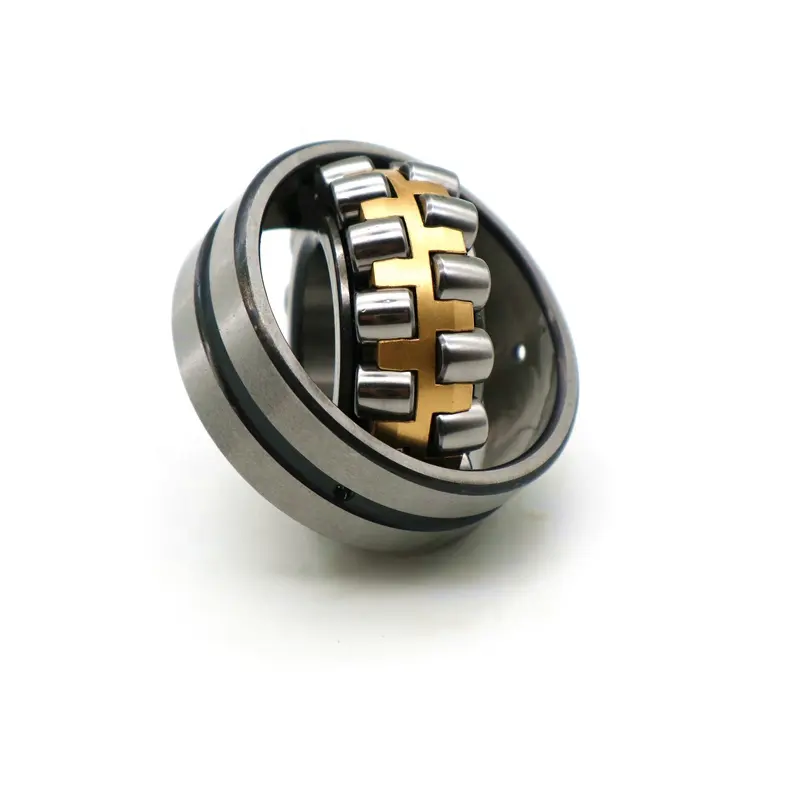
Selecting the Right Cylindrical Roller Bearing for Your Application
Critical Selection Factors
Choosing the optimal cylindrical roller bearing configuration for a specific gas turbine application requires careful consideration of multiple interrelated factors:
Load Requirements: Accurately characterizing both magnitude and direction of applied loads forms the foundation for bearing selection. Engineers must consider not only steady-state operating loads but also transient conditions during startup, shutdown, and abnormal operating scenarios.
Speed Capabilities: The bearing's DN rating must exceed maximum operating speeds with adequate margin for occasional overspeed conditions. High-speed applications may require specialized cages, modified internal geometry, or advanced lubrication systems to achieve target performance.
Temperature Environment: Bearing materials, heat treatment specifications, and clearances must be selected to maintain optimal performance across the anticipated temperature range. Applications involving extreme temperatures may justify premium bearing specifications or exotic materials.
Maintenance Philosophy: The accessibility of bearing locations and desired maintenance intervals influence design choices. Applications where accessibility is limited may justify additional investment in premium bearing specifications to extend service intervals, while more accessible locations might accept more frequent maintenance to reduce initial costs.
Working with Bearing Manufacturers
Collaborating with experienced cylindrical roller bearing manufacturers early in the design process ensures optimal bearing selection and integration. Leading manufacturers maintain extensive application engineering capabilities and can provide valuable guidance on bearing selection, mounting practices, and lubrication system design.
Quality manufacturers offer comprehensive technical support including:
Application-specific bearing calculations and life analysis
Recommendations for mounting methods and clearance specifications
Lubrication system design guidance
Failure analysis support when problems occur
Custom bearing designs for unique applications
Building strong relationships with reliable bearing suppliers provides access to this technical expertise while ensuring consistent product quality and availability of replacement bearings when needed.
Conclusion
Cylindrical roller bearings have proven themselves as the optimal choice for gas turbine applications through decades of reliable service across diverse operating conditions. Their superior radial load capacity, high-speed capabilities, and thermal stability enable gas turbines to achieve the performance and reliability that modern industrial applications demand.
As gas turbine technology continues advancing toward higher efficiencies and power densities, bearing systems must evolve correspondingly. Ongoing innovations in materials, lubrication technology, and digital integration promise to extend cylindrical roller bearing capabilities further, ensuring they remain the preferred choice for critical turbomachinery applications.
Whether you're specifying bearings for a new gas turbine design or seeking to improve the performance of existing equipment, understanding the unique characteristics and capabilities of cylindrical roller bearings enables informed decisions that optimize both performance and lifecycle costs. By selecting appropriate bearing configurations, implementing effective lubrication and maintenance strategies, and partnering with experienced manufacturers, engineers can maximize gas turbine reliability while minimizing total cost of ownership.
For more information about cylindrical roller bearing solutions for your specific application, contact our technical team to discuss your requirements and explore how advanced bearing technology can enhance your gas turbine performance.
Frequently Asked Questions
Q1: What is the typical service life of cylindrical roller bearings in gas turbine applications?
Service life varies significantly based on operating conditions, but properly selected and maintained cylindrical roller bearings in gas turbine applications typically achieve 40,000-100,000 operating hours or more. Heavy-duty power generation turbines often exceed these values with appropriate lubrication and condition monitoring.
Q2: Can cylindrical roller bearings handle the axial loads in gas turbines?
While cylindrical roller bearings excel at radial load support, most gas turbine designs use separate thrust bearings (typically tilting pad designs) to manage axial loads. Some cylindrical roller bearing configurations with guide flanges can accommodate limited axial loads in specific applications.
Q3: What lubrication oils are recommended for gas turbine cylindrical roller bearings?
Gas turbine bearings typically use high-quality synthetic oils (often polyol ester or synthetic hydrocarbon based) meeting specifications such as MIL-PRF-23699 or equivalent. These oils maintain stability at elevated temperatures and provide excellent oxidation resistance essential for long service intervals.
Q4: How do full complement cylindrical roller bearings differ from caged designs?
Full complement cylindrical roller bearings eliminate the cage and maximize the number of rolling elements, providing higher load capacity in the same envelope. However, they typically operate at lower speeds than caged designs and generate more friction due to roller-to-roller contact.
Q5: What factors most commonly cause premature cylindrical roller bearing failure in gas turbines?
The most common failure modes include inadequate lubrication (insufficient oil flow or degraded oil quality), contamination from external sources or internal wear debris, improper mounting causing misalignment or incorrect clearances, and operation outside design limits (excessive load or speed). Implementing proper maintenance practices and condition monitoring significantly reduces premature failure risk.

 English


