You need the right Special Bearing when your job demands high precision, reliability, and performance in tough conditions. Special Bearing gives you a smart solution for non-standard and advanced needs. Many industries rely on these bearings every day. For example, you see them in aerospace for jet engines, in robotics for fast and accurate movement, and in food processing where parts must resist harsh cleaning and high humidity.
Industry | Specific Demands |
Food Processing | Endures extreme conditions, resists corrosion, stands up to cleaning chemicals and humidity. |
Aerospace | Delivers high precision and works under extreme conditions. |
Robotics | Offers precision and reliability in high-speed applications. |
Heavy Machinery | Handles large loads and tough environments. |
Choosing the right bearing means you match the type and features to your load, speed, environment, and installation needs.
Key Takeaways
Identify your application needs before selecting a bearing. Consider factors like load type, speed, and environment to ensure optimal performance.
Choose the right bearing type based on load and speed requirements. For heavy loads, consider tapered or spherical roller bearings; for lighter loads, ball bearings are ideal.
Ensure proper installation and maintenance. Cleanliness and correct alignment are crucial for extending bearing life and preventing early failure.
Select materials that match your environment. Stainless steel resists corrosion, while ceramic offers durability and low friction for high-performance applications.
Use a checklist to confirm your final bearing choice. Evaluate factors like dimensions, speed, and lubrication to avoid common mistakes.
Application Needs
When you select a Special Bearing, you must first look at your application’s needs. Each industry faces unique challenges. For example, aerospace engineers need bearings that work under extreme loads and speeds. Medical device makers want compact, precise bearings for small instruments. Automation systems require reliable parts that keep machines running smoothly.
Load and Speed
You must match the bearing type to your load and speed requirements. Here are some steps to guide you:
Identify the type of load—radial, axial, or both.
Estimate the maximum and average loads your application will apply.
Check the speed and duty cycle for your equipment.
Review the manufacturer’s dynamic and static load ratings.
Choose a bearing that meets or exceeds these needs.
For heavy loads, you might use tapered or spherical roller bearings. These types handle high forces and misalignment. Ball bearings work best for lighter loads and higher speeds. In robotics or medical devices, miniature bearings support fast, precise movement. Always use high-quality lubricants and avoid overloading to extend bearing life.
Environment and Space
Your working environment affects bearing choice. High temperatures, humidity, and contamination can damage standard bearings. Special Bearing offers high-temp models for furnaces and turbines, and corrosion-resistant options for food processing or medical labs. If you work in a tight space, miniature or custom bearings fit where standard sizes cannot. Sealed or shielded bearings help block dust and moisture.
Tip: Always check the temperature and humidity range for your application. Choose materials like stainless steel or ceramic for harsh environments.
Installation Factors
Proper installation ensures long bearing life. Cleanliness is key—dust or dirt can shorten service time. Always check the fit and tolerances between the bearing and its housing. Use the right tools, such as bearing presses, to avoid damage. In automation and aerospace, even small errors in installation can lead to vibration or early failure.
A Special Bearing from can be customized for your exact installation needs, whether you need a unique bore size or special mounting features.
Special Bearing Types
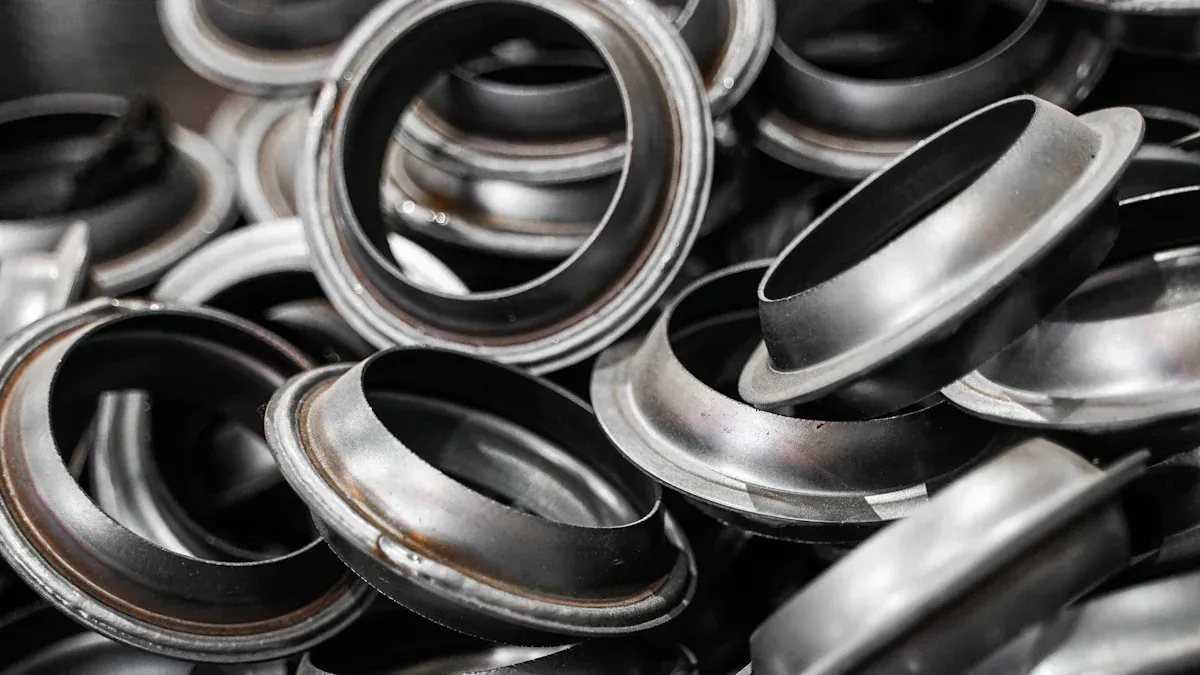
Choosing the right Special Bearing starts with understanding the types available. offers several options to match your needs, whether you work in aerospace, medical devices, or industrial automation.
High-Temp Bearings
You need high-temp bearings when your equipment faces extreme heat. These bearings can operate in temperatures up to 1000°C. You see them in furnaces, turbines, and chemical plants. High-temp bearings use materials like silicon carbide and specialty alloys. These materials resist thermal expansion and keep performance steady across wide temperature ranges. You avoid seizure and breakdowns, even in harsh conditions.
Tip: High-temp bearings work best in places where regular bearings fail due to heat.
Bearing Type | Key Characteristics | Performance Implications |
High-Temperature | Minimal thermal expansion, suitable for high heat | Consistent performance, reduced risk of seizure |
Ceramic and Magnetic Bearings
Ceramic bearings give you excellent wear resistance and low friction. Magnetic bearings use magnetic fields to support moving parts without contact. You find these bearings in high-speed motors, medical scanners, and vibration-sensitive equipment. Ceramic bearings resist corrosion and need less lubrication. Magnetic bearings run quietly and last longer because there is no physical contact.
Advantage | Ceramic Bearings | Steel Bearings |
Wear Resistance | Harder materials provide excellent wear resistance. | Less wear resistance. |
Corrosion Resistance | Less susceptible to corrosion in harsh environments. | More prone to corrosion. |
Lubrication Requirement | Requires less lubrication due to low friction. | Higher lubrication needs. |
Rolling Resistance | Reduced resistance enhances operational efficiency. | Higher rolling resistance. |
Service Life | Extended service life due to hardness. | Shorter service life. |
Weight | Up to 50% lighter, advantageous for weight-sensitive applications. | Heavier than ceramics. |
Note: Ceramic bearings cost more than steel bearings, but you get longer service life and better performance in tough environments.
Miniature and Custom Bearings
Miniature bearings fit into small spaces, like medical instruments and robotics. You need them when your design requires precision and compact size. offers custom solutions for electric wheelchairs, prosthetic devices, and rehab systems. You can choose the right size and capacity for your project.
Device Type | Standard Bearing Limitations | Custom Bearing Advantages |
Electric Wheelchair | Overheating, size mismatches | Optimized torque and tight motor fit |
Prosthetic Foot Module | Limited ROM, discomfort | Joint-specific preload and rotation axis tuning |
Rehab Pulley System | Noise, friction | Silent operation, better weight distribution |
Miniature bearings need regular maintenance for smooth operation.
You can select from a wide range of sizes or ask for custom designs.
Custom bearings solve problems like noise, friction, and tight spaces.
Material choice matters for every Special Bearing. Stainless steel resists corrosion, ceramic offers hardness and smoothness, and specialty alloys handle extreme loads. You pick the material that matches your environment and performance needs.
Material | Advantages | Disadvantages | Applications |
Chrome Steel | High hardness and wear resistance; good for general-purpose bearings. | Less resistant to corrosion; requires protective coatings. | General-purpose applications. |
Stainless Steel | Better corrosion resistance due to chromium content; forms protective layer. | Lower hardness and load capacity compared to chrome steel. | Corrosive environments. |
Ceramic | Outstanding surface hardness; smooth surface; used in hybrid bearings. | Generally more expensive; limited applications due to brittleness. | High-performance and specialty uses. |
Smart bearings now include sensors for real-time monitoring. You get better fault detection and longer service life.
Selection Criteria
When you choose a bearing for your project, you must look at several important factors. These include how much load the bearing will carry, how fast it will spin, the temperature it will face, and how you will keep it clean and working well. You also need to think about how you will install the bearing and how often you will check or replace it. These steps help you avoid common problems like fatigue failure, contamination, and improper installation, which can cause bearings to wear out too soon.
Capacity and Speed Rating
You must match the bearing’s capacity and speed rating to your equipment’s needs. Capacity means how much weight or force the bearing can handle. Speed rating tells you how fast the bearing can spin without problems. If you choose a bearing with too low a rating, it may break or wear out quickly. If you pick one with a higher rating than you need, you may spend more money than necessary.
Here is a table that shows typical size and speed ranges for high-precision bearings:
Bearing Type | Size Range (mm) | Speed Range (RPM) |
Angular Contact Bearings | ID: 5 to 120 | 9,700 to 287,500 |
| OD: 14 to 180 |
|
| W: 4 to 28 |
|
Radial Ball Bearings | ID: 5 to 40 | 22,500 to 129,375 |
| OD: 16 to 80 |
|
| W: 5 to 18 |
|
You should always check the manufacturer’s data for the exact numbers. If your application has heavy loads or high speeds, you need to choose a bearing that matches or exceeds these values. This helps prevent fatigue failure, which happens when a bearing faces repeated stress and starts to crack or pit.
Alignment and Lubrication
Proper alignment and good lubrication keep your bearing running smoothly. If you install a bearing out of line, it can cause dents or uneven wear. This can lead to noise, vibration, and even early failure. You must make sure the shaft and housing fit together well. Use the right tools and follow the instructions for your bearing type.
Lubrication is also very important. It reduces friction and heat. If you do not use enough lubricant, the bearing can get too hot and wear out faster. Too much lubricant can also cause problems. You should use the type and amount of lubricant recommended by the manufacturer. Cleanliness matters, too. Dust, dirt, and other small particles can get inside and cause damage. Seals and shields help keep out these contaminants.
Tip: Set up a regular maintenance schedule to check alignment and add lubricant. This helps your bearing last longer and work better.
Mounting and Clearance
Mounting and clearance affect how well your bearing works. Internal clearance means the space inside the bearing between the rolling parts and the rings. This space helps spread the load and keeps the bearing quiet and smooth. If the clearance is too tight or too loose, the bearing may make noise, vibrate, or wear out early.
Here are some key points to remember when mounting bearings:
Internal clearance helps spread the load and affects how long the bearing lasts.
It also changes the noise and vibration levels in your equipment.
The way you install the bearing, such as using a tight fit, can change the clearance after assembly.
Changes in temperature can make the clearance bigger or smaller, which affects performance.
You should always follow the instructions for mounting and check the clearance before and after installation. This helps you avoid problems like skidding or extra stress on the bearing.
offers many customization options to help you get the right fit for your project. You can choose special materials, designs, coatings, and even complete bearing units. Here is a table that shows some of the options you can select:
Customization Type | Description |
Materials | High strength tool steels (SAE 52100, M50) and stainless steels (440C, 304) for specialized applications. |
Designs | Adaptations for unique applications, including custom contact angles and preloads. |
Coatings | Options like solid lubricants and protection layers for enhanced performance. |
Special Preload and Tolerances | Custom preload and tolerances available, often within standard lead times. |
Complete Bearing Units | Fully assembled units tailored to specific application requirements. |
You also need to make sure your bearing meets industry standards. Special Bearing products come with important certifications. These include ISO9001 for quality management, AS9100 for aerospace, Nadcap for non-destructive testing and chemical processing, and RoHS3 for safety with hazardous substances.
Certification Type | Description |
ISO9001 | Quality Management System |
AS9100 | Aerospace Quality Management |
Nadcap: NDT | Non-Destructive Testing Certification |
Nadcap: Chemical Processing | Certification for Chemical Processing |
RoHS3 Compliance | Restriction of Hazardous Substances Compliance |
By checking these criteria, you make sure your bearing will last longer, work better, and meet all safety rules.
Compare and Confirm
Performance and Availability
You should always compare the performance of your shortlisted bearings before making a final choice. Look at key metrics like load capacity, speed, durability, and precision. These factors help you see which bearing will work best for your application. For example, some brands focus on high-speed performance, while others offer extra strength for heavy-duty jobs.
Key Point | SKF Bearings | Timken Bearings |
Load Capacity | Moderate to high | High |
Speed | High-speed optimized | Reliable at all speeds |
Durability | Long-lasting | Extremely robust |
Friction | Low | Moderate |
Precision | High | Very high |
Applications | High-speed, precision | Heavy-duty, industrial |
Cost | Higher | Moderate |
Innovation | Advanced materials | Specialized designs |
You also need to check how quickly you can get the bearings you need. Lead time depends on the type and level of customization. Standard bearings usually arrive in 20-30 days. Custom or OEM bearings may take 30-45 days. Simple customizations can take 2-3 weeks, while complex ones may need 8 weeks or more.
Customization Type | Lead Time |
Simple Customizations | 2-3 weeks |
Moderate Customizations | 4-6 weeks |
Complex Customizations | 8 weeks or more |
When you compare costs, think about more than just the price tag. Material choices, manufacturing processes, and supply chain logistics all affect the final cost. Market demand and after-sales support also play a role. Good supplier support can help you solve problems and keep your machines running smoothly.
Tip: Always check customer reviews and ask about after-sales support. Reliable suppliers offer help with installation, maintenance, and troubleshooting.
Checklist for Final Choice
Use a checklist to make sure your final bearing choice meets all your needs. This helps you avoid mistakes and ensures the bearing will perform well in your application.
Step | Evaluation Criteria | Key Considerations |
1 | Bearing Type | Does it match your load and space requirements? |
2 | Bearing Arrangement | Do you need single or multiple bearings? |
3 | Dimensions & Service Life | Will it fit and last as long as you need? |
4 | Speed & Accuracy | Can it handle your speed and precision needs? |
5 | Preload & Rigidity | Is the preload set for stability and low vibration? |
6 | Lubrication & Stability | Does it have the right lubrication system for long life? |
7 | Surrounding Components | Will it work well with seals, housings, and other parts? |
8 | Mounting & Maintenance | Is it easy to install and maintain? |
Review each item in the checklist.
Confirm that your bearing meets all technical and operational requirements.
Choose a supplier who offers strong support and clear communication.
Remember: Taking time to compare and confirm your choice leads to better performance and fewer problems in the future.
You improve reliability and extend service life when you choose a Special Bearing designed for your application. Application-specific bearings handle high loads and reduce maintenance compared to standard options. Following a structured selection process helps you avoid common mistakes and ensures top performance.
Common Mistakes | Solutions |
Compromising on quality | Choose reputable brands for reliability and performance. |
Neglecting maintenance | Set a regular schedule for cleaning, lubrication, and inspection. |
Ignoring future needs | Plan for future equipment changes when selecting bearings. |
Contact for expert advice and custom solutions. Smart choices today lead to reliable results tomorrow.
FAQ
What makes Special Bearings different from standard bearings?
You get advanced engineering with Special Bearings. These bearings handle extreme temperatures, high speeds, and heavy loads. You can choose custom sizes and materials for your specific needs.
How do you select the right bearing material?
You look at your environment and application. Stainless steel resists corrosion. Ceramic offers smooth movement and hardness. Specialty alloys work well in high-temperature or heavy-load settings.
Can you order custom sizes or designs?
Yes, you can request custom bore diameters, widths, and mounting features. works with you to match your exact technical requirements.
How often should you maintain your special bearing?
You should check alignment and lubrication regularly. Set a schedule based on your equipment’s usage. Clean bearings and replace lubricant as needed to keep performance high.

 English


