The 1-inch shaft diameter serves as the undisputed workhorse for light-to-medium duty applications across the industrial landscape. You will find this specific size powering everything from agricultural conveyors and packaging machinery to commercial HVAC systems. It represents a critical standard where versatility meets durability. However, a significant decision gap exists in the procurement process. While "1-inch pillow block" remains a common search term, failing to distinguish between duty classes, locking mechanisms, and housing materials often leads to premature failure. This oversight drastically increases Total Cost of Ownership (TCO) through unplanned downtime.
Selecting the correct unit involves more than just matching the bore diameter to the shaft. You must evaluate load ratings, environmental factors like washdown requirements or high heat, and precise mounting dimensions. This article moves beyond basic definitions to provide a comprehensive technical breakdown. We will guide you through deciphering complex part numbers, understanding load capacities, and implementing maintenance strategies that extend component life.
Key Takeaways
Exact Sizing Matters: A "1-inch" bearing often falls into specific series (e.g., UCP205-16); verifying the center height and bolt hole spacing is as critical as the bore size.
Material Dictates Lifespan: Cast iron is standard, but stainless steel or thermoplastic is non-negotiable for food/chem environments, while pressed steel serves cost-sensitive HVAC needs.
Load Orientation: Standard pillow blocks are designed primarily for support loads; mounting them vertically or inverted requires specific safety factor calculations.
Locking Logic: Set screws are default, but eccentric collars or concentric locks are superior for specific vibration or reversing load scenarios.
Deciphering the Specs: Anatomy of a 1 Inch Pillow Block Bearing
Replacing a bearing requires more than a ruler; it requires a "decoder ring" to understand industry-standard nomenclature. A generic request for a Pillow Block Bearing often results in receiving a standard duty unit when your application might demand something more robust. Understanding the syntax of part numbers ensures you order the exact component required for your machinery.
Nomenclature Breakdown (The "Decoder Ring")
Most manufacturers follow a standardized naming convention, typically referencing the UCP or HC syntax. Breaking this code reveals the housing type, the insert bearing style, and the exact dimensions.
Prefix (Housing/Insert): The prefix tells you about the locking mechanism and housing shape. A UCP designation typically indicates a set screw locking insert inside a standard cast iron pillow block housing. Conversely, an HCP prefix usually denotes an eccentric locking collar, which applies force differently to the shaft.
Series Code: The numbers following the prefix indicate the duty class. The "200" series implies a standard duty rating, suitable for most general applications. If you see a "300" series, it indicates a medium-to-heavy duty unit designed for higher load capacities.
Bore Size Designation: This is where the specific 1 Inch Pillow Block Bearing is identified. In the metric-dominant bearing world, inch sizes are often handled via a suffix. For example, the suffix "-16" represents 16/16ths of an inch, or exactly 1 inch. Therefore, a UCP205-16 is a standard housing with a 1-inch bore insert.
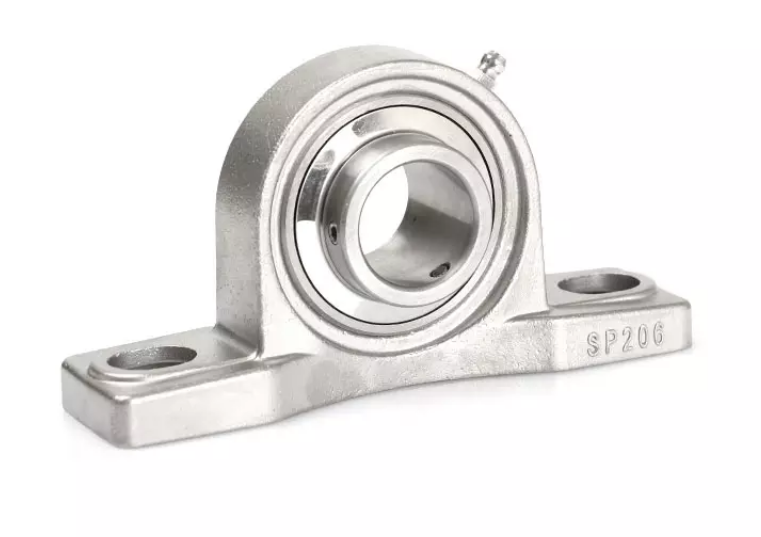
It is important to note that a UCP206 pillow block bearing typically houses a 30mm bore. However, it can be fitted with inch-size inserts (like 1-1/8" or 1-3/16"). Always verify the digits following the series code to confirm the exact inch measurement.
Critical Dimensions Beyond the Bore
The bore size guarantees the bearing fits the shaft, but it does not guarantee the housing fits the machine frame. You must verify three other dimensions.
| Dimension | Definition | Why It Matters |
| Center Height | Distance from the bottom of the base to the center of the shaft. | Critical for shaft alignment. A discrepancy here creates immediate vibration and binding. |
| Bolt Hole Spacing | Distance between the centers of the mounting slots. | Determines if the unit will bolt onto your existing pedestal or frame. |
| Housing Width | The overall footprint of the base. | Ensures the housing does not overhang narrow support structures. |
Linear vs. Rotary Distinction
Engineers sometimes confuse rotary units with linear options. The standard UCP style is designed for rotary motion, supporting a spinning shaft. In contrast, Linear Bearing Pillow Blocks use internal bushings or ball circuits to slide along a guide rail. Before purchasing, confirm whether your application requires the shaft to spin (rotary) or the block to move back and forth (linear).
Material Selection: Matching Housing to Environment
The operational environment defines the lifespan of your component. A standard cast iron unit will corrode rapidly in a chemical washdown, while a thermoplastic unit may fail under heavy impact. Choosing the right Housing pillow block bearing material is a balance between environmental resistance and structural rigidity.
Cast Iron (The Industrial Standard)
Cast iron remains the default choice for general manufacturing and agriculture. We see it used where rigidity and cost-effectiveness are paramount. Its high mass provides excellent vibration damping, and it handles static loads well. However, cast iron is porous and prone to rust. In wet environments, it can contaminate products and seize onto the mounting base.
Stainless Steel & Thermoplastic (Washdown & Hygiene)
For industries like food processing, pharmaceuticals, and chemical handling, corrosion is the enemy. Stainless steel housings offer the highest durability and resistance to aggressive cleaning agents. They are non-porous and easy to sanitize.
Thermoplastic housings offer a lightweight alternative. They are rust-proof and often feature solid bases to prevent bacteria growth in cavities. These units are frequently paired with stainless steel inserts and food-grade grease. The trade-off is a higher initial cost compared to iron, but the TCO is lower because you replace them less frequently in corrosive zones.
Pressed Steel (Light Duty & HVAC)
In applications like light conveyors and ventilation fans, heavy cast iron is unnecessary. Pressed steel housings are formed from two metal sheets stamped into shape. They are lightweight, inexpensive, and offer decent fatigue resistance. However, they have significantly lower load capacity than cast housings and are not suitable for high-torque applications.
High Temperature Resistance Options
Standard bearings fail when temperatures exceed 250°F (120°C). The grease liquefies, and the metal expands, eliminating internal clearance. For ovens or industrial dryers, you must specify a High Temperature Resistance pillow block bearing. These units feature C3 or C4 internal clearance to accommodate thermal expansion and utilize Viton (FKM) seals and high-temp synthetic lubricants to survive the heat.
Evaluating Load Capacity and Duty Cycles
A "1-inch bearing" does not have a universal load rating. The capacity depends on the internal ball size, the raceway geometry, and the housing strength. Engineers must evaluate both static and dynamic forces to prevent catastrophic failure.
Dynamic vs. Static Load Ratings
Manufacturers provide two distinct load numbers. Dynamic Load (Cr) is used to calculate the expected fatigue life (L10 life) of the bearing while it is rotating. If your application involves continuous motion, this is your primary metric.
Static Load (Cor) refers to the limit the bearing can handle while stationary or moving very slowly. Exceeding this limit causes permanent deformation, known as brinelling, on the raceways. If your equipment experiences heavy shock loads while stopped, size your bearing based on the Static Load rating.
Speed Limits (RPM)
Shaft diameter influences the maximum permissible RPM. A 1-inch shaft allows for relatively high speeds, but the seal type acts as a governor. Non-contact seals (labyrinth style) allow higher speeds because they generate less friction. Contact seals, which drag against the inner ring to keep dust out, generate heat and limit your top speed. Always check the manufacturer’s limiting speed data against your motor’s RPM.
High-Precision vs. Standard Tolerance
Agricultural equipment can tolerate "loose" fits, but printing presses and high-speed balancing machines cannot. In these scenarios, you may need to upgrade to a High-Precision pillow block bearing. These units feature tighter tolerances on the bore and center height, reducing runout and vibration. While standard units focus on durability, precision units focus on smoothness and positioning accuracy.
Mounting Orientation Risks
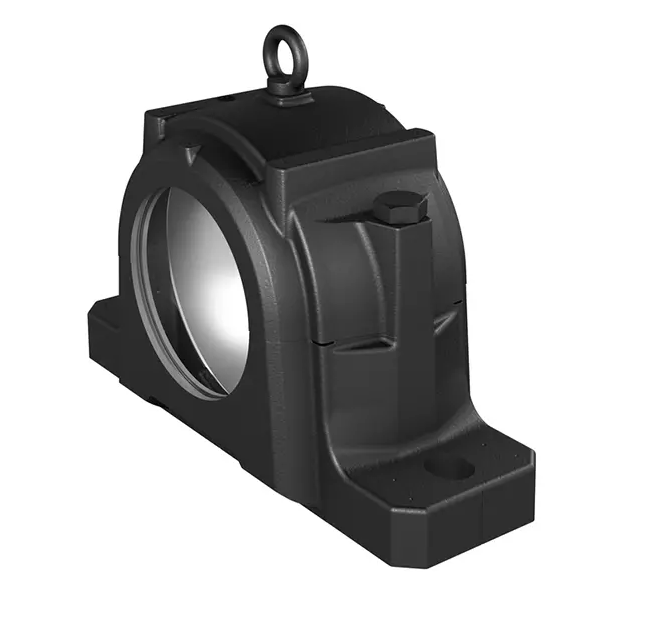
Pillow blocks are designed to support loads pushing down into the base (compression). Mounting them on walls or ceilings changes the force vector. In a "hanging" orientation, the load pulls on the housing bolts and puts the cast iron cap in tension. Cast iron is weak in tension and can fracture. For heavy loads in vertical or inverted positions, consider using a Heavy-Duty Plummer pillow block bearing or a split housing design that is rated for "Center Pull" or "Side Pull" loads.
Shaft Locking Mechanisms: Preventing Slippage and Fretting
The interface between the shaft and the inner ring is where many failures originate. If the bearing slips on the shaft, it causes fretting corrosion, eventually welding the two components together.
Set Screw (Grub Screw)
This is the most common mechanism. Two screws, typically spaced 120° apart, drive directly into the shaft. It is simple and effective for reversing loads. However, the screws damage the shaft surface, making removal difficult. For maximum hold, we recommend filing a small flat spot on the shaft where the screws make contact.
Eccentric Locking Collar
The eccentric collar features a "cam-lock" design. You rotate the collar onto the inner ring, and it tightens as it turns. This provides a secure hold without marring the shaft as deeply as set screws. The limitation is directionality; if the shaft reverses rotation, the collar can loosen. Therefore, use these primarily for unidirectional conveyors.
Concentric (Squeeze) Lock / Adapter Sleeve
For high-speed applications or situations where shaft protection is vital, a concentric lock or adapter sleeve is superior. This mechanism compresses the inner ring evenly around the shaft, similar to a collet. It maintains concentricity, reducing vibration. In heavy-duty scenarios, you might use an adapter sleeve to secure the bearing. This method is more expensive and complex to install but offers the best protection against shaft wear.
Implementation & Maintenance: Ensuring ROI
Even the highest quality bearing will fail if installed incorrectly. Proper implementation protocols ensure you get the maximum Return on Investment (ROI) from your hardware.
Installation Best Practices
Alignment is the first step. Although pillow block inserts have spherical outer rings that allow for static misalignment (usually +/- 2 degrees), this feature compensates for shaft deflection, not poor installation. Significant misalignment forces the balls to run on the edge of the raceway, shortening life.
Torque Specs are often ignored. You must torque the mounting bolts to secure the housing, but equally important is torquing the set screws. Under-torquing leads to shaft slip; over-torquing can crack the inner ring.
Lubrication Strategy
Most 1-inch units come with a grease fitting (Zerk), but "more grease" is not always better. Over-greasing creates internal pressure that can blow out the seals. Once the seal is compromised, contaminants enter, and grease escapes.
For hard-to-reach areas, consider "Sealed-for-Life" units. These eliminate maintenance but must be replaced entirely when the lubricant degrades. If you grease manually, follow the rule of thumb: add grease slowly while the shaft rotates until a small amount purges from the seal, then stop immediately.
Failure Analysis (TCO Drivers)
Recognizing early signs of failure saves money. Noise usually indicates spalling (pitting) of the raceways. Heat indicates lubrication failure or over-tightening. Vibration suggests looseness or misalignment.
When failure occurs, analyze the economics of replacement. If the housing is intact, you can often replace just the insert bearing. However, if the housing bore is worn or the mounting feet are cracked, you must replace the entire assembly. Partnering with a reliable Pillow Block Bearing manufacturer ensures you have access to both complete units and replacement inserts, minimizing downtime.
Conclusion
The "best" 1-inch pillow block isn't necessarily the cheapest one on the shelf. It is the unit that matches your specific load type, environmental conditions, and maintenance capabilities. Whether you need a stainless steel unit for a food line or a heavy-duty iron housing for a rock crusher, understanding the specs ensures reliability.
Before making your purchase, run through this final verification checklist:
Shaft Fit: Is it a true 1-inch shaft, or a metric size close to 1 inch?
Center Height: Does the new unit match the height of the old one?
Bolt Spacing: Will the slots align with your machine base?
Seal Type: Do you need contact seals for dust or labyrinth seals for speed?
FAQ
Q: What is the difference between a UCP205-16 and a standard UCP205?
A: The difference lies in the bore diameter. A standard UCP205 typically has a 25mm metric bore. The "-16" suffix indicates an inch-size bore, specifically 16/16ths of an inch (1 inch). Always check for the suffix if you are replacing a bearing on an Imperial (inch) shaft to ensure a proper fit.
Q: Can I mount a pillow block bearing upside down?
A: Standard cast iron pillow blocks are not designed for "hanging" loads where the force pulls the housing away from the base. This puts the housing cap in tension, which can cause fracture. For upside-down mounting, ensure the load does not exceed the housing's tensile strength, or use a heavy-duty or split-housing design.
Q: How much misalignment can a 1-inch pillow block handle?
A: Most pillow block inserts feature a spherical outer diameter that fits into a matching spherical housing. This design accommodates static misalignment, typically up to +/- 2 degrees. This allows for slight shaft deflection or imperfect mounting surfaces, but it does not correct for dynamic misalignment (wobbling) during operation.
Q: How often should I grease a pillow block bearing?
A: Greasing frequency depends on RPM and environment. For clean environments running at moderate speeds, regreasing every 3 to 6 months is common. In dirty, wet, or high-speed conditions, you may need to grease weekly or even daily. Always refer to the manufacturer’s specific relubrication interval charts.
Q: What is the difference between a Pillow Block and a Plummer Block?
A: The terms are often used interchangeably, but there is a technical distinction. "Pillow Block" usually refers to light-to-medium duty, pre-assembled units (like UCP series). "Plummer Block" typically refers to heavy-duty, split-housing designs (like SNL series) where the housing cap can be removed to install spherical roller bearings.

 English


