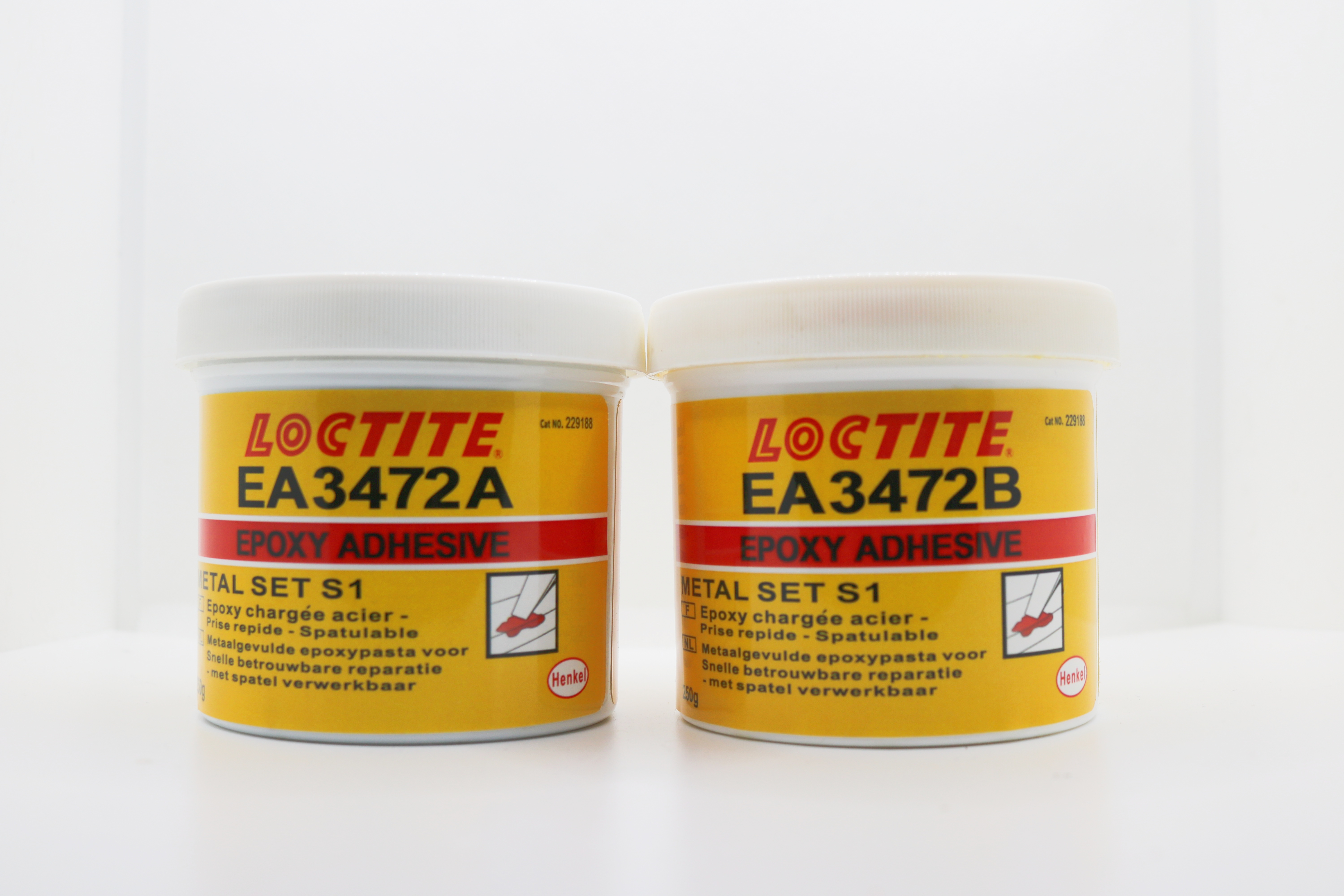
EA3472
loctiter
3506990000
Anaerobic adhesive
high quality
Barreled, bagged, boxed, palletized or as customers' requirement
OEM service provided
3-10 days, depends on quantity needed
| Availability: | |
|---|---|
| Quantity: | |
Spherical roller bearings represent a critical solution for heavy-load industrial equipment operating under extreme conditions. These self-aligning bearings feature two rows of symmetrical barrel-shaped rollers running on a common spherical outer ring raceway, enabling compensation for shaft deflection and misalignment inherent in large-scale machinery. Manufacturing plants processing raw materials, mining operations extracting natural resources, and steel mills running continuous production cycles depend on these robust components to handle substantial radial forces combined with bidirectional axial loads. The internal design permits angular misalignment up to 2-3 degrees, preventing bearing seizure when shaft bending occurs during operation. This self-aligning capability eliminates costly alignment procedures during installation while maintaining consistent load distribution across all rolling elements, maximizing bearing service life in demanding applications where equipment downtime directly impacts production output.

The spherical outer ring raceway permits automatic compensation for shaft deflection, housing deformation, and installation errors. This self-aligning bearing characteristic prevents edge loading that causes premature raceway spalling in rigid bearing types, particularly valuable in applications with long, flexible shafts spanning multiple support points.
Barrel-shaped rollers maintain optimal contact patterns with inner and outer raceways throughout the load zone. The symmetrical profile distributes stress uniformly, preventing roller skewing and cage wear that plague asymmetrical designs under fluctuating load conditions common in crushing equipment and rolling mills.
The double-row roller arrangement provides exceptional radial load ratings, often exceeding cylindrical roller bearings of comparable size. This heavy-duty bearing capacity makes spherical roller bearings the preferred choice for applications where shaft-supported loads reach thousands of kilonewtons, such as mining machinery and cement plant equipment.
Unlike pure radial bearings, spherical roller bearings accommodate axial forces in both directions without requiring companion thrust bearings. This combined load capability simplifies bearing arrangements in gearboxes and marine propulsion systems where thrust reversals occur during operation.
Modern sealed spherical roller bearings incorporate advanced sealing systems retaining grease for extended periods. Some configurations operate for 10,000+ hours between relubrication cycles, reducing maintenance labor costs in continuous-operation facilities where scheduled downtime is expensive.
Sealed versions utilize labyrinth seals or contact seals blocking ingress of water, dust, and abrasive particles. This environmental protection is essential for bearings in paper mills, wastewater treatment plants, and outdoor conveyors where contamination accelerates bearing deterioration.
Steel cages provide maximum strength for heavy-shock loading in impact crushers, while brass cages offer better conformability in slightly misaligned installations. Polymer cages reduce noise in enclosed gearboxes, demonstrating how bearing manufacturers customize components for specific operating environments.
Crushing machinery, vibrating screens, and material extraction systems utilize spherical roller bearings to withstand massive impact loads and constant contamination exposure. The self-aligning capability tolerates structural flexing in oversized equipment frames supporting ore processing operations running 24-hour production schedules.
Rolling mill stands, continuous casting machines, and furnace transport systems require bearings handling extreme temperatures, heavy loads, and thermal expansion effects. Spherical roller bearings maintain alignment as mill housings distort under rolling forces, ensuring consistent steel product dimensions.
Ship propeller shafts, rudder stocks, and deck machinery employ these bearings where shaft deflection from hydrodynamic forces demands self-aligning properties. The bidirectional axial capacity handles thrust reversal during maneuvering operations without requiring complex bearing arrangements.
Gearbox main shafts and intermediate stages in multi-megawatt turbines rely on large spherical roller bearings compensating for tower deflection and rotor imbalance. The extended lubrication intervals reduce maintenance access requirements for offshore installations where service visits are costly.
Dryer cylinders, yankee cylinders, and press rolls operate with spherical roller bearings enduring high temperatures, moisture exposure, and continuous rotation. Our industry-specific solutions address the unique challenges of paper production environments where bearing failure causes expensive production losses.
Kilns, mills, and conveyors processing abrasive materials depend on robust spherical roller bearings surviving dust-laden atmospheres and heavy radial loads. The contamination-resistant sealing systems extend bearing life in conditions that rapidly destroy inadequately protected alternatives.
Premium bearing steel (100Cr6/GCr15) undergoes vacuum degassing during production, removing microscopic inclusions that initiate subsurface fatigue cracks. Chemical composition control ensures consistent hardenability throughout large bearing rings, critical for components exceeding 500mm diameter where heat treatment uniformity affects reliability.
Through-hardening processes achieve 58-65 HRC surface hardness providing wear resistance while maintaining core toughness absorbing shock loads. Controlled atmosphere furnaces prevent decarburization and oxidation, eliminating surface defects that reduce bearing fatigue life in cyclic loading applications.
CNC grinding machines produce raceway geometries within 5-micron tolerance limits, ensuring proper roller-raceway contact patterns under load. Surface finish specifications below 0.1 Ra micrometers minimize friction and extend rolling contact fatigue life by eliminating microscopic stress concentrations.
Logarithmic roller profiles prevent edge stress concentrations when bearings operate under misaligned conditions. This subtle geometry modification, calculated through finite element analysis, dramatically extends bearing life in applications with unavoidable shaft deflection.
Automated inspection systems measure dimensional accuracy, surface integrity, and geometric running accuracy. Vibration testing detects manufacturing defects before assembly, while metallurgical analysis verifies heat treatment effectiveness. These rigorous controls align with our commitment to quality ensuring every bearing meets performance specifications.
A steel manufacturer experienced frequent bearing failures in continuous caster withdrawal rolls due to thermal expansion causing misalignment. Replacing rigid cylindrical roller bearings with sealed spherical roller bearings eliminated the problem. The self-aligning capability compensated for thermal distortion, while improved sealing excluded scale particles. Bearing life increased from 6 months to 36 months, reducing unplanned maintenance interruptions.
A mining operation's primary crusher suffered from roller bearing damage caused by impact loads from oversized rock fragments. Upgrading to heavy-duty spherical roller bearings with reinforced cages absorbed shock loads without cage fracture. Combined with automated lubrication systems, bearing replacement intervals extended from quarterly to annually, lowering maintenance costs significantly.
A cargo vessel experienced propeller shaft bearing failures from shaft deflection during heavy seas. Installation of sealed spherical roller bearings accommodated shaft movement while maintaining oil lubrication integrity. The bidirectional axial capacity handled thrust reversals during port maneuvering. Bearing service life now exceeds 40,000 operating hours between dry-dock inspections.
Cylindrical roller bearings offer higher radial capacity for perfectly aligned installations but fail rapidly when misalignment occurs. Spherical roller bearings sacrifice 10-15% radial capacity but gain self-aligning properties essential for flexible shaft applications. Choose cylindrical types for rigid precision machinery and spherical types for heavy industrial equipment with inevitable misalignment.
Tapered roller bearings require precise axial preload adjustment and opposing bearing arrangement for combined load applications. Spherical roller bearings eliminate preload complexity with internal geometry handling both radial and axial loads. For applications with varying axial loads or difficult bearing adjustment access, spherical rollers provide simpler solutions.
Deep groove ball bearings excel in high-speed, light-load applications but lack load capacity for heavy industrial machinery. Spherical roller bearings handle 5-10 times higher radial loads while tolerating misalignment that destroys ball bearings. Use ball bearings for electric motors and machine tools; specify spherical rollers for mining, steel, and heavy equipment applications.
Common failure modes include inadequate lubrication causing metal-to-metal contact, contamination ingress degrading lubricant film strength, excessive operating temperatures breaking down grease consistency, improper mounting creating internal stress, and loads exceeding rated capacity. Implementing vibration monitoring and thermographic inspection identifies developing problems before catastrophic failure.
Standard spherical roller bearings compensate for 1.5 to 3 degrees angular misalignment depending on series and size. Exceeding this range causes roller end-rib contact increasing friction and wear. For applications with greater misalignment requirements, consult our technical support team for specialized bearing recommendations.
Grease lubrication suits most applications providing simplicity and contamination exclusion. Oil lubrication is preferred for high-speed operations, high-temperature environments, or centralized lubrication systems serving multiple bearings. Consider operating speed, temperature, accessibility, and existing plant infrastructure when selecting lubrication methods.
Relubrication frequency depends on speed, temperature, contamination level, and grease type. Operating at 50% of rated speed in clean environments might allow 10,000-hour intervals. Higher speeds, elevated temperatures, or contamination require more frequent lubrication. Follow bearing manufacturer calculations considering your specific operating parameters.
Dimensional interchangeability depends on bearing series and mounting arrangement. While bore and outer diameter may match, internal geometry differences affect load distribution and housing design. Replacement requires engineering analysis ensuring shaft and housing tolerances suit spherical bearing requirements and adequate axial location is provided.
Steel components should be recycled through certified metal recovery facilities. Bearings containing residual lubricant require handling as industrial waste per local environmental regulations. Some jurisdictions classify used bearing grease as hazardous material requiring special disposal procedures. Consult waste management authorities for compliance guidance.
Warning indicators include increased operating noise, elevated temperatures, unusual vibration patterns, visible seal damage, grease leakage, and reduced equipment performance. Predictive maintenance technologies like vibration analysis, ultrasonic testing, and oil analysis detect bearing deterioration weeks before failure, enabling planned replacement during scheduled maintenance windows.
E-ASIA BEARINGS delivers 60 years of bearing manufacturing experience serving metallurgical plants, mining operations, steel mills, and power generation facilities globally. This extensive history demonstrates proven reliability in the world's most demanding industrial applications where bearing failure causes production losses measured in millions.
Rather than promoting premium bearings for every application, our engineers specify appropriate quality grades matching your actual operating conditions. This approach optimizes total cost of ownership, preventing unnecessary spending on over-specified components while avoiding false economy from inadequate bearing selection that leads to premature failure.
Maintaining substantial inventory of standard spherical roller bearings enables same-day shipment for emergency replacements minimizing unplanned downtime. Our global distribution network provides regional warehousing, facilitating rapid delivery when equipment failure interrupts production schedules. Learn more about our sustainability practices supporting efficient inventory management.
Factory-trained application engineers provide bearing selection guidance, lubrication recommendations, and mounting procedure assistance. From calculating equivalent loads to specifying fit tolerances, our support team ensures proper implementation for challenging industrial environments where incorrect bearing specification causes expensive operational problems.
Serving diverse sectors including mining machinery, construction equipment, steel production, and marine propulsion provides cross-industry insights. This broad experience helps identify proven bearing solutions from similar applications, reducing implementation risk for critical equipment installations.
Partnerships with over 1000 cooperating factories enable cost-effective sourcing without compromising quality standards. Whether comparing quotes from competitors or establishing long-term supply agreements, our pricing delivers value while maintaining the reliability industrial operations demand.
International shipping options include express air freight for emergency orders, economical sea freight for large quantities, and truck transport for European and Southeast Asian customers. This logistics flexibility supports both planned maintenance programs and urgent breakdown situations requiring immediate bearing delivery.
Spherical roller bearings represent a critical solution for heavy-load industrial equipment operating under extreme conditions. These self-aligning bearings feature two rows of symmetrical barrel-shaped rollers running on a common spherical outer ring raceway, enabling compensation for shaft deflection and misalignment inherent in large-scale machinery. Manufacturing plants processing raw materials, mining operations extracting natural resources, and steel mills running continuous production cycles depend on these robust components to handle substantial radial forces combined with bidirectional axial loads. The internal design permits angular misalignment up to 2-3 degrees, preventing bearing seizure when shaft bending occurs during operation. This self-aligning capability eliminates costly alignment procedures during installation while maintaining consistent load distribution across all rolling elements, maximizing bearing service life in demanding applications where equipment downtime directly impacts production output.

The spherical outer ring raceway permits automatic compensation for shaft deflection, housing deformation, and installation errors. This self-aligning bearing characteristic prevents edge loading that causes premature raceway spalling in rigid bearing types, particularly valuable in applications with long, flexible shafts spanning multiple support points.
Barrel-shaped rollers maintain optimal contact patterns with inner and outer raceways throughout the load zone. The symmetrical profile distributes stress uniformly, preventing roller skewing and cage wear that plague asymmetrical designs under fluctuating load conditions common in crushing equipment and rolling mills.
The double-row roller arrangement provides exceptional radial load ratings, often exceeding cylindrical roller bearings of comparable size. This heavy-duty bearing capacity makes spherical roller bearings the preferred choice for applications where shaft-supported loads reach thousands of kilonewtons, such as mining machinery and cement plant equipment.
Unlike pure radial bearings, spherical roller bearings accommodate axial forces in both directions without requiring companion thrust bearings. This combined load capability simplifies bearing arrangements in gearboxes and marine propulsion systems where thrust reversals occur during operation.
Modern sealed spherical roller bearings incorporate advanced sealing systems retaining grease for extended periods. Some configurations operate for 10,000+ hours between relubrication cycles, reducing maintenance labor costs in continuous-operation facilities where scheduled downtime is expensive.
Sealed versions utilize labyrinth seals or contact seals blocking ingress of water, dust, and abrasive particles. This environmental protection is essential for bearings in paper mills, wastewater treatment plants, and outdoor conveyors where contamination accelerates bearing deterioration.
Steel cages provide maximum strength for heavy-shock loading in impact crushers, while brass cages offer better conformability in slightly misaligned installations. Polymer cages reduce noise in enclosed gearboxes, demonstrating how bearing manufacturers customize components for specific operating environments.
Crushing machinery, vibrating screens, and material extraction systems utilize spherical roller bearings to withstand massive impact loads and constant contamination exposure. The self-aligning capability tolerates structural flexing in oversized equipment frames supporting ore processing operations running 24-hour production schedules.
Rolling mill stands, continuous casting machines, and furnace transport systems require bearings handling extreme temperatures, heavy loads, and thermal expansion effects. Spherical roller bearings maintain alignment as mill housings distort under rolling forces, ensuring consistent steel product dimensions.
Ship propeller shafts, rudder stocks, and deck machinery employ these bearings where shaft deflection from hydrodynamic forces demands self-aligning properties. The bidirectional axial capacity handles thrust reversal during maneuvering operations without requiring complex bearing arrangements.
Gearbox main shafts and intermediate stages in multi-megawatt turbines rely on large spherical roller bearings compensating for tower deflection and rotor imbalance. The extended lubrication intervals reduce maintenance access requirements for offshore installations where service visits are costly.
Dryer cylinders, yankee cylinders, and press rolls operate with spherical roller bearings enduring high temperatures, moisture exposure, and continuous rotation. Our industry-specific solutions address the unique challenges of paper production environments where bearing failure causes expensive production losses.
Kilns, mills, and conveyors processing abrasive materials depend on robust spherical roller bearings surviving dust-laden atmospheres and heavy radial loads. The contamination-resistant sealing systems extend bearing life in conditions that rapidly destroy inadequately protected alternatives.
Premium bearing steel (100Cr6/GCr15) undergoes vacuum degassing during production, removing microscopic inclusions that initiate subsurface fatigue cracks. Chemical composition control ensures consistent hardenability throughout large bearing rings, critical for components exceeding 500mm diameter where heat treatment uniformity affects reliability.
Through-hardening processes achieve 58-65 HRC surface hardness providing wear resistance while maintaining core toughness absorbing shock loads. Controlled atmosphere furnaces prevent decarburization and oxidation, eliminating surface defects that reduce bearing fatigue life in cyclic loading applications.
CNC grinding machines produce raceway geometries within 5-micron tolerance limits, ensuring proper roller-raceway contact patterns under load. Surface finish specifications below 0.1 Ra micrometers minimize friction and extend rolling contact fatigue life by eliminating microscopic stress concentrations.
Logarithmic roller profiles prevent edge stress concentrations when bearings operate under misaligned conditions. This subtle geometry modification, calculated through finite element analysis, dramatically extends bearing life in applications with unavoidable shaft deflection.
Automated inspection systems measure dimensional accuracy, surface integrity, and geometric running accuracy. Vibration testing detects manufacturing defects before assembly, while metallurgical analysis verifies heat treatment effectiveness. These rigorous controls align with our commitment to quality ensuring every bearing meets performance specifications.
A steel manufacturer experienced frequent bearing failures in continuous caster withdrawal rolls due to thermal expansion causing misalignment. Replacing rigid cylindrical roller bearings with sealed spherical roller bearings eliminated the problem. The self-aligning capability compensated for thermal distortion, while improved sealing excluded scale particles. Bearing life increased from 6 months to 36 months, reducing unplanned maintenance interruptions.
A mining operation's primary crusher suffered from roller bearing damage caused by impact loads from oversized rock fragments. Upgrading to heavy-duty spherical roller bearings with reinforced cages absorbed shock loads without cage fracture. Combined with automated lubrication systems, bearing replacement intervals extended from quarterly to annually, lowering maintenance costs significantly.
A cargo vessel experienced propeller shaft bearing failures from shaft deflection during heavy seas. Installation of sealed spherical roller bearings accommodated shaft movement while maintaining oil lubrication integrity. The bidirectional axial capacity handled thrust reversals during port maneuvering. Bearing service life now exceeds 40,000 operating hours between dry-dock inspections.
Cylindrical roller bearings offer higher radial capacity for perfectly aligned installations but fail rapidly when misalignment occurs. Spherical roller bearings sacrifice 10-15% radial capacity but gain self-aligning properties essential for flexible shaft applications. Choose cylindrical types for rigid precision machinery and spherical types for heavy industrial equipment with inevitable misalignment.
Tapered roller bearings require precise axial preload adjustment and opposing bearing arrangement for combined load applications. Spherical roller bearings eliminate preload complexity with internal geometry handling both radial and axial loads. For applications with varying axial loads or difficult bearing adjustment access, spherical rollers provide simpler solutions.
Deep groove ball bearings excel in high-speed, light-load applications but lack load capacity for heavy industrial machinery. Spherical roller bearings handle 5-10 times higher radial loads while tolerating misalignment that destroys ball bearings. Use ball bearings for electric motors and machine tools; specify spherical rollers for mining, steel, and heavy equipment applications.
Common failure modes include inadequate lubrication causing metal-to-metal contact, contamination ingress degrading lubricant film strength, excessive operating temperatures breaking down grease consistency, improper mounting creating internal stress, and loads exceeding rated capacity. Implementing vibration monitoring and thermographic inspection identifies developing problems before catastrophic failure.
Standard spherical roller bearings compensate for 1.5 to 3 degrees angular misalignment depending on series and size. Exceeding this range causes roller end-rib contact increasing friction and wear. For applications with greater misalignment requirements, consult our technical support team for specialized bearing recommendations.
Grease lubrication suits most applications providing simplicity and contamination exclusion. Oil lubrication is preferred for high-speed operations, high-temperature environments, or centralized lubrication systems serving multiple bearings. Consider operating speed, temperature, accessibility, and existing plant infrastructure when selecting lubrication methods.
Relubrication frequency depends on speed, temperature, contamination level, and grease type. Operating at 50% of rated speed in clean environments might allow 10,000-hour intervals. Higher speeds, elevated temperatures, or contamination require more frequent lubrication. Follow bearing manufacturer calculations considering your specific operating parameters.
Dimensional interchangeability depends on bearing series and mounting arrangement. While bore and outer diameter may match, internal geometry differences affect load distribution and housing design. Replacement requires engineering analysis ensuring shaft and housing tolerances suit spherical bearing requirements and adequate axial location is provided.
Steel components should be recycled through certified metal recovery facilities. Bearings containing residual lubricant require handling as industrial waste per local environmental regulations. Some jurisdictions classify used bearing grease as hazardous material requiring special disposal procedures. Consult waste management authorities for compliance guidance.
Warning indicators include increased operating noise, elevated temperatures, unusual vibration patterns, visible seal damage, grease leakage, and reduced equipment performance. Predictive maintenance technologies like vibration analysis, ultrasonic testing, and oil analysis detect bearing deterioration weeks before failure, enabling planned replacement during scheduled maintenance windows.
E-ASIA BEARINGS delivers 60 years of bearing manufacturing experience serving metallurgical plants, mining operations, steel mills, and power generation facilities globally. This extensive history demonstrates proven reliability in the world's most demanding industrial applications where bearing failure causes production losses measured in millions.
Rather than promoting premium bearings for every application, our engineers specify appropriate quality grades matching your actual operating conditions. This approach optimizes total cost of ownership, preventing unnecessary spending on over-specified components while avoiding false economy from inadequate bearing selection that leads to premature failure.
Maintaining substantial inventory of standard spherical roller bearings enables same-day shipment for emergency replacements minimizing unplanned downtime. Our global distribution network provides regional warehousing, facilitating rapid delivery when equipment failure interrupts production schedules. Learn more about our sustainability practices supporting efficient inventory management.
Factory-trained application engineers provide bearing selection guidance, lubrication recommendations, and mounting procedure assistance. From calculating equivalent loads to specifying fit tolerances, our support team ensures proper implementation for challenging industrial environments where incorrect bearing specification causes expensive operational problems.
Serving diverse sectors including mining machinery, construction equipment, steel production, and marine propulsion provides cross-industry insights. This broad experience helps identify proven bearing solutions from similar applications, reducing implementation risk for critical equipment installations.
Partnerships with over 1000 cooperating factories enable cost-effective sourcing without compromising quality standards. Whether comparing quotes from competitors or establishing long-term supply agreements, our pricing delivers value while maintaining the reliability industrial operations demand.
International shipping options include express air freight for emergency orders, economical sea freight for large quantities, and truck transport for European and Southeast Asian customers. This logistics flexibility supports both planned maintenance programs and urgent breakdown situations requiring immediate bearing delivery.
content is empty!