Choosing the correct contact angle is one of the most important decisions when selecting an angular contact ball bearing. The contact angle affects axial load capacity, operating speed, stiffness, heat generation, preload behavior and service life.
For purchasing engineers, equipment manufacturers and maintenance teams, the question is not only “what is the contact angle of a ball bearing?” The more practical question is:
Which contact angle should I choose for my machine, load direction, speed and mounting arrangement?
This guide explains how 15°, 25° and 40° angular contact ball bearings differ, where each type is commonly used, and what information you should confirm before sourcing bearings from a supplier.
What Is the Contact Angle of an Angular Contact Ball Bearing?
The contact angle is the angle between the line connecting the contact points of the ball and raceways and a plane perpendicular to the bearing axis.
In simple terms, it shows how the load passes through the bearing.
A smaller contact angle is better for high-speed rotation and radial load support. A larger contact angle is better for axial thrust load support.
This is why angular contact ball bearings are widely used in applications where both radial and axial loads are present, such as CNC spindles, pumps, gearboxes, compressors, electric motors, machine tools and precision drive systems.
Unlike deep groove ball bearings, angular contact ball bearings are designed with a defined contact angle. This gives them better axial load capability, especially when mounted in matched pairs or sets.
Contact Angle Comparison: 15°, 25° and 40°
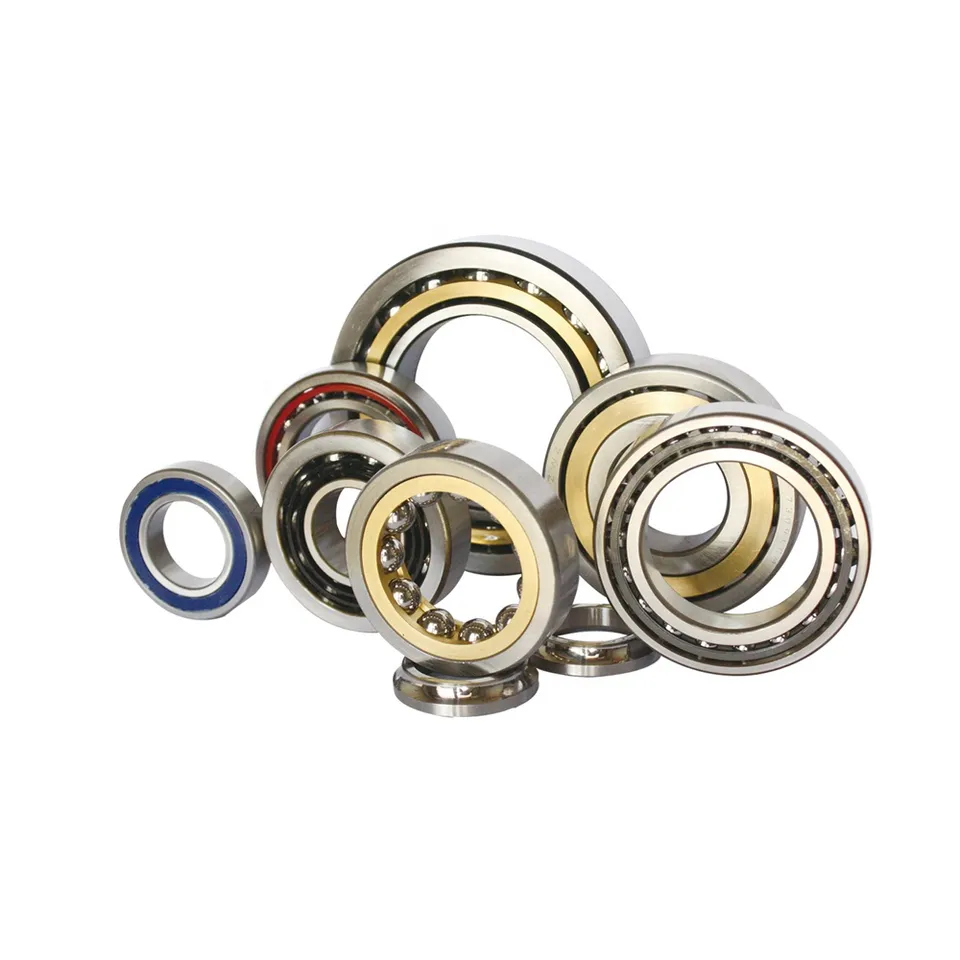
The most common high speed angular contact ball bearing contact angles are 15°, 25° and 40°. Each option has a different balance between speed, axial load capacity and rigidity.
| Contact Angle | Load Capacity Priority | Speed Suitability | Typical Applications |
15° | Higher radial load, moderate axial load | Very high speed | CNC spindles, high-speed motors, precision machine tools |
25° | Balanced radial and axial load | Medium to high speed | Gearboxes, pumps, robotics, automation equipment |
40° | Higher axial load capacity | Lower to medium speed | Screw drives, vertical shafts, heavy thrust applications, industrial equipment |
A 15° bearing is usually selected when speed and low heat generation are more important. A 40° bearing is selected when axial thrust capacity is the priority.
For many industrial applications where load direction is mixed and speed is moderate, a 25° contact angle can be a practical balanced option.
How Contact Angle Affects Bearing Performance
1. Axial Load Capacity
A larger contact angle allows the bearing to support higher axial load. This is one of the main reasons engineers choose angular contact ball bearings instead of standard deep groove ball bearings.
For example, a 40° angular contact bearing can carry more thrust load than a 15° bearing of the same size. This makes 40° bearings more suitable for applications with strong axial forces, such as screw drives, pumps and heavy-duty rotating assemblies.
2. Operating Speed
A smaller contact angle generally allows higher operating speed. Bearings with a 15° contact angle create less sliding friction and less heat during rotation.
This is why high-speed spindle bearings often use 15° contact angles together with high precision grades, optimized cage materials and special lubrication systems.
If a bearing with too large a contact angle is used in a high-speed spindle, it may run hotter, consume more energy and fail earlier.
3. Stiffness and Preload
Contact angle also affects bearing stiffness. In precision machinery, angular contact bearings are often installed with preload to remove internal clearance and improve shaft rigidity.
Preloaded bearing sets are common in CNC spindles, grinding machines, robotics and precision transmission systems.
However, preload must be carefully controlled. Excessive preload can increase temperature and reduce bearing life. Too little preload can cause vibration, poor accuracy and axial movement.
4. Heat Generation
Higher contact angles can increase friction under high-speed conditions. This can lead to higher operating temperature.
When selecting a bearing, the contact angle should be matched with speed, lubrication, preload and expected duty cycle. For continuous high-speed operation, heat control is especially important.
15° Angular Contact Ball Bearings: Best for High-Speed Applications
A 15° contact angle is commonly used in high-speed and precision applications.
Typical applications include:
CNC machine tool spindles
High-speed electric motors
Grinding machines
Precision rotary tables
Medical equipment
High-speed automation systems
The main advantage of a 15° angular contact bearing is lower friction and better speed performance. It is suitable when axial load is present but not extremely high.
Buyers should pay attention to precision grade, cage material, lubrication type and matched arrangement when sourcing 15° angular contact bearings.
For spindle applications, common requirements may include:
High precision grade such as P4 or ABEC 7
Controlled preload
Matched bearing sets
Low vibration
Stable running temperature
Oil-air or grease lubrication depending on speed
25° Angular Contact Ball Bearings: Balanced Load and Speed
A 25° contact angle provides a balance between axial load capacity and speed performance.
It is often used in equipment where both radial and axial loads are present, but neither extreme speed nor extreme thrust load is the only priority.
Typical applications include:
For many OEMs and maintenance teams, 25° bearings are a practical choice when the machine operates under mixed load conditions.
When purchasing 25° angular contact bearings, confirm the load ratio, speed, lubrication, installation space and whether the bearing needs to work as a single unit or in pairs.
40° Angular Contact Ball Bearings: Best for Higher Axial Load
A 40° contact angle is designed for stronger axial load support.
Typical applications include:
The advantage of a 40° bearing is its higher axial load capacity. However, it is usually not the best choice for extremely high-speed applications.
If used incorrectly in high-speed equipment, a 40° angular contact bearing may generate more heat and shorten service life.
Before selecting a 40° bearing, buyers should confirm:
Axial load direction
Axial load magnitude
Shaft speed
Lubrication method
Mounting arrangement
Required rigidity
Expected service life
Single Row vs Double Row Angular Contact Ball Bearings
Contact angle selection should also be considered together with bearing structure.
Single Row Angular Contact Ball Bearings
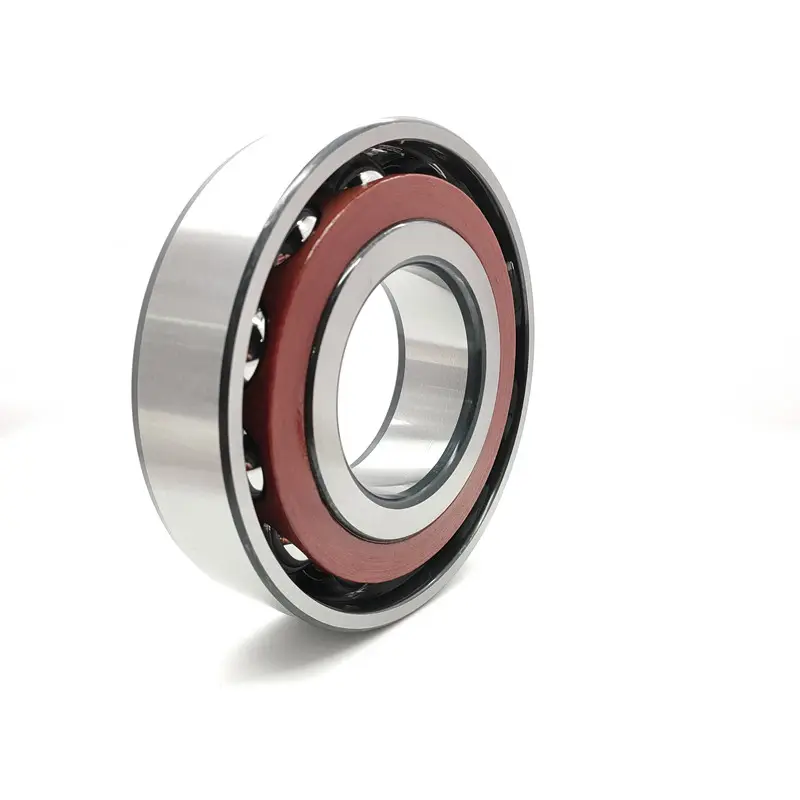
A single row angular contact ball bearing supports axial load in one direction only. If the application has axial load in both directions, single row bearings are usually installed in pairs.
Common arrangements include:
Back-to-back arrangement, also called DB
Face-to-face arrangement, also called DF
Tandem arrangement, also called DT
Single row angular contact bearings are widely used in precision spindles, motors, pumps and high-speed machinery.
Double Row Angular Contact Ball Bearings
A double row angular contact ball bearing can support axial loads in both directions within one compact unit.
It is often used when installation space is limited or when a simpler assembly is preferred.
Typical applications include:
Pumps
Gearboxes
Wheel hubs
Agricultural machinery
Industrial drive systems
For buyers, the key decision is whether the application needs the flexibility of matched single row bearings or the compact design of a double row bearing.
Back-to-Back, Face-to-Face and Tandem Arrangements
When single row angular contact ball bearings are used in pairs, mounting arrangement has a major influence on performance.
Arrangement | Load Direction | Main Advantage | Typical Use |
Back-to-back, DB | Axial load in both directions | High rigidity and moment load resistance | Machine tool spindles, precision shafts |
Face-to-face, DF | Axial load in both directions | Better misalignment tolerance | Pumps, gearboxes, general machinery |
Tandem, DT | Axial load in one direction | Higher axial load capacity in one direction | Screw drives, thrust-loaded shafts |
A back-to-back arrangement is often preferred when rigidity is important. A face-to-face arrangement can be useful when slight misalignment may occur. A tandem arrangement is used when axial load is mainly in one direction and higher load capacity is required.
How to Choose the Right Contact Angle
When selecting an angular contact ball bearing, do not choose based on contact angle alone. The correct choice depends on the whole operating condition.
Step 1: Confirm Load Direction
Identify whether the bearing mainly carries radial load, axial load, or combined load.
If the application has significant axial load, angular contact geometry is usually more suitable than a standard deep groove ball bearing.
Step 2: Check the Axial-to-Radial Load Ratio
If axial load is low and speed is high, a smaller contact angle may be better.
If axial load is high, a larger contact angle may be required.
As a general selection direction:
Choose 15° for high speed and moderate axial load
Choose 25° for balanced radial and axial load
Choose 40° for higher axial thrust load
Step 3: Confirm Operating Speed
Speed has a direct effect on heat generation and lubrication requirements.
High-speed applications usually require:
Step 4: Determine Precision Grade
Precision angular contact ball bearings are available in different tolerance grades.
Common industrial applications may use standard precision grades. CNC spindles and high-speed machine tools often require higher grades such as P4 or ABEC 7.
The higher the precision requirement, the more important it becomes to confirm runout, preload, vibration and matching accuracy.
Step 5: Choose the Mounting Arrangement
If axial load occurs in both directions, a single bearing may not be enough.
You may need:
Two single row bearings in DB arrangement
Two single row bearings in DF arrangement
Two or more bearings in tandem arrangement
A double row angular contact bearing
The mounting arrangement should be selected according to axial load direction, rigidity requirement and available space.
Step 6: Confirm Lubrication
Lubrication affects friction, heat, noise and service life.
Grease lubrication is common in many industrial machines. Oil lubrication, oil-air lubrication or oil-mist lubrication may be required for high-speed applications.
Always confirm whether the bearing will operate under continuous rotation, intermittent duty, high temperature, contamination or heavy load.
Common Selection Mistakes
Mistake 1: Using a 40° Bearing in a High-Speed Spindle
A 40° contact angle provides high axial load capacity, but it may generate more heat at high speed. For spindle applications, 15° bearings are usually more appropriate.
Mistake 2: Using a Single Row Bearing for Bidirectional Axial Load
A single row angular contact bearing supports axial load in only one direction. If the machine has axial load in both directions, the bearing must be paired or replaced with a double row design.
Mistake 3: Ignoring Preload
Incorrect preload can cause overheating, vibration or premature failure. Preload should be selected according to speed, rigidity, bearing size and application conditions.
Mistake 4: Replacing Deep Groove Bearings Without Checking Load Direction
Angular contact bearings are not always a direct replacement for deep groove ball bearings. Mounting direction, axial load direction and internal clearance must be considered.
Mistake 5: Choosing Only by Size
Two bearings with the same bore, outside diameter and width may perform very differently if their contact angle, cage, precision grade or preload class is different.
Maintenance Signs That the Contact Angle or Arrangement May Be Wrong
If an angular contact ball bearing is incorrectly selected or installed, problems may appear quickly in operation.
Common warning signs include:
If these symptoms appear, check whether the contact angle, preload, lubrication and mounting direction match the actual operating conditions.
Information to Provide When Requesting a Quote
To receive a correct angular contact ball bearing recommendation, buyers should provide more than just the bearing size.
Useful information includes:
Bearing model or existing part number
Bore diameter, outside diameter and width
Required contact angle, if known
Radial load and axial load
Rotational speed
Working temperature
Lubrication method
Precision grade requirement
Mounting arrangement
Application equipment
Quantity and delivery requirement
Brand preference or replacement brand
Providing this information helps the supplier recommend the right bearing and avoid wrong selection.
Angular Contact Ball Bearing Applications
Angular contact ball bearings are used in many industries where speed, axial load and precision must be balanced.
Common application fields include:
CNC Machine Tools
CNC spindles require high rotational accuracy, high speed and strong rigidity. Precision angular contact ball bearings with controlled preload are commonly used.
Pumps and Compressors
Pumps and compressors often generate axial thrust during operation. Angular contact bearings help support this thrust while maintaining shaft stability.
Gearboxes
Gearboxes require bearings that can support combined radial and axial loads. 25° or 40° angular contact bearings may be used depending on the load condition.
Robotics and Automation
Robotics applications need compact bearings with accurate motion control. Angular contact ball bearings can provide rigidity and bidirectional support when properly arranged.
Electric Motors
Some high-speed motors use angular contact bearings where axial positioning and speed stability are important.
Industrial Machinery
Angular contact bearings are also used in textile machinery, packaging equipment, printing machines, conveyor systems and other rotating equipment.
Sourcing Angular Contact Ball Bearings from LOC Bearing
LOC Bearing supplies angular contact ball bearings for industrial machinery, machine tools, pumps, gearboxes, motors and automation equipment.
Available options can include:
15°, 25° and 40° contact angles
Single row angular contact ball bearings
Double row angular contact ball bearings
Precision angular contact ball bearings
Matched bearing sets
Standard and custom configurations
Industrial replacement bearing solutions
For buyers who are unsure which contact angle to choose, our team can help review the application conditions and recommend a suitable bearing type, precision grade, preload and mounting arrangement.
If you need angular contact ball bearings for high-speed, high-precision or high-axial-load applications, contact LOC Bearing with your bearing model, operating speed, load condition and quantity requirement.
FAQ
What is the most common contact angle for angular contact ball bearings?
Common contact angles include 15°, 25° and 40°. A 15° contact angle is often used for high-speed precision applications. A 40° contact angle is commonly used when higher axial load capacity is required.
Is a larger contact angle always better?
No. A larger contact angle increases axial load capacity, but it may reduce speed capability and increase heat generation. The best contact angle depends on load, speed, lubrication and mounting arrangement.
Can angular contact ball bearings replace deep groove ball bearings?
Sometimes they can, but not always. Angular contact bearings have different load direction behavior and installation requirements. Single row angular contact bearings support axial load in one direction only, so replacement should be checked carefully.
What contact angle is best for CNC spindle bearings?
Many high-speed CNC spindle applications use 15° angular contact ball bearings because they provide lower friction and better speed performance. However, the final choice depends on spindle speed, load, preload and precision requirement.
When should I choose a 40° angular contact ball bearing?
Choose a 40° contact angle when the application has higher axial thrust load and moderate speed. It is commonly used in screw drives, pumps, vertical shafts and heavy-duty machinery.
Do angular contact ball bearings need preload?
Many precision angular contact bearings use preload to improve rigidity and reduce axial play. However, preload must be selected correctly. Too much preload can cause overheating and early failure.
What is the difference between single row and double row angular contact ball bearings?
A single row angular contact bearing supports axial load in one direction and is often used in pairs. A double row angular contact bearing can support axial load in both directions in one compact unit.
What information should I send to a supplier before buying angular contact bearings?
Send the bearing model, size, speed, radial load, axial load, application, precision grade, lubrication method, mounting arrangement and required quantity. This helps the supplier recommend the correct bearing.

 English


