+86-15996058266
Home / Products / Loctite Adhesive / Yellow Multi-Material Structural Adhesive

Product Catalog

loading

Share to:
facebook sharing button
twitter sharing button
line sharing button
wechat sharing button
linkedin sharing button
pinterest sharing button
whatsapp sharing button
sharethis sharing button

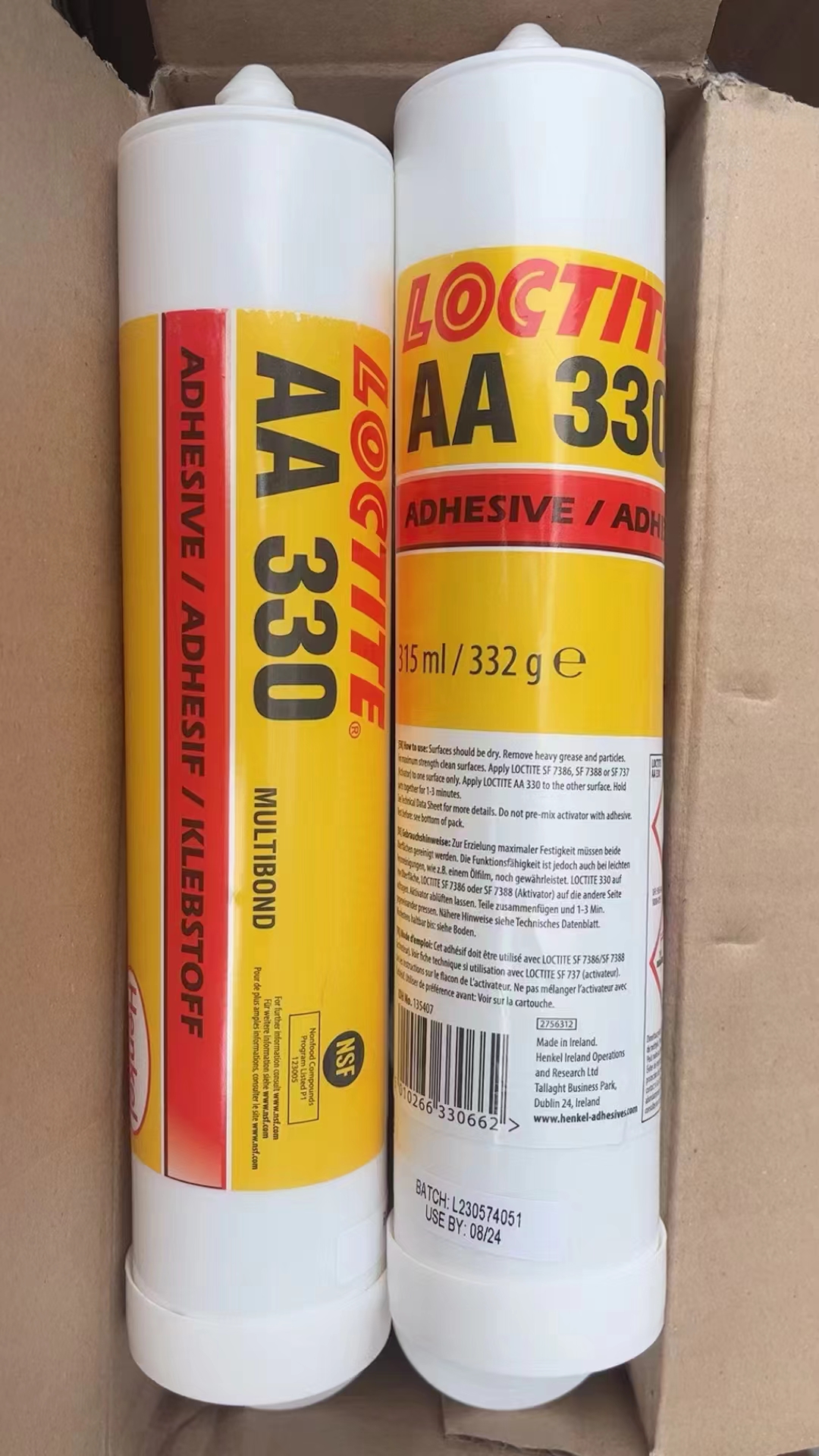
Yellow Multi-Material Structural Adhesive

LOCTITE® AA 330 IS A NO-MIX, PALE-YELLOW, GENERAL PURPOSE STRUCTURAL BONDER. IT'S A MEDIUM TO HIGH VISCOSITY PRODUCT WITH GOOD IMPACT RESISTANCE & A SERVICE TEMPERATURE RANGE UP TO +100°C. IT REQUIRES AN ACTIVATOR SUCH AS LOCTITE SF 7386 OR SF 7387.
  • loctiter AA330

  • loctiter

  • 3506990000

  • Anaerobic adhesive

  • DIN, GB, ISO, JIS

  • Barreled, bagged, boxed, palletized or as customers' requirement

  • OEM service provided

  • 8-15 days, depends on quantity needed

Availability:
Quantity:


Brief Introduction


LOCTITE AA 330 structural adhesive represents a breakthrough in single-component bonding technology, engineered for professionals requiring reliable adhesion across dissimilar substrates without complex mixing procedures. This acrylic-based bonding solution excels in applications demanding permanent joints between metals, polymers, composites, and wood materials. The formulation combines rapid-cure chemistry with activator-triggered polymerization, enabling high-strength bonds that resist mechanical stress, environmental exposure, and thermal cycling.

Distinguished by its pale-yellow appearance and controlled viscosity profile, this no-mix adhesive eliminates common application challenges associated with two-part systems, including ratio errors, pot life limitations, and mixing equipment requirements. When paired with compatible activators such as LOCTITE SF 7387 or SF 7386, the adhesive develops exceptional shear strength and impact resistance within minutes. Industries worldwide rely on E-ASIA BEARING as a trusted supplier of premium adhesive solutions, including LOCTITE products that meet stringent performance standards for industrial assembly, maintenance operations, and precision manufacturing applications.


Yellow Multi-Material Structural Adhesive


Parameter

Condition

Material

Value

Unit

Working temperature

-

-

-55 to +100

°C

Color

-

-

Amber

-

Time to full strength

Gap 0.05mm, 22°C

Steel

24

hours

Gap 0.05mm, 22°C

Aluminum

24

hours

Time to initial strength

Gap 0.05mm, 22°C

Steel

2.5

minutes

Gap 0.05mm, 22°C

Aluminum

8

minutes

Lap shear strength (ISO 4587)

24h@22°C, activator 7387TM (one side)

Mild steel (sandblasted)

15-30

N/mm²

24h@22°C, activators 7387TM/7386TM (both sides)

Soft steel (sandblasted)

216.5

N/mm²

Tensile strength (ISO 6922)

24h@22°C, activator 7387TM (one side)

Soft steel (sandblasted)

12-22

N/mm²

Viscosity

25°C

Activator LOCTITE 7388

1.5

mPas (cP)

Fixed time (ISO 4587)

LOCTITE 330 covered by PVC, activator 7388 (one side)

-

65-105

seconds

Shear strength (ISO 4587)

24h@22°C, activator 7388 (one side), Gap 0mm

Steel (shot peened)

17

N/mm²

24h@22°C, activator 7388 (one side), Gap 0.5mm

Steel (shot peened)

7

N/mm²


Performance Characteristics and Advantages

Simplified Single-Component Application System

The LOCTITE AA 330 adhesive eliminates traditional two-part mixing requirements through its activator-triggered curing mechanism. Users apply adhesive to one substrate and activator to the mating surface, then assemble components immediately. This process reduces material waste, prevents mixing errors, and eliminates concerns about working time limitations. Manufacturing facilities benefit from streamlined production workflows, reduced training requirements, and consistent bond quality across operators with varying skill levels. The system proves particularly valuable in high-volume assembly operations where speed and repeatability drive productivity.

Superior Mechanical Performance Under Stress

Formulated to withstand dynamic loading conditions, this structural bonding adhesive maintains integrity when exposed to vibration, impact, and cyclical stress. The cured polymer matrix distributes forces across bonded areas, preventing stress concentration points that initiate failure in rigid adhesives. Testing demonstrates exceptional peel resistance and shear strength retention even after prolonged exposure to mechanical cycling. Applications involving rotating machinery, transportation equipment, and hand tools benefit from this durability, reducing warranty claims and maintenance costs associated with bond failures.

Broad Substrate Compatibility Matrix

The adhesive chemistry bonds effectively to metals including steel, stainless steel, aluminum, brass, and copper without primers. It also adheres to engineering plastics (ABS, polycarbonate, PVC, acrylic), thermosets (phenolics, epoxy laminates), wood species (hardwoods, softwoods, plywood), ceramics, and glass. This multi-substrate adhesive capability consolidates inventory requirements, allowing facilities to stock one product serving multiple bonding applications. Chemical adhesion mechanisms ensure bonds remain stable across temperature ranges and humidity conditions typical of industrial environments.

Activator-Controlled Cure Speed Optimization

Pairing LOCTITE AA 330 with specific activators enables cure time customization matching production requirements. LOCTITE SF 7387 provides rapid fixture strength (3-5 minutes), suitable for fast-paced assembly lines requiring quick part handling. Alternative activators offer extended working time for complex assemblies or large components requiring precise positioning before cure initiation. This flexibility accommodates diverse manufacturing scenarios without compromising final bond strength or environmental resistance properties.

Environmental and Chemical Resistance Properties

Cured bonds withstand exposure to water, humidity, mild acids, alkalis, and common industrial solvents including alcohols, ketones, and aliphatic hydrocarbons. The polymer network resists degradation from ultraviolet radiation, making it suitable for outdoor applications or assemblies near windows and skylights. Temperature stability from -55°C to +120°C covers most industrial operating conditions, including cold storage facilities, automotive under-hood applications, and heated manufacturing environments. Learn more about adhesive solutions through our comprehensive support resources.

Industrial Application Scenarios

Precision Manufacturing and Assembly Operations

LOCTITE AA 330 structural adhesive serves critical functions in electronics manufacturing, bonding circuit board components, securing sensors to housings, and attaching display panels to metal frames. The controlled viscosity prevents adhesive migration onto sensitive electronic contacts or optical surfaces. Medical device assembly facilities utilize this adhesive for joining metal components to plastic housings in diagnostic equipment, surgical instruments, and patient monitoring devices. The adhesive meets cleanliness requirements for medical applications and provides bonds withstanding repeated sterilization cycles. Explore our full range of industrial solutions.

Automotive and Transportation Component Production

Vehicle manufacturers and tier suppliers employ this acrylic bonding adhesive for interior trim assembly, dashboard component attachment, and decorative badge mounting. The adhesive bonds dissimilar materials common in modern vehicles—aluminum body panels to plastic trim, steel brackets to composite interior panels, and chrome-plated emblems to painted surfaces. Its vibration resistance ensures bonds remain intact throughout vehicle service life despite constant road-induced stress. Aftermarket repair facilities use the same product for collision repair operations, reattaching trim pieces, mirrors, and decorative elements damaged in accidents.

Furniture Manufacturing and Woodworking Industries

Commercial furniture producers utilize LOCTITE AA 330 for wood-to-wood joints in office furniture, retail displays, and institutional seating. The adhesive creates invisible bond lines preserving aesthetic appearance while providing strength exceeding mechanical fasteners in many configurations. It bonds wood to metal in adjustable-height desks, conference tables, and storage systems where mixed-material construction offers design flexibility. The adhesive's gap-filling properties accommodate natural wood dimensional variations and surface irregularities common in solid wood components.

Maintenance, Repair, and Overhaul Services

Industrial maintenance teams stock this no-mix structural adhesive for emergency repairs to production equipment, material handling systems, and facility infrastructure. Typical repairs include reattaching broken mounting brackets, bonding cracked plastic guards, securing loose metal panels, and reinforcing damaged wooden structures. The rapid cure enables equipment return-to-service within hours rather than days required for welding or mechanical fastening alternatives. The adhesive proves particularly valuable in food processing plants, pharmaceutical facilities, and clean rooms where hot work permits and metal particulates present contamination risks.

Consumer Product Assembly and Packaging

Manufacturers of appliances, sporting goods, toys, and consumer electronics integrate LOCTITE AA 330 into assembly processes for products requiring permanent, aesthetically clean joints. Applications include attaching plastic bezels to metal appliance bodies, bonding rubber grips to metal tool handles, securing wooden handles to metal kitchenware, and assembling multi-material sporting goods equipment. The adhesive's resistance to cleaning chemicals and repeated handling ensures product durability meeting consumer expectations for quality and longevity.

Material Chemistry and Application Technology

Acrylic Ester Polymer Foundation

The adhesive formulation centers on methyl methacrylate and ethyl acrylate monomers that polymerize upon contact with activator compounds. The monomer blend ratio controls final polymer properties including flexibility, strength, and environmental resistance. Polymerization occurs through free-radical chain reaction mechanisms initiated by activator chemistry, creating cross-linked three-dimensional polymer networks. This curing mechanism differs fundamentally from moisture-cure, heat-cure, or UV-cure systems, offering unique advantages in gap filling, substrate wetting, and final bond ductility.

Activator Chemistry and Interaction Mechanisms

Compatible activators contain amine compounds or transition metal complexes that generate free radicals when contacted by adhesive monomers. These radicals initiate rapid polymerization beginning at the substrate interface and propagating through the adhesive layer. Activator selection influences cure speed, final bond strength, and temperature resistance. LOCTITE SF 7387 contains higher activator concentrations for fast assembly operations, while SF 7386 provides slower cure enabling longer positioning time for complex assemblies. Proper activator pairing ensures optimal adhesive performance across varying application requirements.

Rheology and Application Flow Characteristics

The adhesive viscosity range (5,000-15,000 mPa·s) balances conflicting requirements: sufficient flow to wet substrate surfaces and fill microscopic irregularities, yet adequate body to prevent gravitational sagging on vertical surfaces or dripping during application. Thixotropic additives provide shear-thinning behavior—viscosity decreases under application stress (dispensing through nozzles or spreading with applicators) but recovers when stress removes, maintaining position before cure. This rheological profile enables dispensing through automated equipment while supporting manual application using spatulas, brushes, or syringes.

Bond Formation and Strength Development

Adhesion to substrates occurs through multiple mechanisms depending on material type. Metals bond via chemical interaction between adhesive functional groups and metal oxide layers naturally present on surfaces. Plastics bond through molecular interdiffusion where monomer molecules penetrate polymer surface layers before polymerizing. Porous substrates like wood bond through mechanical interlocking as adhesive penetrates surface irregularities plus chemical bonding to cellulose molecules. Cohesive strength develops as polymerization creates long-chain molecules that entangle and cross-link, transforming liquid adhesive into solid polymer distributing applied forces across bonded areas.

Application Guidelines and Best Practices

Surface Preparation Protocols

Achieve optimal bond strength through proper surface preparation. Remove oils, greases, release agents, and corrosion products using appropriate solvents—isopropanol for light contamination, acetone for heavier soils, or specialized degreasers for industrial oils. Mechanically abrading surfaces using sandpaper (120-180 grit), wire brushes, or abrasive pads increases surface area and removes weak boundary layers, particularly important for metals and dense plastics. Clean abraded surfaces again with solvent to remove generated particles. Ensure complete solvent evaporation before applying adhesive or activator. E-ASIA BEARING provides comprehensive technical guidance for surface preparation across various substrate types.

Optimized Application Techniques

Apply LOCTITE AA 330 adhesive to one bonding surface in a thin, uniform layer using suitable dispensing equipment—syringe applicators for small components, brush application for moderate areas, or automated dispensing systems for high-volume production. Apply activator spray or liquid to the mating surface, ensuring complete coverage without excessive pooling. Assemble components within 10 seconds of activator application for maximum bond strength. Apply sufficient clamping pressure (0.3-0.7 MPa) to establish intimate surface contact while allowing excess adhesive to squeeze from bond lines. Maintain clamping for minimum fixture time before handling parts.

Curing Condition Management

Room temperature curing (15-25°C) provides adequate strength for most applications within 24 hours. Elevated temperature post-cure (40-60°C for 1-2 hours) accelerates full strength development and improves environmental resistance, beneficial for bonds exposed to harsh service conditions. Low-temperature environments (below 10°C) significantly extend cure times and may reduce ultimate bond strength—consider warming components or workspaces to 20°C minimum for critical applications. Humidity levels between 40-70% relative humidity optimize cure, while extremely dry conditions may slow activator effectiveness.

Safety and Handling Procedures

Wear nitrile or butyl rubber gloves when handling adhesive and activators—skin contact may cause irritation or sensitization reactions. Ensure adequate ventilation (10+ air changes per hour) in work areas to prevent accumulation of volatile organic compounds released during application and cure. Wear safety glasses to protect against accidental splashes during dispensing operations. Store products in sealed containers at temperatures between 8-21°C away from direct sunlight and heat sources. Separate adhesive and activator storage locations to prevent accidental mixing or cross-contamination. Consult safety data sheets for complete handling, storage, and disposal information. Our sustainability commitment extends to safe handling of all chemical products.

Comparison: LOCTITE AA 330 vs. Alternative Adhesive Technologies

Acrylic Structural Adhesives vs. Epoxy Adhesives

While two-part epoxy adhesives offer higher ultimate strength and chemical resistance, LOCTITE AA 330 acrylic adhesive provides faster cure times, simpler application, and superior impact resistance. Epoxies require precise ratio mixing and have limited working time, whereas the activator-cure system offers indefinite working time with instant cure upon assembly. Acrylics bond effectively to plastics without primers typically required for epoxies. Cost considerations often favor acrylics for applications where epoxy's extreme strength proves unnecessary.

Structural Adhesives vs. Cyanoacrylate "Super Glues"

Cyanoacrylate adhesives cure rapidly and require no activators but exhibit brittleness under impact and poor gap-filling properties. LOCTITE AA 330 offers superior flexibility, vibration resistance, and ability to bond rough or poorly fitted surfaces. Cyanoacrylates perform poorly on acidic substrates (including some woods) and porous materials, whereas acrylic structural adhesives handle these materials effectively. For production environments requiring consistent performance across material variations, acrylic structural adhesives prove more reliable than cyanoacrylates.

No-Mix Systems vs. Traditional Two-Part Adhesives

Conventional two-part adhesives (epoxy, polyurethane, acrylic) require volumetric or gravimetric mixing, introducing potential for ratio errors that compromise performance. The LOCTITE AA 330 activator system eliminates mixing entirely, reducing application errors, material waste, and labor costs. Two-part systems have fixed pot life limiting usable working time, while activator-cure systems provide unlimited open time until substrates contact. For intermittent production or repair applications where mixed adhesive spoilage causes waste, activator-cure systems offer economic advantages.

Structural Adhesives vs. Mechanical Fasteners

Mechanical fasteners (screws, rivets, bolts) create stress concentrations, require material thickness for thread engagement, and add weight to assemblies. Structural adhesives distribute loads uniformly, bond thin materials effectively, and eliminate visible fastener heads improving aesthetics. Adhesive bonds seal joints against moisture and contaminant ingress, whereas mechanical fasteners create potential leak paths. However, adhesive bonds resist disassembly, making them unsuitable for serviceable joints where mechanical fasteners excel. Design engineers select bonding method based on functional requirements, aesthetics, and serviceability needs.

Frequently Asked Questions

What thickness gap can LOCTITE AA 330 effectively fill?

This structural adhesive performs optimally in bond lines between 0.05-0.25 mm (0.002-0.010 inches). Thinner gaps provide maximum strength through optimal adhesive-substrate interaction. Gaps exceeding 0.5 mm may reduce strength and extend cure times due to limited activator penetration. For applications with larger gaps, consider alternative products specifically formulated for gap-filling applications or redesign joint geometry to reduce gap dimensions.

How do environmental conditions affect bond performance?

Cured LOCTITE AA 330 withstands continuous exposure to temperatures from -55°C to +120°C without strength degradation. Brief excursions to 150°C cause minimal permanent strength loss. Humidity exposure up to 95% relative humidity does not affect cured bonds. Prolonged immersion in water or exposure to steam may gradually reduce strength over months. Chemical resistance covers most industrial fluids; however, concentrated acids, bases above pH 12, and chlorinated solvents may attack the polymer. Test specific exposure conditions when critical.

Can I accelerate cure time beyond activator-specified rates?

Applying heat (40-60°C) after initial fixture accelerates full cure development and improves final properties. However, heating before achieving initial fixture time may cause adhesive flow from bond lines before polymerization locks material in place. Increasing activator quantity beyond recommended amounts does not proportionally accelerate cure and may weaken final bonds through excessive reaction heat or incomplete polymerization. Follow recommended activator application procedures for consistent, predictable results.

What preparation do I need for bonding plastic materials?

Most engineering plastics bond successfully after solvent cleaning to remove mold release agents, oils, and handling contamination. Difficult plastics including polyethylene, polypropylene, PTFE, and silicone rubber require surface treatment (corona discharge, plasma, or flame treatment) to create bondable surfaces, or use specialized primers designed for low-surface-energy plastics. When plastic type identification is uncertain, test bond on scrap material before committing to production assemblies. Consult technical resources for specific plastic bonding recommendations.

How does E-ASIA BEARING support adhesive product customers?

E-ASIA BEARING provides comprehensive technical support including application engineering assistance, product selection guidance, and troubleshooting services. Our experienced team helps optimize bonding processes for specific manufacturing requirements. We maintain substantial inventory ensuring rapid delivery of LOCTITE products and compatible activators. Technical training programs educate customer teams on proper application techniques, safety procedures, and quality control methods. Our global logistics network supports customers worldwide with localized inventory and technical resources.

Why Partner with E-ASIA BEARING

Extensive Industrial Adhesive Portfolio

Beyond LOCTITE structural adhesives, E-ASIA BEARING supplies comprehensive bonding solutions including threadlockers, sealants, surface treatments, and specialty adhesives serving diverse manufacturing sectors. Our technical specialists assist in selecting optimal products for specific applications, considering performance requirements, cost parameters, and process constraints. Single-source supply simplifies procurement, reduces administrative overhead, and ensures product compatibility across adhesive technologies.

Technical Expertise and Application Support

Our engineering team possesses deep knowledge in adhesive science, material compatibility, and manufacturing processes. We provide application development services including bond testing, process optimization, and failure analysis. Training programs educate customer teams on adhesive technology fundamentals, proper application techniques, and troubleshooting methodologies. This expertise accelerates successful adhesive integration into manufacturing operations while minimizing trial-and-error costs.

Competitive Pricing and Supply Chain Reliability

Strategic supplier relationships and efficient distribution networks enable competitive pricing without compromising product authenticity or quality. Volume discounts accommodate large-scale manufacturing operations while sample quantities support prototype development and testing. Consistent product availability from strategically located warehouses ensures uninterrupted production schedules. Our commitment to supply chain excellence minimizes your inventory carrying costs while guaranteeing material availability when needed.

Global Service Network with Local Support

E-ASIA BEARING operates an international distribution infrastructure supporting customers across continents. Regional technical representatives provide localized support in native languages, understanding regional manufacturing practices and regulatory requirements. Express shipping options accommodate urgent requirements, while consolidated shipments optimize costs for routine replenishment orders. This global-local approach combines multinational resources with personalized regional service.

Quality Assurance and Product Authenticity

All LOCTITE products supplied by E-ASIA BEARING come from authorized distribution channels with full manufacturer warranties and certifications. Lot-specific documentation including certificates of analysis, safety data sheets, and technical data sheets accompany shipments. Our quality management systems ensure proper product storage, handling, and shipping conditions maintaining material integrity from manufacturer to end-user. This attention to quality protects customers from counterfeit products or degraded materials that compromise manufacturing operations.

Previous: 
Next: 
Inquiry
60 years history from foundation, E-ASIA bearings have obtained SLYB, JSS brands.
Contact Us
  NO.88, E-ASIA building 1-6 floor, Jingjiang industries park, jiangsu province, china
  sales@zwz-skf.com
  +86-15996058266
  rachelsun168

Products

Quick Links

Copyright © 2025 E-ASIA Bearing Co.,Ltd.  Sitemap Supported By Leadong  苏ICP备2025208765号-1