Brief Introduction
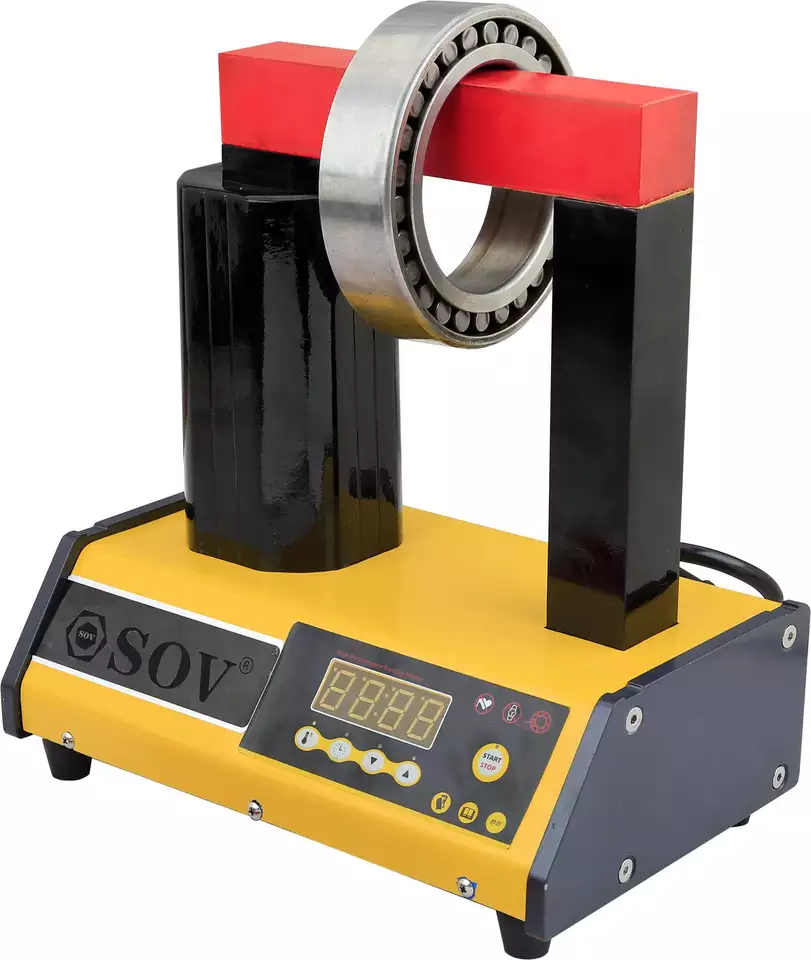
The Electromagnetic Portable Bearing Heater represents a breakthrough in industrial heating technology for bearing installation and metal component assembly. This advanced induction bearing heater utilizes electromagnetic induction principles to heat bearings, gears, bushings, and other metal workpieces safely and efficiently. Unlike conventional heating methods such as flame torches, oil baths, or hot plates, this portable bearing heater delivers controlled, uniform heating without producing harmful emissions, smoke, or workpiece distortion.
Engineered for professionals in manufacturing, maintenance, and repair facilities, this bearing heating equipment combines portability with precision. Its lightweight construction allows technicians to transport the unit across different work zones, while intelligent features like automatic demagnetization, digital temperature display, and over-heat protection ensure consistent results. Whether assembling precision bearings in automotive plants, installing gears in industrial gearboxes, or conducting maintenance in mining operations, this heater streamlines workflows and reduces component damage risks.
At E-ASIA Bearing, we understand the critical role proper bearing installation plays in equipment longevity. Our 60 years of bearing industry experience inform our selection of premium heating equipment that meets the demanding standards of modern manufacturing and maintenance operations.
Key Features and Benefits
Advanced Electromagnetic Induction Heating Technology
The core advantage of this electromagnetic bearing heater lies in its induction heating mechanism. Traditional heating methods apply heat externally, creating temperature gradients that risk bearing distortion or lubricant degradation. Electromagnetic induction generates heat directly within the metal workpiece through induced electrical currents, ensuring uniform temperature distribution from core to surface. This technology preserves pre-applied lubricants in sealed bearings and maintains dimensional accuracy in precision components.
For facilities handling high-value bearings or tight-tolerance assemblies, this heating method prevents costly rework. The even heat distribution eliminates hot spots that cause localized expansion, ensuring workpieces fit properly without force.
Dual Heating Control Modes
Operational flexibility defines this industrial bearing heater. The constant temperature mode maintains a preset temperature throughout the heating cycle—ideal for applications requiring precise thermal expansion calculations. Operators working with bearing installation standards can set exact temperatures (e.g., 80°C, 100°C) and let the heater maintain that level until the workpiece reaches thermal equilibrium.
The timing heating mode serves high-volume production environments. Technicians determine the optimal heating duration for a specific bearing type, then program that time. Subsequent identical bearings receive consistent heating, reducing setup time and ensuring repeatability across production runs. This feature proves invaluable in assembly lines where multiple bearings require sequential installation.
Integrated Automatic Demagnetization System
A critical yet often-overlooked aspect of bearing heating involves residual magnetism. When bearings are heated electromagnetically, they can retain magnetic properties that attract ferrous debris during operation—accelerating wear and reducing service life. Our bearing induction heater incorporates automatic demagnetization that activates post-heating, neutralizing residual magnetism before installation.
This feature particularly benefits sealed bearings and precision applications where contamination control is paramount. By eliminating magnetic attraction, the heater ensures bearings perform as designed throughout their expected lifespan. Learn more about bearing quality standards at our Corporate Information page.
Portable and Workshop-Ready Construction
Industrial environments demand rugged equipment. This portable induction heater for bearings features a reinforced chassis with anti-vibration feet, protecting internal components from workshop impacts. The carrying handle design distributes weight evenly, allowing single-person transport between workstations.
Weighing approximately 15kg, the unit balances portability with stability. Unlike bulky stationary heaters requiring dedicated floor space, this model stores easily on workshop shelves or in maintenance vehicles. Field service technicians working at customer sites appreciate the compact form factor that fits standard tool cases.
Intuitive Digital Control Interface
User-friendly operation accelerates training and reduces errors. The digital LED display presents real-time temperature readings and countdown timers in clear numerals visible from several meters. Tactile buttons for temperature adjustment, mode selection, and start/stop functions provide positive feedback, even when wearing work gloves.
The interface includes visual indicators for heating status, demagnetization progress, and fault conditions. When over-heat protection activates or workpiece weight exceeds limits, specific error codes guide troubleshooting. This transparency reduces downtime and helps operators develop best practices.
Bearing Assembly and Installation
The primary application for this electromagnetic bearing heater involves bearing installation across multiple bearing types. Deep groove ball bearings, cylindrical roller bearings, spherical roller bearings, and tapered roller bearings all benefit from thermal expansion installation. By heating bearings to controlled temperatures (typically 80-100°C), inner races expand sufficiently to slide onto shafts without interference.
This method prevents bearing damage common with press-fitting or hammer installation. Raceways remain smooth, rolling elements maintain proper geometry, and seals stay intact. Automotive repair shops use these heaters for wheel bearing replacement, while manufacturing plants rely on them for motor bearing assembly. Explore our comprehensive bearing solutions at our Industries page.
Gear and Sprocket Heating
Gear heating for interference fitting represents another critical application. Transmission assemblies, gearbox maintenance, and power transmission systems frequently require gears to be mounted with tight tolerances. Heating gears uniformly expands their bore diameter, enabling easy shaft installation without damaging gear teeth or case hardening.
Sprocket assemblies in conveyor systems and chain drives similarly benefit. The heater accommodates sprocket sizes from small industrial chains to large agricultural machinery drives, provided they fall within weight limits.
Bushing and Sleeve Installation
Bushings, shaft sleeves, and coupling hubs often require interference fits to prevent rotation or axial movement during operation. This induction heating equipment heats these components to precise temperatures, ensuring proper thermal expansion without overshooting dimensions. Bronze bushings, steel sleeves, and cast iron hubs all respond well to electromagnetic heating.
Manufacturing processes for pumps, compressors, and industrial motors regularly incorporate this heating method. The clean, flameless process suits environments where open flames pose safety risks or contamination concerns.
Maintenance and Disassembly Operations
Beyond assembly, this heater facilitates maintenance tasks. Seized bearings that resist traditional removal methods often release when heated. The uniform heating reduces the risk of shaft damage during bearing extraction—critical when shaft replacement costs far exceed bearing costs.
Maintenance teams at mining operations, steel mills, and paper plants keep these heaters in their core toolkits. The ability to remove and install bearings on-site minimizes equipment downtime, directly impacting production efficiency. Visit our Support section for maintenance resources.
Material Compatibility and Heating Process
This electromagnetic induction bearing heater works with ferromagnetic materials—steel, iron, and their alloys. Most industrial bearings use chromium steel (GCr15/52100) or stainless steel, both highly responsive to induction heating. Carbon steel bushings, alloy steel gears, and cast iron components also heat effectively.
Non-ferrous metals like aluminum, brass, and bronze respond poorly to electromagnetic induction due to low magnetic permeability. For these materials, alternative heating methods are required.
Heating Process Best Practices
Proper heating technique maximizes results:
Workpiece Preparation: Clean the bearing or component, removing preservative oils that might smoke during heating. Ensure the yoke (heating rod) matches the workpiece inner diameter.
Temperature Selection: For standard bearing installation, set 80-100°C. Larger interference fits may require up to 120°C, but never exceed this to protect lubricants and seals.
Heating Cycle: Place the workpiece on the yoke, ensuring stable contact. Activate heating and monitor the display. Most bearings reach target temperature within 3-8 minutes depending on size.
Installation Window: Once heated, work quickly. Bearings cool rapidly—installation should occur within 2-3 minutes to maintain adequate expansion.
Demagnetization: Allow automatic demagnetization to complete before removing the workpiece. This typically takes 30-60 seconds.
Precautions
Yoke Installation: Never operate without the correct yoke (heating rod). Wrong or missing yokes damage the heater and cause uneven heating.
Probe Care: In temperature control mode, attach the magnetic probe to the workpiece’s inner race. Do not leave the probe on heated surfaces—this shortens its lifespan.
Protective Gear: Wear heat-resistant asbestos gloves when handling heated workpieces to avoid burns. Safety goggles protect against debris.
Weight Limit: Do not heat workpieces exceeding the heater’s weight capacity (typically under 12kg). Overloading causes overheating and equipment failure.
Ventilation: Use in well-ventilated areas to disperse heat—though it produces no smoke or waste (unlike traditional methods).
Material Compatibility and Heating Process
Compatible Materials
This electromagnetic induction bearing heater works with ferromagnetic materials—steel, iron, and their alloys. Most industrial bearings use chromium steel (GCr15/52100) or stainless steel, both highly responsive to induction heating. Carbon steel bushings, alloy steel gears, and cast iron components also heat effectively.
Non-ferrous metals like aluminum, brass, and bronze respond poorly to electromagnetic induction due to low magnetic permeability. For these materials, alternative heating methods are required.
Heating Process Best Practices
Proper heating technique maximizes results:
Workpiece Preparation: Clean the bearing or component, removing preservative oils that might smoke during heating. Ensure the yoke (heating rod) matches the workpiece inner diameter.
Temperature Selection: For standard bearing installation, set 80-100°C. Larger interference fits may require up to 120°C, but never exceed this to protect lubricants and seals.
Heating Cycle: Place the workpiece on the yoke, ensuring stable contact. Activate heating and monitor the display. Most bearings reach target temperature within 3-8 minutes depending on size.
Installation Window: Once heated, work quickly. Bearings cool rapidly—installation should occur within 2-3 minutes to maintain adequate expansion.
Demagnetization: Allow automatic demagnetization to complete before removing the workpiece. This typically takes 30-60 seconds.
Comparison with Traditional Heating Methods
Versus Flame Heating (Torch/Burner)
Traditional flame heating poses multiple risks: uneven heating creates hot spots, open flames hazard flammable materials, and operator skill significantly affects results. The electromagnetic heater eliminates these variables, providing consistent heating regardless of operator experience. Workshops transitioning from torch heating report reduced bearing damage and improved first-time installation success rates.
Versus Oil Bath Heating
Oil baths heat bearings uniformly but create disposal, fire hazard, and cleanliness issues. Heated oil coats bearings, requiring post-heating cleaning that risks contamination. The electromagnetic method produces no waste, requires no consumables, and delivers bearings ready for immediate installation—streamlining workflows in clean manufacturing environments.
Versus Hot Plate Heating
Hot plates heat slowly and unevenly, with bottom surfaces heating faster than tops. This gradient risks dimensional variations. Electromagnetic induction heats the entire workpiece simultaneously, ensuring uniform expansion essential for precision fits.
Safety Guidelines and Precautions
Yoke Selection and Installation
Critical: Always install the correct yoke (heating arm) for your workpiece diameter. Operating without a yoke or with an incorrectly sized yoke damages the heater's induction coil and creates uneven heating patterns. Most units include multiple yoke sizes—verify compatibility before each use.
Temperature Probe Handling
When using constant temperature mode, attach the magnetic temperature probe to the workpiece's inner race or bore surface. Position it securely to ensure accurate readings. After heating completes, remove the probe immediately—leaving it on hot surfaces degrades the sensor, reducing measurement accuracy over time.
Personal Protective Equipment
Despite the clean heating process, workpieces reach temperatures causing severe burns. Always wear heat-resistant gloves (leather or aramid fiber) when handling heated components. Safety glasses protect against rare instances of scale or debris dislodging during temperature changes.
Weight Capacity Compliance
Each heater model specifies maximum workpiece weight (commonly 12kg). Exceeding this limit overloads the heating system, causing extended heating times, over-temperature faults, or component failure. Weigh large bearings or gears before heating. For components exceeding capacity, consider larger heater models or alternative methods.
Electrical Safety
Connect the heater only to grounded outlets matching the unit's voltage rating (110V or 220V). Inspect power cords for damage before each use. If operating in wet environments, ensure the heater and connections remain dry—water contact creates electrical hazards.
Work Environment Considerations
While electromagnetic heating produces no smoke or fumes, workpieces radiate heat into surrounding air. Use in ventilated areas to prevent heat accumulation. Keep flammable materials at least 1 meter from the heater during operation.
Frequently Asked Questions
Q1: What is the recommended maximum temperature for heating pre-lubricated bearings?
A: Pre-lubricated sealed bearings should not exceed 120°C to preserve grease consistency and seal integrity. Most bearing manufacturers recommend 80-100°C for standard installations. Our heater includes over-heat protection that automatically stops heating at 120°C, preventing lubricant breakdown. For specialized bearings with temperature-sensitive seals, consult bearing specifications before heating.
Q2: Can this electromagnetic heater work with non-circular components like rectangular plates or irregular shapes?
A: The heater performs optimally with circular or ring-shaped components that provide even electromagnetic field interaction. Non-circular ferromagnetic parts can be heated if they fit stably on the yoke, but heating uniformity decreases. Rectangular bushings or irregularly shaped components may develop temperature variations. For critical applications involving non-standard shapes, conduct trial heating with temperature measurement at multiple points.
Q3: How long does a typical bearing heating cycle take from start to installation-ready temperature?
A: Heating duration depends on bearing mass, material, and target temperature. Small bearings (0.5-2kg) typically reach 100°C within 3-5 minutes. Medium bearings (2-6kg) require 5-8 minutes. Large bearings approaching the 12kg limit may need 10-15 minutes. The timing heating mode lets you establish optimal durations for frequently used bearing sizes, creating repeatable heating schedules that improve production efficiency.
Q4: Does the heater include warranty coverage and what maintenance does it require?
A: Standard warranty covers one year for manufacturing defects, including parts and labor. Many suppliers offer extended warranties or lifetime repair services at reduced rates. Maintenance requirements are minimal: keep air vents clear of dust, inspect power cords quarterly, and verify yoke condition before each use. Annual calibration of the temperature probe ensures measurement accuracy. Contact our technical team through E-ASIA Bearing's About Us page for warranty details.
Q5: How does automatic demagnetization work and why is it necessary?
A: During electromagnetic induction heating, bearings can acquire residual magnetism from the alternating magnetic field. If not neutralized, this magnetism attracts ferrous wear particles during operation, accelerating bearing degradation. Automatic demagnetization applies a decreasing alternating magnetic field that randomizes magnetic domains in the steel, effectively eliminating net magnetism. This 30-60 second process activates automatically after heating completes, ensuring bearings perform as designed.
Q6: Can I use this heater for removing seized bearings, or is it only for installation?
A: Absolutely—the heater effectively aids bearing removal. When bearings seize on shafts due to corrosion or interference fit tightening over time, gentle heating expands the bearing inner race, reducing grip on the shaft. This method prevents shaft damage common with hydraulic pullers or cutting tools. Position the heater to heat the bearing while keeping the shaft cooler (if possible), maximizing the expansion differential.
Why Choose E-ASIA Bearing for Your Heating Equipment Needs
At E-ASIA Bearing, we bring 60 years of bearing industry expertise to every product recommendation. Our selection of electromagnetic portable bearing heaters reflects our commitment to quality, reliability, and customer success. We understand that proper bearing installation directly impacts equipment performance, and we support our clients with:
Technical Expertise: Our team provides guidance on heater selection, operation training, and troubleshooting support.
Quality Assurance: Every heater undergoes testing before shipment, ensuring temperature accuracy and safety feature functionality.
Comprehensive Solutions: Beyond heating equipment, we supply the bearings, gears, and components you're installing—creating a one-stop solution for your maintenance needs.
Global Support: With customers in over 50 countries, we maintain support channels that respect your time zone and language preferences.
Our commitment to sustainability extends to recommending equipment that reduces waste, eliminates hazardous disposal, and improves energy efficiency—principles embodied in electromagnetic induction heating technology.
Conclusion
The Electromagnetic Portable Bearing Heater transforms bearing installation from a skill-intensive task to a reliable, repeatable process. By combining electromagnetic induction technology with intelligent controls, automatic demagnetization, and portable design, this equipment meets the demands of modern manufacturing and maintenance operations. Whether you're assembling precision bearings in automotive applications, installing gears in industrial machinery, or conducting field repairs, this heater delivers consistent results while protecting component integrity.
Investing in quality heating equipment reduces bearing damage, minimizes installation time, and improves overall equipment reliability. Contact E-ASIA Bearing today to discuss your bearing heating requirements and discover how our 60 years of industry experience can support your operation's success.

 English


