Brief Introduction
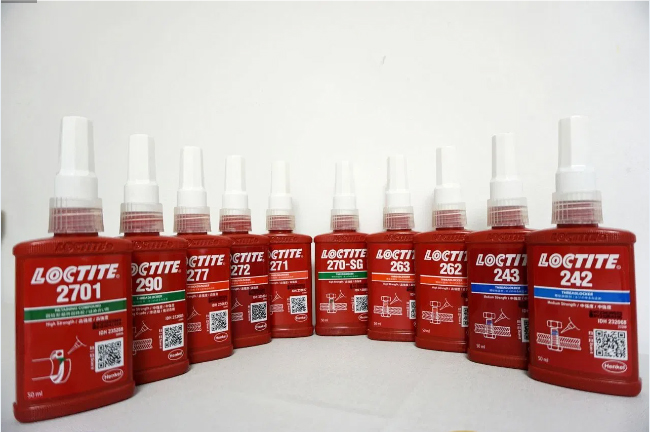
Loctite 243 threadlocker represents a premium-grade anaerobic adhesive solution designed for professionals requiring dependable fastener retention in demanding environments. This medium-strength metal sealing adhesive delivers consistent performance across diverse industrial sectors, from automotive assembly to aerospace manufacturing. The threadlocker's anaerobic curing mechanism activates exclusively when confined between close-fitting metal surfaces without air exposure, generating a robust mechanical lock that resists vibration-induced loosening, thermal cycling, and operational stress.
Engineered for versatility, this high temperature threadlocker accommodates all metal substrates while providing dual functionality—securing threaded connections and sealing against fluid or gas migration. The formulation balances permanent retention during operation with removability using standard tools when disassembly becomes necessary. This controlled-strength characteristic makes Loctite 243 the preferred choice for maintenance-accessible assemblies requiring both reliability and serviceability.
Industrial applications spanning machinery maintenance, equipment assembly, and component manufacturing benefit from this threadlocker's consistent curing behavior and temperature stability. Whether securing critical fasteners in vibrating equipment or preventing loosening in high-heat zones, this anaerobic adhesive maintains integrity throughout extended service intervals, reducing maintenance frequency and preventing costly equipment failures.
For comprehensive industrial adhesive solutions across multiple sectors, explore our industries page.
Key Performance Characteristics
Superior Thermal Stability
Loctite 243 threadlocker maintains bonding integrity across a working temperature range extending to 180°C (360°F), addressing applications where thermal exposure challenges conventional fastening methods. This high temperature anaerobic adhesive resists thermal degradation in engine compartments, exhaust assemblies, heating systems, and industrial processing equipment where elevated temperatures are constant. The polymer chemistry remains stable through repeated thermal cycles, preventing bond deterioration that causes fastener loosening in temperature-fluctuating environments.
Anti-Vibration Locking Technology
Mechanical vibrations represent a primary cause of threaded fastener failure across industrial equipment. This metal threadlocker creates a solid polymer interface between mating threads, eliminating clearance gaps that permit micro-movements leading to loosening. Once cured, the adhesive forms a resilient yet rigid structure that absorbs vibration energy without compromising the mechanical lock. Equipment subjected to continuous vibration—pumps, compressors, conveyors, and rotating machinery—maintains fastener integrity throughout operational cycles.
Broad Metal Substrate Compatibility
Formulated as a universal solution, this threadlocker adheres effectively to ferrous metals including carbon steel, alloy steel, and stainless steel, as well as non-ferrous metals such as aluminum, brass, bronze, copper, and titanium. This comprehensive compatibility eliminates the need for multiple specialized products, simplifying inventory management and application procedures. The adhesive's chemistry accommodates variations in surface energy and oxide layers characteristic of different metal types, ensuring consistent bonding across mixed-metal assemblies.
Dual-Function Sealing Capability
Beyond mechanical locking, Loctite 243 threadlocker functions as an effective thread sealant, filling microscopic surface irregularities and thread tolerances to create a continuous barrier. This sealing action prevents fluid seepage, gas migration, and contaminant ingress in pressurized systems, hydraulic connections, pneumatic assemblies, and chemical processing equipment. The cured adhesive resists aggressive fluids including oils, fuels, coolants, and mild chemicals, maintaining seal integrity under operational pressures.
Controlled Anaerobic Curing
The anaerobic curing mechanism provides distinct advantages for assembly operations. Application occurs under normal atmospheric conditions without premature polymerization. Once fasteners engage and exclude air from thread interfaces, catalytic curing initiates, progressing from fixture strength within minutes to full mechanical properties over 24 hours. This curing behavior permits position adjustments during assembly while ensuring complete bond development in confined threaded zones.
Medium-Strength Removability
Unlike permanent threadlockers requiring destructive removal methods, this medium-strength formulation permits disassembly using standard hand tools. Applying controlled torque overcomes the adhesive bond, allowing fastener removal for maintenance, inspection, or component replacement. Heat application (150-200°C) accelerates disassembly when required, softening the cured polymer for easier removal. This removability characteristic suits applications requiring periodic service access without sacrificing operational security.
Industrial Application Sectors
Automotive Component Assembly
The automotive industry extensively utilizes Loctite 243 threadlocker throughout powertrain assemblies, chassis systems, and auxiliary equipment. Engine block fasteners, cylinder head bolts, transmission case attachments, and suspension component connections benefit from vibration resistance in environments experiencing constant mechanical stress. Exhaust manifold fasteners withstand thermal cycling between ambient and extreme temperatures without loosening. Wheel assembly components, brake caliper mountings, and steering system fasteners maintain torque specifications despite road-induced vibrations and environmental exposure.
Aerospace Equipment Manufacturing
Aerospace applications demand fastening solutions meeting stringent reliability standards under extreme conditions. This high temperature threadlocker secures critical components in turbine engines where temperatures approach material limits, landing gear assemblies experiencing impact loads, and avionic housings requiring vibration isolation. The adhesive's consistent performance across temperature extremes and its resistance to aviation fluids make it suitable for airframe assemblies, control surface attachments, and hydraulic system connections where fastener failure carries severe consequences.
Industrial Machinery Maintenance
Manufacturing facilities employ this threadlocker across production equipment including CNC machine tools, injection molding systems, stamping presses, and material handling conveyors. Pump assemblies in fluid transfer systems, compressor components in pneumatic networks, and gearbox fasteners in power transmission systems maintain integrity despite continuous operational vibrations. The medium-strength formulation facilitates scheduled maintenance while preventing unscheduled downtime from vibration-loosened fasteners. Processing equipment in food production, pharmaceutical manufacturing, and chemical processing benefits from the adhesive's sealing properties and chemical resistance.
Power Generation Infrastructure
Electrical generation equipment including turbine assemblies, generator housings, switchgear enclosures, and transformer components utilize this threadlocker for critical fastenings. The adhesive's thermal stability suits environments near heat-generating equipment, while its electrical insulation properties prevent galvanic corrosion between dissimilar metal fasteners. Wind turbine nacelle assemblies, solar mounting structures, and hydroelectric equipment fastenings resist environmental exposure and operational vibrations throughout extended service intervals.
Marine and Offshore Equipment
Shipboard systems, offshore platform equipment, and marine propulsion assemblies face corrosive saltwater environments combined with constant vibration. Loctite 243 threadlocker protects fasteners in engine room machinery, deck equipment, ballast systems, and navigational electronics. The cured adhesive creates a moisture barrier preventing corrosion initiation at thread interfaces while maintaining mechanical retention despite pitch and roll motions.
Material Composition and Application Process
The threadlocker utilizes methacrylate ester chemistry that remains liquid stable in atmospheric oxygen but polymerizes rapidly when confined between metal surfaces. Metal ion catalysis initiates free-radical polymerization, forming cross-linked polymer networks that mechanically interlock with thread profiles. The blue pigmentation provides visual confirmation of application coverage and facilitates quality control during assembly operations.
Surface Preparation Requirements
Optimal bonding requires metal surfaces free from contamination. Remove oils, greases, cutting fluids, and preservative coatings using appropriate solvents or alkaline cleaners. Abrasive cleaning removes rust, oxidation, and scale that interfere with metal contact. Clean, dry surfaces promote consistent curing and maximum bond strength. Passive metal surfaces such as stainless steel may benefit from activator primers in applications requiring accelerated cure or enhanced bond strength.
Dispense adhesive directly onto male threads, ensuring complete coverage of the engagement length. For through-holes, apply to both male and female threads to guarantee adhesive presence throughout the joint. Thread engagement should occur promptly after application to prevent surface contamination. Excess adhesive expelled during tightening confirms complete thread filling. Fasteners reach handling strength within 10-20 minutes under normal conditions, permitting adjacent assembly operations while full cure develops.
Standard room temperature (20-25°C) provides ideal curing conditions, with fixture strength developing within minutes and full strength achieved in 24 hours. Lower temperatures extend cure times, while elevated temperatures accelerate polymerization. Large gap widths (>0.5mm) may slow curing due to reduced metal contact; activators address this condition when necessary. Post-cure heating accelerates strength development when operational requirements demand rapid assembly cycles.
Real-World Application Solutions
Case Study: Engine Assembly Line
A major automotive manufacturer implemented Loctite 243 threadlocker across engine assembly operations, addressing recurring warranty claims from vibration-loosened fasteners. Previous mechanical locking methods proved inconsistent, while permanent threadlockers complicated engine rebuilds. The medium-strength anaerobic adhesive reduced fastener-related failures by 94% while maintaining serviceability for warranty repairs. Assembly line throughput increased through elimination of mechanical locking washer installation, and the threadlocker's sealing properties eliminated oil seepage at threaded penetrations.
Case Study: Industrial Pump Maintenance
A chemical processing facility experienced frequent unplanned shutdowns from loosened pump housing fasteners, causing fluid leaks and production interruptions. After implementing Loctite 243 threadlocker during routine maintenance, pump reliability improved significantly. The adhesive's chemical resistance withstood process fluid exposure, while its vibration resistance prevented loosening from pump operational frequencies. Maintenance intervals extended from monthly inspections to quarterly schedules, reducing labor costs and improving production continuity.
Case Study: Aerospace Component Assembly
An aerospace components manufacturer required fastening solutions for turbine housing assemblies experiencing temperatures reaching 165°C during operation. Traditional mechanical locking methods added weight and complexity, while competitor threadlockers failed under thermal cycling. Loctite 243 threadlocker maintained bond integrity through qualification testing simulating 10,000 thermal cycles, meeting aerospace certification requirements. The product enabled weight reduction through elimination of mechanical locking features while improving assembly reliability.
For technical support and application guidance, visit our support center.
Comparison with Alternative Fastening Methods
Mechanical Locking Devices vs. Threadlockers
Traditional mechanical locking devices—split washers, lock washers, lock nuts, and safety wire—add weight, cost, and assembly complexity. These methods rely on friction or mechanical interference that degrades under sustained vibration. Threadlockers provide equivalent or superior locking without additional components, reducing part count and assembly time. Unlike mechanical methods, threadlockers seal threads against fluid migration and corrosion.
Permanent vs. Medium-Strength Threadlockers
Permanent threadlockers (such as Loctite 271) provide maximum retention but require heat or destructive methods for disassembly. Medium-strength formulations like Loctite 243 balance operational security with maintenance accessibility, suitable for assemblies requiring periodic service. Applications with no planned disassembly benefit from permanent grades, while serviceable equipment favors medium-strength products.
Liquid vs. Preapplied Threadlockers
Liquid threadlockers offer application flexibility and immediate use, requiring no inventory of precoated fasteners. Preapplied threadlocker patches provide convenience for high-volume automated assembly but limit adjustability and add fastener cost. Liquid formulations accommodate varying thread sizes and styles without specialized fastener procurement.
Frequently Asked Questions
Which metal types are compatible with this threadlocker?
Loctite 243 threadlocker bonds to all common metals used in industrial assemblies, including ferrous materials (carbon steel, alloy steel, stainless steel, cast iron) and non-ferrous metals (aluminum alloys, brass, bronze, copper, titanium). The adhesive chemistry accommodates surface variations across these substrates, providing consistent performance regardless of metal composition. Mixed-metal assemblies encounter no compatibility limitations.
What is the expected curing timeline for this adhesive?
Under standard conditions (room temperature, clean metal surfaces, appropriate gap width), fixture strength develops in 10-20 minutes, allowing careful handling of assembled components. Full mechanical strength and chemical resistance develop over 24 hours. Curing accelerates at elevated temperatures and slows in cold conditions. Thick bondlines or inactive metals may extend cure times; activators address these conditions when faster strength development is required.
Does this adhesive provide sealing in addition to locking?
Beyond preventing fastener loosening, Loctite 243 threadlocker creates an effective seal filling gaps between mating threads. This sealing action prevents fluid leakage, gas migration, and contaminant intrusion in pressurized systems, hydraulic assemblies, and chemical processing equipment. The cured polymer resists common industrial fluids including petroleum products, coolants, mild acids, and alkalis, maintaining seal integrity under operational pressures.
How should this threadlocker be stored to maintain effectiveness?
Store unopened containers in cool, dry conditions at temperatures between 5°C and 25°C (41°F and 77°F) away from direct sunlight and heat sources. Keep containers tightly sealed when not in use to prevent moisture contamination and premature polymerization. Properly stored product maintains effectiveness through the labeled shelf life, typically 12-24 months from manufacture. Refrigerated storage extends shelf life for infrequently used inventory.
Is surface preparation critical for bonding success?
Clean metal surfaces directly influence bonding performance and curing speed. Oils, greases, rust preventatives, and particulate contamination interfere with metal-adhesive contact necessary for catalytic curing. Solvent cleaning or alkaline washing removes organic contaminants, while abrasive methods address oxidation and scale. Investing time in proper surface preparation ensures consistent results and maximum bond strength across production operations.
Material Composition and Application Process
Chemical Formulation
The threadlocker utilizes methacrylate ester chemistry that remains liquid stable in atmospheric oxygen but polymerizes rapidly when confined between metal surfaces. Metal ion catalysis initiates free-radical polymerization, forming cross-linked polymer networks that mechanically interlock with thread profiles. The blue pigmentation provides visual confirmation of application coverage and facilitates quality control during assembly operations.
Surface Preparation Requirements
Optimal bonding requires metal surfaces free from contamination. Remove oils, greases, cutting fluids, and preservative coatings using appropriate solvents or alkaline cleaners. Abrasive cleaning removes rust, oxidation, and scale that interfere with metal contact. Clean, dry surfaces promote consistent curing and maximum bond strength. Passive metal surfaces such as stainless steel may benefit from activator primers in applications requiring accelerated cure or enhanced bond strength.
Application Methodology
Dispense adhesive directly onto male threads, ensuring complete coverage of the engagement length. For through-holes, apply to both male and female threads to guarantee adhesive presence throughout the joint. Thread engagement should occur promptly after application to prevent surface contamination. Excess adhesive expelled during tightening confirms complete thread filling. Fasteners reach handling strength within 10-20 minutes under normal conditions, permitting adjacent assembly operations while full cure develops.
Curing Optimization
Standard room temperature (20-25°C) provides ideal curing conditions, with fixture strength developing within minutes and full strength achieved in 24 hours. Lower temperatures extend cure times, while elevated temperatures accelerate polymerization. Large gap widths (>0.5mm) may slow curing due to reduced metal contact; activators address this condition when necessary. Post-cure heating accelerates strength development when operational requirements demand rapid assembly cycles.
Real-World Application Solutions
Case Study: Engine Assembly Line
A major automotive manufacturer implemented Loctite 243 threadlocker across engine assembly operations, addressing recurring warranty claims from vibration-loosened fasteners. Previous mechanical locking methods proved inconsistent, while permanent threadlockers complicated engine rebuilds. The medium-strength anaerobic adhesive reduced fastener-related failures by 94% while maintaining serviceability for warranty repairs. Assembly line throughput increased through elimination of mechanical locking washer installation, and the threadlocker's sealing properties eliminated oil seepage at threaded penetrations.
Case Study: Industrial Pump Maintenance
A chemical processing facility experienced frequent unplanned shutdowns from loosened pump housing fasteners, causing fluid leaks and production interruptions. After implementing Loctite 243 threadlocker during routine maintenance, pump reliability improved significantly. The adhesive's chemical resistance withstood process fluid exposure, while its vibration resistance prevented loosening from pump operational frequencies. Maintenance intervals extended from monthly inspections to quarterly schedules, reducing labor costs and improving production continuity.
Case Study: Aerospace Component Assembly
An aerospace components manufacturer required fastening solutions for turbine housing assemblies experiencing temperatures reaching 165°C during operation. Traditional mechanical locking methods added weight and complexity, while competitor threadlockers failed under thermal cycling. Loctite 243 threadlocker maintained bond integrity through qualification testing simulating 10,000 thermal cycles, meeting aerospace certification requirements. The product enabled weight reduction through elimination of mechanical locking features while improving assembly reliability.
For technical support and application guidance, visit our support center.
Comparison with Alternative Fastening Methods
Mechanical Locking Devices vs. Threadlockers
Traditional mechanical locking devices—split washers, lock washers, lock nuts, and safety wire—add weight, cost, and assembly complexity. These methods rely on friction or mechanical interference that degrades under sustained vibration. Threadlockers provide equivalent or superior locking without additional components, reducing part count and assembly time. Unlike mechanical methods, threadlockers seal threads against fluid migration and corrosion.
Permanent vs. Medium-Strength Threadlockers
Permanent threadlockers (such as Loctite 271) provide maximum retention but require heat or destructive methods for disassembly. Medium-strength formulations like Loctite 243 balance operational security with maintenance accessibility, suitable for assemblies requiring periodic service. Applications with no planned disassembly benefit from permanent grades, while serviceable equipment favors medium-strength products.
Liquid vs. Preapplied Threadlockers
Liquid threadlockers offer application flexibility and immediate use, requiring no inventory of precoated fasteners. Preapplied threadlocker patches provide convenience for high-volume automated assembly but limit adjustability and add fastener cost. Liquid formulations accommodate varying thread sizes and styles without specialized fastener procurement.
Frequently Asked Questions
Which metal types are compatible with this threadlocker?
Loctite 243 threadlocker bonds to all common metals used in industrial assemblies, including ferrous materials (carbon steel, alloy steel, stainless steel, cast iron) and non-ferrous metals (aluminum alloys, brass, bronze, copper, titanium). The adhesive chemistry accommodates surface variations across these substrates, providing consistent performance regardless of metal composition. Mixed-metal assemblies encounter no compatibility limitations.
What is the expected curing timeline for this adhesive?
Under standard conditions (room temperature, clean metal surfaces, appropriate gap width), fixture strength develops in 10-20 minutes, allowing careful handling of assembled components. Full mechanical strength and chemical resistance develop over 24 hours. Curing accelerates at elevated temperatures and slows in cold conditions. Thick bondlines or inactive metals may extend cure times; activators address these conditions when faster strength development is required.
Can fasteners be removed after the adhesive fully cures?
Yes, Loctite 243 threadlocker is specifically formulated as a medium-strength product permitting disassembly using standard hand tools. Applying normal removal torque overcomes the adhesive bond without requiring heat or special equipment in most applications. For stubborn assemblies or corrosion-affected fasteners, heating the joint to 150-200°C softens the polymer, facilitating easier removal. This removability makes the threadlocker ideal for equipment requiring periodic maintenance while maintaining operational security.
What temperature range does this product withstand during operation?
The threadlocker maintains full bonding and sealing properties across a service temperature range from -55°C to 180°C (-65°F to 360°F). This temperature stability addresses applications from cold storage facilities to high-heat engine compartments. The adhesive withstands thermal cycling without bond degradation, maintaining fastener retention through repeated temperature fluctuations. Applications exceeding 180°C require alternative high-temperature threadlocker formulations.
Does this adhesive provide sealing in addition to locking?
Beyond preventing fastener loosening, Loctite 243 threadlocker creates an effective seal filling gaps between mating threads. This sealing action prevents fluid leakage, gas migration, and contaminant intrusion in pressurized systems, hydraulic assemblies, and chemical processing equipment. The cured polymer resists common industrial fluids including petroleum products, coolants, mild acids, and alkalis, maintaining seal integrity under operational pressures.
How should this threadlocker be stored to maintain effectiveness?
Store unopened containers in cool, dry conditions at temperatures between 5°C and 25°C (41°F and 77°F) away from direct sunlight and heat sources. Keep containers tightly sealed when not in use to prevent moisture contamination and premature polymerization. Properly stored product maintains effectiveness through the labeled shelf life, typically 12-24 months from manufacture. Refrigerated storage extends shelf life for infrequently used inventory.
Is surface preparation critical for bonding success?
Clean metal surfaces directly influence bonding performance and curing speed. Oils, greases, rust preventatives, and particulate contamination interfere with metal-adhesive contact necessary for catalytic curing. Solvent cleaning or alkaline washing removes organic contaminants, while abrasive methods address oxidation and scale. Investing time in proper surface preparation ensures consistent results and maximum bond strength across production operations.
Why Partner with E-ASIA Bearing for Industrial Adhesive Solutions
With six decades of experience serving industrial sectors globally, E-ASIA Bearing provides comprehensive solutions extending beyond mechanical components to include critical assembly materials. Our technical expertise helps customers select appropriate threadlocking solutions for specific applications, ensuring optimal performance and cost-effectiveness.
Application Engineering Support
Our experienced team provides consultation on threadlocker selection, surface preparation protocols, and application methods tailored to your assembly requirements. We analyze operating conditions—temperature exposure, vibration levels, chemical environments, and maintenance needs—to recommend solutions matching your performance criteria.
Quality-Assured Products
Every threadlocker product undergoes verification testing confirming specification compliance and performance consistency. Our quality assurance protocols ensure you receive authentic products with proper storage and handling throughout the supply chain, protecting your investment and assembly reliability.
Comprehensive Industrial Solutions
Beyond threadlockers, we supply complete fastening and assembly solutions including bearings, mechanical components, and maintenance materials. This integrated approach simplifies procurement, reduces supplier management overhead, and ensures compatibility across your assembly operations.
Global Service Network
Operating across 50+ countries with established distribution networks, we provide local inventory availability and responsive technical support regardless of your facility location. Our 24/7 service commitment ensures assistance when production schedules demand immediate support.
Cost-Effective Procurement
Through partnerships with leading adhesive manufacturers and our efficient supply chain, we deliver competitive pricing without compromising product authenticity or quality. Our cost-effective solutions help control assembly expenses while maintaining reliability standards.
Visit our about us page to learn more about our commitment to industrial excellence, or explore our sustainability initiatives demonstrating our dedication to responsible business practices. Contact our team to discuss your threadlocking requirements and discover how Loctite 243 high temperature threadlocker can enhance your assembly reliability and operational efficiency.

 English


