Brief Introduction
Loctite 515 Anaerobic Flange Sealant is a high-performance industrial adhesive developed by Henkel, designed to solve common sealing challenges in harsh working environments. As a professional flat sealing adhesive, it replaces traditional gaskets and washers, eliminating the hassle of frequent replacement and leak-related costly repairs. This product leverages anaerobic curing technology, forming a reliable, long-lasting seal when applied to rigid metal flanges—a key advantage for industries seeking consistent performance. Whether used in high-temperature machinery or chemical-exposed equipment, Loctite 515 maintains its integrity, making it a go-to choice for engineers and maintenance teams looking for efficient, leak-proof solutions.
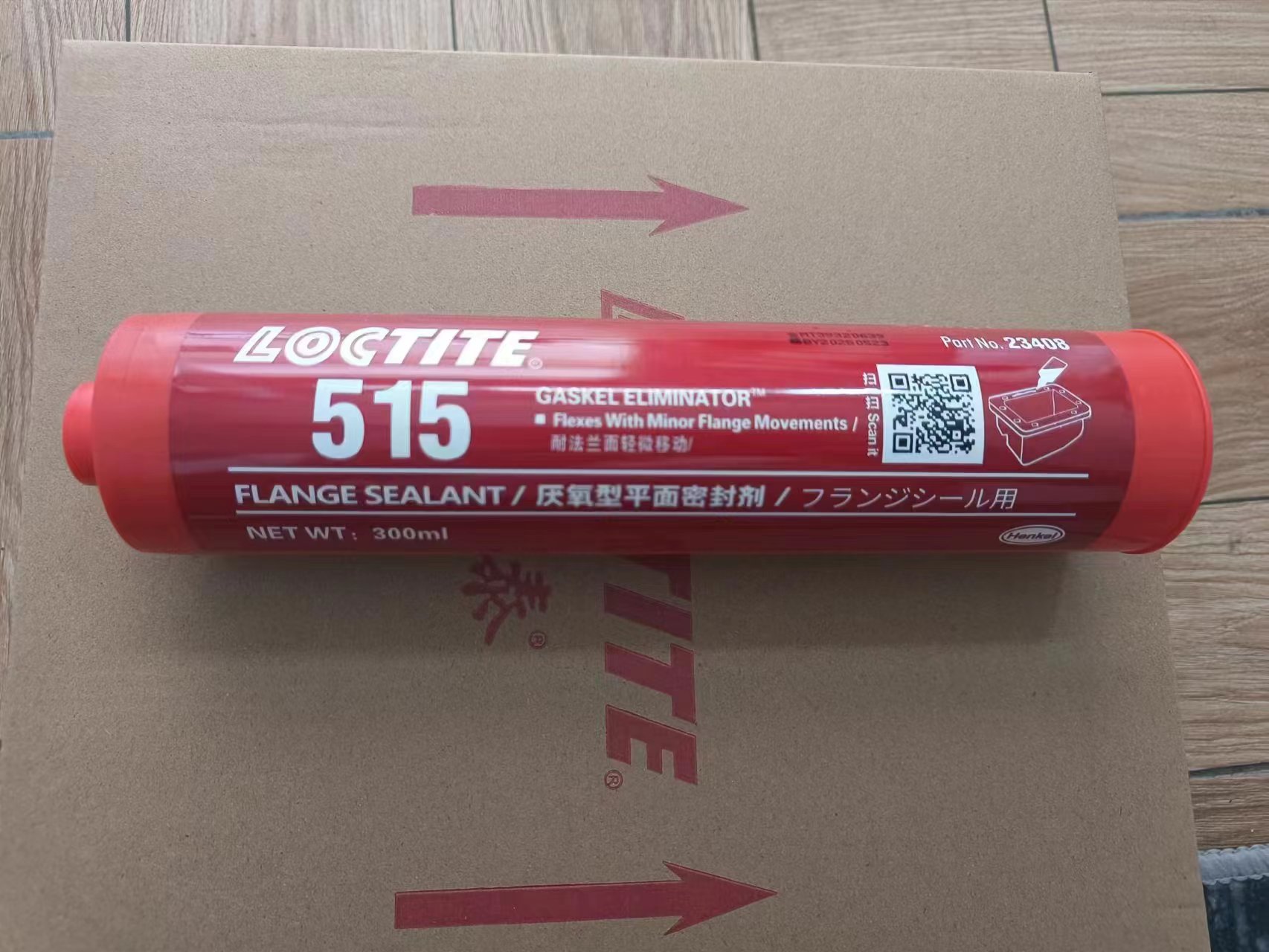
Core Features
Exceptional Temperature Resistance
Loctite 515 boasts strong extreme temperature resistance, withstanding both low and high temperature fluctuations without losing sealing ability. This ensures the seal remains intact in demanding settings, such as engine compartments or industrial ovens, where traditional gaskets often fail.
Superior Chemical Durability
The adhesive’s chemical resistance is a standout feature—it can endure exposure to various industrial fluids and chemicals. This protects the seal from degradation, ensuring long-term reliability in sectors like manufacturing, automotive, and petrochemicals.
Flexible & Elastic Seal
Unlike rigid gaskets, Loctite 515 offers excellent flexibility and elasticity. It adapts to minor irregularities on rigid metal flange surfaces, creating a tight, gap-free seal every time. This flexibility also accommodates small vibrations in machinery, preventing seal cracks.
Anaerobic Curing Mechanism
The anaerobic curing process activates in the absence of air, allowing the adhesive to cure quickly and form a strong bond on metal surfaces. This eliminates the need for external heat or pressure, simplifying application and reducing downtime.
Universal Compatibility with Rigid Metals
Loctite 515 works seamlessly with most rigid metal flanges, including steel, aluminum, and cast iron. This versatility makes it suitable for a wide range of industrial equipment, from pumps to gearboxes.
Typical Uses
Industrial Pumps & Thermostats
As an on-site formed gasket, Loctite 515 is ideal for sealing pumps and thermostats. These components require leak-proof seals to maintain fluid flow and temperature control, and the adhesive’s durability ensures consistent performance under stress.
Compressors & Gearboxes
Compressors and gearboxes operate under high pressure and frequent motion. Loctite 515’s flexible seal absorbs vibrations and resists pressure, preventing fluid leaks that could damage internal parts or reduce efficiency.
Safety Locks & Engine Housings
For safety-critical components like industrial safety locks and engine housings, Loctite 515 provides a secure, non-corrosive seal. Its compatibility with rigid metal flanges ensures these parts stay sealed, protecting both equipment and personnel.
Precautions
Storage Guidelines
Store Loctite 515 in a cool, dry area at room temperature (avoid extreme heat or cold). Keep the container tightly sealed when not in use to prevent the adhesive from curing prematurely due to air exposure.
Application Safety
Wear protective gloves during application to avoid skin contact. Work in a well-ventilated area, as prolonged exposure to uncured adhesive may cause irritation. If the adhesive comes into contact with skin, wash immediately with soap and water.
Avoid Contamination
Do not pour unused adhesive back into the original container—this can contaminate the remaining product and affect its performance. Use a clean applicator each time to ensure the adhesive stays free of debris.
FAQ
How does Loctite 515 differ from traditional gaskets?
Unlike traditional gaskets, Loctite 515 is an anaerobic flange sealant that adapts to flange surfaces, eliminating gaps. It requires no replacement (reducing maintenance) and resists temperature/chemical damage—issues that often shorten gasket lifespans.
Can Loctite 515 be used on non-metal surfaces?
No, Loctite 515 is designed specifically for rigid metal flanges. Its anaerobic curing technology relies on metal surfaces to activate, so it will not perform well on plastics or non-metallic materials.
Is Loctite 515 easy to remove if repairs are needed?
Yes, it offers medium-strength bonding, making it removable with standard tools (e.g., wrenches) when disassembly is required. This balances reliability with ease of maintenance.

 English


