Brief Introduction
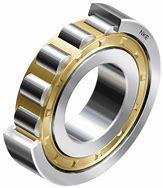
The NJ309E Cylindrical Roller Bearing represents advanced engineering in radial load management, specifically designed for industrial environments demanding exceptional durability and performance. Manufactured from premium Gcr15 bearing steel, this single-row roller bearing delivers superior load capacity while maintaining operational efficiency at elevated speeds. The bearing features a specialized design with outer ring ribs and a single inner ring rib configuration, allowing controlled axial displacement in one direction. Its separable construction enables simplified assembly procedures and streamlined maintenance protocols, reducing total cost of ownership for industrial operators.
This heavy-duty cylindrical bearing serves critical functions across manufacturing, power generation, transportation, and material handling sectors. Engineers select the NJ309E for applications where radial forces dominate, rotational speeds vary significantly, and reliability cannot be compromised. The bearing's Gcr15 material composition ensures consistent performance across temperature ranges and operating conditions typical in industrial settings.
Key Performance Characteristics
Advanced Friction Reduction Technology
The NJ309E incorporates optimized contact geometry between roller end surfaces and guide flanges. This engineering approach promotes hydrodynamic lubricant film formation, which separates metal surfaces during rotation. The result is measurable friction coefficient reduction compared to standard cylindrical bearings. Lower friction translates directly to reduced power consumption in motor applications and decreased heat generation in high-speed operations. Surface finishing processes applied to roller-raceway interfaces further enhance lubricant retention and distribution.
Extended Operating Lifespan
Roller profiles follow a logarithmic modification curve rather than straight cylindrical geometry. This design modification distributes contact stress more evenly across the roller length, eliminating stress concentration at roller edges. When shaft deflection or housing misalignment occurs, the modified profile maintains optimal contact patterns, preventing premature fatigue. Field data demonstrates service life improvements of 30-50% compared to conventional cylindrical roller designs in typical industrial installations.
Modular Component Design
The bearing assembly separates into three primary components: inner ring with integrated flange, outer ring with dual flanges, and roller-cage assembly. This separation capability offers distinct advantages during equipment assembly and repair operations. Maintenance personnel can replace individual components without removing adjacent machinery parts. The design reduces scheduled maintenance windows and minimizes unplanned downtime events. Component interchangeability is maintained through strict manufacturing tolerances, ensuring proper fit across production batches.
High-Speed Operational Capability
Cage design receives specific attention for applications involving rapid acceleration or sustained high-speed rotation. The cage material selection balances strength requirements against inertial forces at elevated speeds. Pocket geometry allows adequate clearance for roller movement while maintaining precise spacing during operation. Dynamic balancing procedures applied during manufacturing minimize vibration at operating speeds. These features combine to support reliable performance in applications reaching 8,500 rpm with appropriate oil lubrication.
Superior Radial Load Performance
Gcr15 material properties enable the NJ309E to handle substantial radial forces without permanent deformation. The steel's microstructure, achieved through controlled heat treatment, provides optimal hardness for contact stress resistance while maintaining core toughness. Line contact between rollers and raceways distributes applied loads across multiple contact points, maximizing load capacity within the bearing envelope. This configuration makes the bearing suitable for applications where radial forces exceed 100 kN in shock loading conditions.
Reliability Enhancement Features
Surface treatments applied to critical contact zones improve lubricant adhesion and reduce susceptibility to contaminant damage. The outer ring diameter incorporates grinding patterns that facilitate lubricant distribution during rotation. Inner ring mounting surfaces receive precision finishing to ensure proper shaft fit and load transfer. Quality control protocols include 100% dimensional verification and surface inspection, guaranteeing consistent performance across production volumes.
Industrial Application Sectors
Manufacturing Equipment Integration
Machine Tool Spindles: The NJ309E serves as a primary bearing in lathe headstocks, milling machine spindles, and grinding machine main shafts. The combination of high-speed capability and radial load capacity supports cutting operations requiring both precision and rigidity. Separable design facilitates spindle rebuilding procedures during scheduled maintenance intervals.
Production Line Machinery: Conveyor drive systems, packaging equipment, and assembly line components utilize the bearing for continuous operation requirements. The Gcr15 material withstands repetitive loading cycles typical in automated production environments. Low friction characteristics reduce drive motor sizing requirements and operational energy costs.
Metalworking Equipment: Rolling mills, forging presses, and metal forming machines subject bearings to severe radial loads and shock loading. The NJ309E's robust construction and material properties maintain dimensional stability under these demanding conditions. Extended service intervals reduce production interruptions for bearing replacement.
Power Generation and Transmission
Electric Motor Applications: Industrial motors ranging from 10 kW to 500 kW commonly specify cylindrical roller bearings for driven-end and non-driven-end positions. The NJ309E handles radial loads from belt tension, gear mesh forces, and rotor weight while supporting rotational speeds up to 3,600 rpm in standard 2-pole motor designs. Temperature stability across the bearing's operating range ensures consistent performance in variable speed drive applications.
Generator Systems: Wind turbine generators, hydroelectric turbines, and diesel generator sets incorporate cylindrical roller bearings in main shaft positions. The separable design allows bearing inspection and replacement without complete equipment disassembly. Gcr15 material performance supports the long service intervals required in remote installation locations.
Gearbox Assemblies: Industrial gearboxes for mining equipment, marine propulsion, and heavy machinery use the NJ309E for intermediate and output shaft support. The bearing accommodates radial loads from gear tooth contact while permitting thermal expansion through its single-direction axial displacement capability.
Transportation and Mobile Equipment
Commercial Vehicle Transmissions: Heavy-duty truck transmissions and construction equipment gearboxes specify cylindrical roller bearings for countershaft and mainshaft applications. The bearing withstands road shock and vibration while maintaining precise shaft positioning for gear mesh accuracy. Separable construction supports field service and overhaul operations.
Rail Applications: Locomotive traction motors and rail vehicle axle boxes utilize cylindrical roller bearings for heavy radial load support. The NJ309E's capacity specifications align with requirements for medium-duty rail equipment operating in industrial and mining environments.
Material Science and Manufacturing Process
Gcr15 Steel Properties
Gcr15 represents a high-carbon chromium steel alloy specifically formulated for rolling element bearing applications. The material achieves optimal performance through controlled carbon content (approximately 1% by weight) combined with chromium addition (1.5% typical). This composition enables deep hardening during heat treatment while maintaining adequate core toughness to resist impact loads. The steel's fine grain structure, developed through specialized melting and refining processes, contributes to fatigue resistance under cyclic loading.
Heat Treatment Protocol
Manufacturing begins with precision forging to create near-net-shape rings, followed by normalizing to relieve internal stresses. Quenching in specialized media achieves the martensitic transformation necessary for surface hardness. Tempering operations carefully balance hardness requirements against dimensional stability and residual stress management. Final hardness verification occurs at multiple locations on each component to ensure specification compliance.
Precision Grinding Operations
Raceway surfaces receive multi-stage grinding to achieve final dimensional accuracy and surface finish requirements. Grinding wheel selection, coolant management, and feed rates follow optimized parameters to prevent thermal damage. The logarithmic roller profile generation requires specialized grinding equipment capable of maintaining profile accuracy across the roller length. Final inspection uses coordinate measuring equipment to verify geometric tolerances.
Installation Guidelines and Best Practices
Mounting Surface Preparation
Shaft and housing bore surfaces must meet specified tolerances for proper bearing fit. Clean all mounting surfaces thoroughly to remove protective coatings, machining residue, and contamination. Inspect for surface damage, burrs, or dimensional deviations that could affect bearing performance. Chamfer edges should match bearing corner radii to prevent installation damage.
Assembly Procedures
Apply the bearing manufacturer's recommended installation method based on fit requirements. Press-fit applications require uniform force application to the bearing ring being installed. Heating the bearing or housing provides an alternative installation approach for interference fits. Maintain heating temperatures below 120°C to prevent material property changes. Ensure the bearing seats properly against shaft or housing shoulders.
Alignment Verification
Shaft and housing bore alignment directly affects bearing service life. Misalignment concentrates stress at roller-raceway contact edges, accelerating wear and reducing load capacity. Use precision alignment tools to verify shaft runout and housing bore concentricity before final assembly. Correct any misalignment exceeding manufacturer specifications through machining or shimming procedures.
Lubrication Application
Select lubricants based on operating speed, load, temperature, and environmental conditions. Lithium complex greases suit most general industrial applications, while synthetic lubricants support extreme temperature or high-speed requirements. Fill the bearing housing to recommended levels, avoiding both under-filling and over-filling conditions. Establish appropriate relubrication intervals based on operating parameters and lubricant type.
Maintenance and Service Considerations
Condition Monitoring
Implement vibration analysis programs to detect developing bearing problems before failure occurs. Establish baseline vibration signatures for comparison during routine monitoring. Temperature monitoring identifies excessive heat generation from inadequate lubrication or overloading. Oil analysis programs detect wear debris and lubricant degradation in oil-lubricated systems.
Inspection Intervals
Schedule bearing inspections based on equipment criticality and operating conditions. High-load or high-speed applications require more frequent inspection than moderate-duty installations. During inspections, examine bearing components for discoloration, spalling, or unusual wear patterns. Verify lubricant condition and quantity, replenishing or replacing as necessary.
Component Replacement
The separable design allows selective component replacement based on inspection findings. Replace any component showing fatigue, wear, or damage exceeding acceptable limits. Maintain component sets from the same manufacturing batch when possible to ensure optimal fit and performance. Store replacement components in controlled environments to prevent corrosion and contamination.
Comparative Analysis with Alternative Bearing Types
Versus Deep Groove Ball Bearings
Cylindrical roller bearings provide significantly higher radial load capacity than comparably sized ball bearings due to line contact versus point contact. However, ball bearings handle combined radial and axial loads, while the NJ309E accommodates primarily radial forces. Ball bearings typically operate at higher speeds with lower friction, making them preferable for light-load, high-speed applications.
Versus Tapered Roller Bearings
Tapered roller bearings support combined radial and axial loads through their angular contact design. The NJ309E offers advantages in pure radial load applications through its straight roller geometry and lower friction. Tapered bearings require precise axial preload adjustment, while cylindrical bearings install with simpler procedures. Operating speed capabilities generally favor cylindrical roller bearings.
Versus Spherical Roller Bearings
Spherical roller bearings accommodate higher misalignment and can carry bidirectional axial loads in addition to radial forces. The NJ309E provides advantages in applications with good alignment through lower friction and higher speed capability. Spherical bearings suit heavy-duty applications with shaft deflection or housing distortion, while cylindrical bearings optimize performance in precision installations.
Why Choose E-ASIA BEARING for NJ309E Cylindrical Roller Bearings
Six Decades of Industry Expertise
E-ASIA BEARING brings over 60 years of bearing manufacturing and distribution experience to every customer relationship. This extensive industry knowledge informs product selection guidance, application engineering support, and technical problem-solving. Our team understands the performance requirements across diverse industrial sectors, ensuring appropriate bearing specifications for each unique application.
Comprehensive Quality Assurance
Every NJ309E bearing undergoes rigorous quality control procedures throughout manufacturing. Raw material verification confirms Gcr15 steel composition and properties. In-process inspections monitor dimensional accuracy and surface finish. Final testing includes load capacity verification, rotational testing, and complete dimensional inspection. Quality certifications accompany each shipment, documenting compliance with international standards.
Cost-Effective Solutions
Our direct relationships with over 1,000 manufacturing facilities enable competitive pricing without compromising quality. We match bearing quality grades to application requirements, ensuring customers pay for needed performance characteristics without over-specification. Volume purchasing power translates to cost savings passed to our customers.
Rapid Order Fulfillment
Extensive warehouse inventory supports same-day shipping for most standard bearing sizes, including the NJ309E. Our logistics network accommodates express air shipping for urgent requirements or economical ocean freight for planned purchases. Order tracking systems provide real-time shipment visibility.
Technical Support Services
Our engineering team assists with bearing selection, installation guidance, and troubleshooting support. We provide application-specific recommendations based on load calculations, speed requirements, and environmental conditions. Post-sale support ensures optimal bearing performance throughout the equipment lifecycle.
Global Service Network
E-ASIA BEARING serves customers across more than 50 countries through our international distribution network. Local inventory positions and technical representatives provide responsive support in major industrial markets. We understand regional standards and regulatory requirements, simplifying international procurement.
Frequently Asked Questions
What radial load capacity does the NJ309E cylindrical roller bearing provide?
The NJ309E offers a dynamic radial load rating of 95.6 kN and a static radial load rating of 106 kN. These capacities apply to purely radial loading conditions. The bearing is not designed for significant axial loads, though the single inner ring rib allows limited axial displacement in one direction. For applications with combined radial and axial loads, alternative bearing types such as tapered roller bearings may be more appropriate.
How does the separable design benefit maintenance operations?
The separable construction allows the inner ring, outer ring, and roller-cage assembly to be installed and removed independently. This feature enables bearing replacement without complete equipment disassembly. Maintenance personnel can inspect or replace individual components, reducing repair time and costs. The design also simplifies initial equipment assembly during manufacturing.
What makes Gcr15 material suitable for cylindrical roller bearing applications?
Gcr15 steel provides an optimal combination of surface hardness, wear resistance, and core toughness for bearing applications. The high carbon content (approximately 1%) enables deep hardening through heat treatment, creating hard raceways resistant to contact fatigue. Chromium addition (approximately 1.5%) improves hardenability and corrosion resistance. The material maintains dimensional stability under operating loads and temperatures typical in industrial equipment.
What speed limitations apply to the NJ309E bearing?
The bearing's limiting speed depends on lubrication method and operating conditions. With grease lubrication, the maximum recommended speed is 6,300 rpm. Oil lubrication systems support speeds up to 8,500 rpm. These limits assume proper lubrication, adequate cooling, and moderate loads. Higher speeds may be achievable with optimized lubrication systems and reduced loads. Consult bearing specialists for specific high-speed applications.
Can the NJ309E accommodate shaft misalignment?
The bearing tolerates minor misalignment through its logarithmic roller profile modification. This design reduces edge stress when slight angular misalignment occurs. However, cylindrical roller bearings are not self-aligning and perform best in properly aligned installations. Significant misalignment accelerates wear and reduces service life. Applications with substantial alignment challenges may require self-aligning bearing types such as spherical roller bearings.

 English


