You need reliable solutions when you face leaks in industrial threaded connections. Loctite Adhesive stops thread leaks for good, giving you peace of mind during critical operations. In high-pressure environments, even a small leak can disrupt your workflow and cause costly downtime. Loctite 577 delivers a strong seal for metal threads, even under vibration or temperature changes. This adhesive keeps your systems secure and helps you maintain smooth, safe operations every day.
Key Takeaways
Loctite Adhesive effectively seals threaded connections, preventing leaks and ensuring smooth operations in industrial settings.
Proper preparation of threads is crucial for achieving a strong bond; clean and dry threads enhance the adhesive's effectiveness.
Loctite 577 offers durability and resistance to chemicals, heat, and vibration, making it a reliable choice for various industrial applications.
Using Loctite Adhesive reduces maintenance needs and costs, leading to increased productivity and fewer operational disruptions.
Regular inspections of threaded connections help catch potential leaks early, ensuring safety and efficiency in your operations.
Causes of Industrial Thread Leaks
What Are Thread Leaks
Thread leaks happen when fluids or gases escape from the gaps between threaded metal parts. You often see these leaks in pipes, valves, and machinery where threaded connections hold everything together. Even a small leak can cause big problems in an industrial system. Leaks can lower pressure, waste valuable resources, and create safety hazards. When you spot a thread leak, you know your system is not working as it should.
Common Causes in Industry
You face thread leaks for many reasons in industrial environments. Some of the most common causes include:
Improper Pipe Connections: Many older systems use national pipe thread (NPT) ports. These connections can deform when tightened, making leaks more likely.
Hardened Seals: High temperatures can damage seals. When seals get hard, they lose their ability to keep fluids or gases inside.
Natural Wear of Component Surfaces: Vibration and friction from high-pressure fluids can wear down metal surfaces over time. This wear creates gaps that allow leaks to form.
Coarse Threads: Coarse threads have wider spacing. While they are strong, they can leave larger gaps that are harder to seal.
Environmental Factors: Dirt and debris can get into threads during assembly. This contamination can cause misalignment, which leads to leaks and pressure loss.
You need to pay attention to these factors when you assemble or maintain threaded connections. Proper installation and regular checks help prevent leaks before they start.
Impact on Operations
Thread leaks can disrupt your operations in many ways:
Safety Risks: Leaks can expose workers to hazardous substances. This exposure can lead to health concerns and legal problems.
Environmental Impact: Escaping fluids or gases can pollute the environment. You may face fines if your facility does not meet regulations.
Financial Losses: Lost fluids or gases increase your costs and reduce productivity.
Operational Disruptions: Leaks can cause equipment failures and unplanned downtime. Repairs often require you to stop production, which leads to lost revenue.
You protect your business and your team when you address thread leaks quickly and effectively.
Sealing Thread Leaks with Loctite Adhesive
How Loctite Adhesive Works
You need a reliable solution when you face leaks in threaded metal connections. Loctite Adhesive uses a unique formula that fills gaps between threads and creates a strong seal. The adhesive works by curing in the absence of air, especially between close-fitting metal surfaces. When you apply Loctite Adhesive to threads, it starts to set quickly and locks the parts together. This process prevents fluids and gases from escaping, even under pressure.
You benefit from a product that resists vibration, shock, and temperature changes. Loctite Adhesive stays flexible and strong, so your connections remain leak-free. You can use it on pipes, valves, and machinery in many industries. The adhesive forms a durable bond that lasts for years.
Tip: Always clean and dry the threads before applying Loctite Adhesive. This step ensures the best possible seal.
Science Behind Loctite 577
Loctite 577 stands out because of its advanced chemistry. The adhesive contains acrylated urethane, silicone, and thermosetting resin. These ingredients give it high viscosity and excellent gap-filling ability. You can use Loctite 577 on coarse threads, which often have larger spaces that are hard to seal.
The curing process is simple and efficient. You do not need heat or special equipment. The adhesive cures at room temperature and sets in minutes. You can speed up the process with activators if you need faster results. Here is a table that shows the curing details:
Curing Aspect | Details |
Curing Mechanism | Loctite adhesives cure in the absence of air, specifically between close-fitting metal surfaces. |
Initial Set Time | Most Loctite threadlockers set in 10-20 minutes. |
Full Cure Time | Full curing takes approximately 24 hours at room temperature (22°C). |
Influencing Factors | 1. Type of metal (active vs passive)
2. Temperature (higher temperatures speed up curing)
3. Use of activators (improves cure speed, especially on inactive metals)
4. Application thickness (thin layers cure faster)
5. Clamping surfaces together (removes air, speeds up curing) |
You get a seal that stands up to chemicals, oils, and extreme temperatures. Loctite 577 keeps your system safe and efficient. You can trust it for both low and high-pressure applications.
Advantages Over Traditional Sealants
You may wonder how Loctite Adhesive compares to other sealing methods. Traditional sealants, such as tapes and pastes, often fail under vibration or temperature changes. They can dry out, crack, or lose their sealing power over time. You face frequent maintenance and risk leaks returning.
Loctite Adhesive offers several advantages:
Durability: The adhesive forms a permanent bond that does not degrade.
Versatility: You can use it on a wide range of metals and thread sizes.
Resistance: It withstands chemicals, heat, and mechanical stress.
Easy Application: You do not need special tools or training.
You also benefit from a long shelf life. Loctite 577 stays effective for up to 24 months when stored properly. Here is a comparison table:
Product | Shelf Life (Months) | Storage Conditions |
Loctite 577 | 24 | Proper storage conditions |
Alternative A | N/A | N/A |
Alternative B | N/A | N/A |
You save time and money by choosing Loctite Adhesive. You reduce downtime and avoid costly repairs. You keep your operations running smoothly and safely.
Applying Loctite Adhesive
Preparing Threads
You must prepare metal threads carefully before you apply Loctite Adhesive. Proper preparation ensures a strong, lasting seal. Follow these steps:
Clean the threads with a solvent like acetone or brake cleaner. This removes oil, dirt, and old sealant.
Use a wire brush for stubborn spots. Mechanical abrasion helps remove tough residues.
Dry the threads completely. Moisture can stop the adhesive from curing.
For stainless steel, titanium, or other inactive metals, apply a primer such as LOCTITE SF 7649. Let it dry before you use the adhesive.
Avoid contaminating the adhesive. Do not dip the applicator back into the tube after it touches the metal.
Tip: Clean threads give you the best bond and prevent leaks.
Application Steps
You can apply Loctite 577 in a few simple steps:
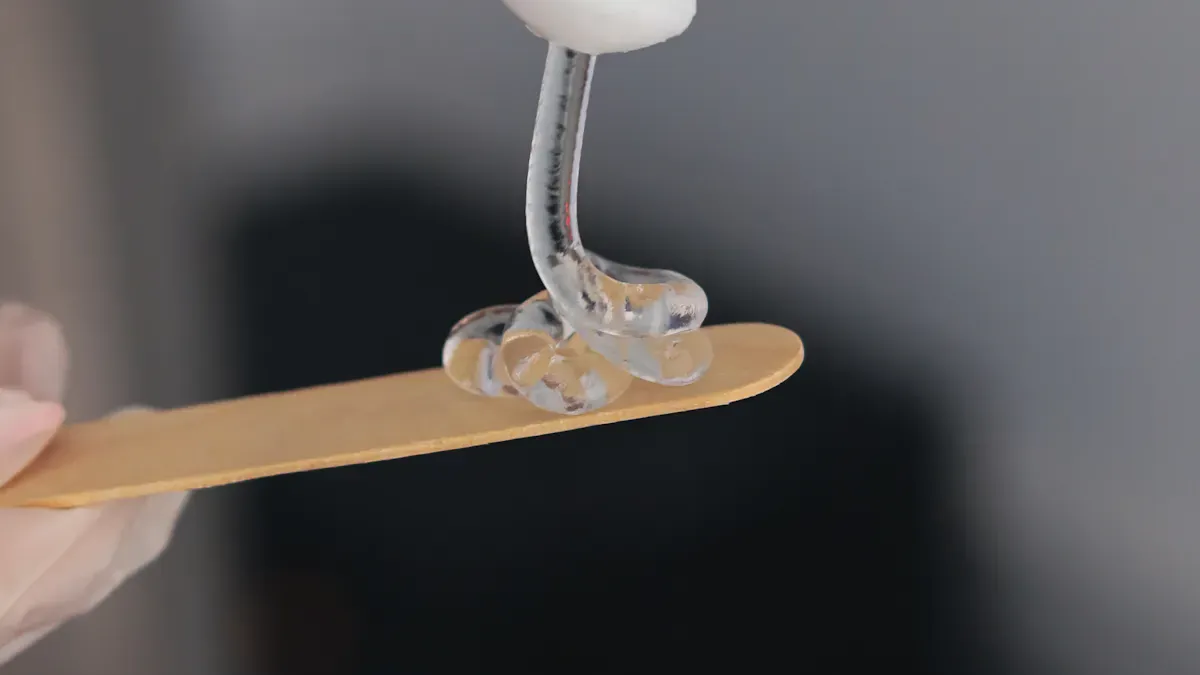
Dispense a continuous 360° bead of sealant onto the leading threads of the male pipe. Leave the first thread free of sealant.
For larger pipes, apply sealant to both male and female threads.
Assemble the parts right away. Tighten them to the manufacturer’s recommended torque.
For disassembly, use standard hand tools. If the joint is stubborn, apply localized heat.
Note: Quick assembly after application helps the adhesive cure properly.
Curing and Testing
Loctite 577 cures at room temperature. You can speed up the process with an accelerator if you work with passive metals or in cold conditions. The table below shows which activator to use:
Metal Type | Activator Used | Effect on Curing Process |
Passive Metals | LOCTITE SF 7649 | Faster curing, better bond |
Stainless Steel | LOCTITE SF 7649 | Works well even below 5°C |
Aluminum | LOCTITE SF 7649 | Ensures proper curing |
After curing, check the joint for leaks. Use pressure or fluid tests to confirm a tight seal. Inspect connections regularly and monitor performance to keep your system safe.
Tip: Regular inspections help you catch problems early and keep your equipment running smoothly.
Benefits of Loctite Adhesive
Durability and Reliability
You demand a sealant that stands up to the toughest conditions. Loctite Adhesive delivers a long-lasting seal that keeps your threaded connections secure. You can rely on its advanced formula to resist vibration, shock, and extreme temperatures. The adhesive maintains performance even when exposed to aggressive chemicals and thermal cycling. You avoid leaks and failures, so your equipment stays operational.
Loctite NS 5540 operates in temperatures from -40°F to 1300°F.
It seals flanges under pressures up to 2900 psi steam.
The adhesive outperforms silicone-based sealants, which typically withstand up to 572°F.
You benefit from chemical resistance and consistent performance during thermal cycling.
Tip: Choose Loctite Adhesive for applications where reliability matters most.
Cost Efficiency
You save money and reduce downtime when you use Loctite Adhesive. The product prevents failures in threaded parts, so you spend less time on repairs. Threadlockers keep clamp loads consistent and stop corrosion, which means fewer maintenance activities. Gasket sealants provide instant seals that resist leaks, eliminating the need for frequent checks and costly gasket replacements.
Enhanced reliability lowers maintenance frequency.
Consistent performance reduces the risk of unexpected failures.
You cut costs associated with repairs and proactive maintenance.
Note: Lower maintenance needs translate to higher productivity and reduced operational expenses.
Safety and Versatility
You protect your team and your assets with a sealant that adapts to many environments. Loctite Adhesive works with a variety of metals and industrial fluids. Synthetic lubricants inside the formula offer higher performance than petroleum-based products. The adhesive operates efficiently at high temperatures and pressures, prevents corrosion, and resists harsh chemicals.
Compatible with multiple metals and fluids.
Suitable for harsh environmental conditions.
Designed for multi-purpose industrial applications.
Callout: You gain peace of mind knowing your connections stay secure and your operations remain safe.
You can trust Loctite Adhesive to stop thread leaks permanently. Loctite 577 offers durability, chemical resistance, and easy application. You gain reliable performance in harsh environments. Technical experts recommend Loctite 577 for its versatility and vibration resistance. Review the table below for key considerations before your next project:
Key Consideration | Description |
General-purpose use | Suitable for many industrial applications |
Chemical resistance | Stands up to aggressive fluids |
Easy cleanup | Simple removal with Loctite solvent |
DVGW approval | Meets industry standards |
Consult your supplier for guidance and use Loctite 577 to secure your threaded connections.
FAQ
How long does Loctite 577 take to cure?
You see Loctite 577 begin to set in 10–20 minutes. Full cure happens in about 24 hours at room temperature. You can use an activator to speed up the process.
Can you use Loctite 577 on all metals?
You can apply Loctite 577 to most metals, including steel, brass, and aluminum. For stainless steel or other passive metals, use a primer for best results.
Is Loctite 577 resistant to chemicals?
You get excellent resistance to oils, fuels, solvents, and lubricants. Loctite 577 keeps your threaded connections sealed even in aggressive chemical environments.
How do you remove Loctite 577 from threads?
You use standard hand tools for disassembly. If the joint is stubborn, apply localized heat. Clean the threads with a solvent for complete removal.
What packaging sizes are available?
Size | Typical Use |
50ml | Small-scale jobs |
250ml | Large projects |
You choose the size that fits your application needs.

 English


