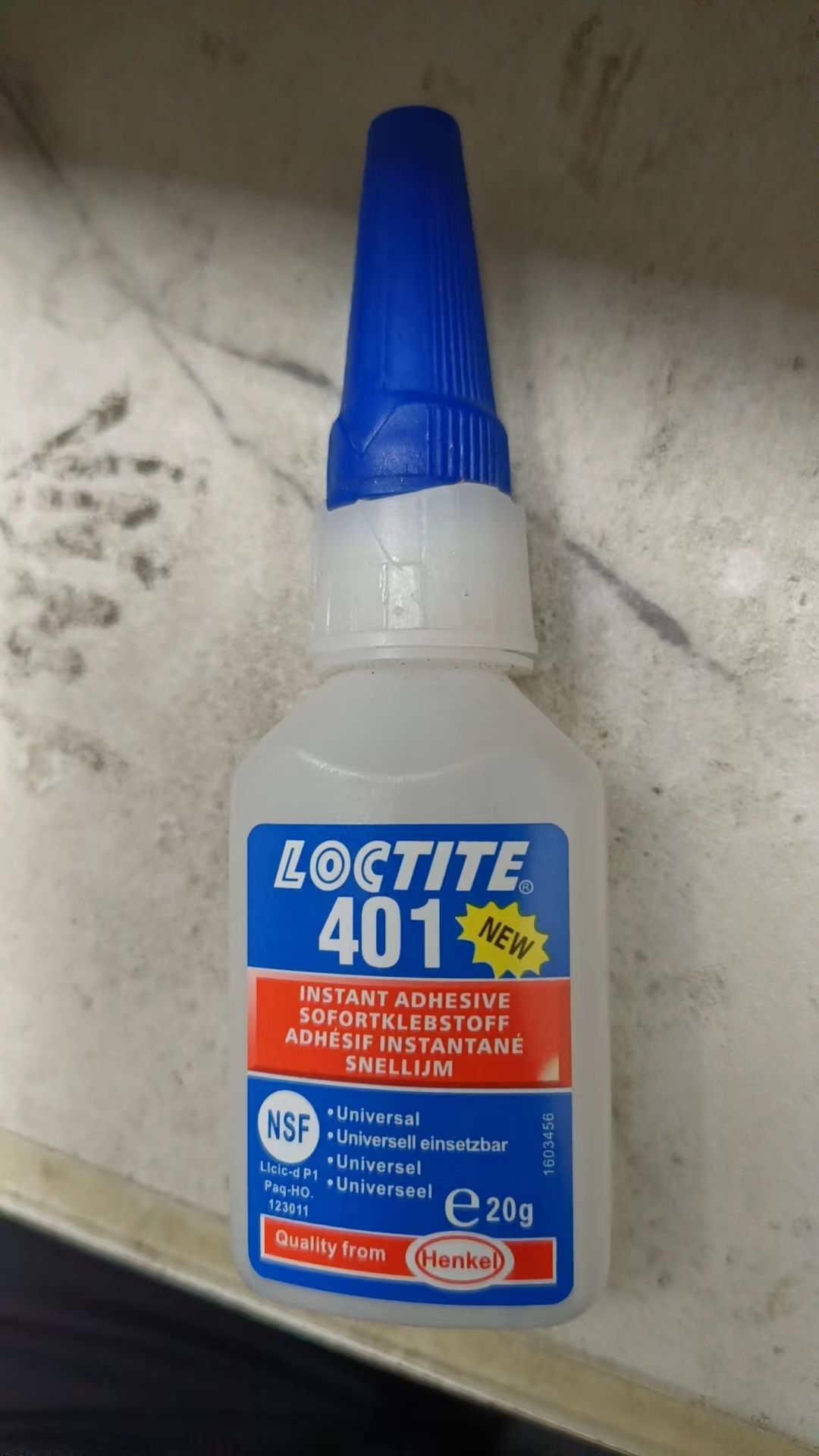
Heat-Resistant Low-Whitening Cyanoacrylate Adhesive Production Lines
Our instant drying adhesive series — including 401, 406, 495, 460 and 496 formulations — delivers strong bonds across metal, plastic, elastomer and PVC substrates. Engineered for minimal whitening and low odor, these cyanoacrylates maintain performance across temperature ranges from -54°C up to 100°C, with shear strength ratings up to 26 MPa. Manufactured to DIN, ISO and JIS standards, each grade targets specific applications from general-purpose to plastic or metal bonding. We serve industrial clients with OEM packaging and 3-10 day delivery.
401
loctite
glue
DIN, GB, ISO, JIS
Barreled, bagged, boxed, palletized or as customers' requirement
The FM01 instant drying adhesive series comprises a range of cyanoacrylate formulations designed for rapid bonding in industrial applications. These single-component adhesives cure at room temperature when exposed to moisture on substrate surfaces, forming strong bonds within seconds to minutes. The series includes multiple models formulated for specific substrate types and gap-filling requirements, allowing procurement teams to select the appropriate grade based on application parameters rather than using a one-size-fits-all approach.
The adhesives bond materials including metal, plastic, elastomers, PVC, and other substrates commonly encountered in manufacturing and assembly operations. Available models include general-purpose grades, infiltration-type formulations for porous substrates, plastic-specific grades, metal-bonding formulations, and low-viscosity options for tight-fitting parts.
Technical Specifications
Part Number
Specification
Typical Use
Color
Maximum Filling Gap
Viscosity (mpa.s)
Shear Strength
Temperature
Loctite 401
20g
General
Transparent
0.05 mm
450.00
26 Mpa
-54 to 100 C
406
20g
Infiltration type
Transparent
0.05 mm
20
22
-54 to 80 C
414
20g
Plastic parts
Transparent
0.1
125
22
-54 to 80 C
415
20g
Metal parts
Transparent
0.25
1500
25
-54 to 80 C
460
20g
Tight fitting parts
Transparent
0.1
45
18
-54 to 80 C
480
20g
General
Transparent
0.25
300
26
-54 to 100 C
495
20g
General
Transparent
0.1
45
19
-54 to 80 C
Model Selection Guide
General Purpose Models
The 401, 495, and 480 models serve as general-purpose options in the series. Model 401 offers a shear strength of 26 MPa with a viscosity of 450 mPa·s and a maximum filling gap of 0.05 mm, with an operating temperature range of -54 to 100°C. Model 495 provides 19 MPa shear strength at 45 mPa·s viscosity with a 0.1 mm gap capacity, operating from -54 to 80°C. Model 480 matches 401 in shear strength at 26 MPa but offers a higher gap capacity of 0.25 mm at 300 mPa·s viscosity, also rated for -54 to 100°C service.
Application-Specific Models
Model 406 is formulated as an infiltration type with very low viscosity (20 mPa·s), designed to wick into porous substrates and tight joints. Model 414 targets plastic parts with 125 mPa·s viscosity and 0.1 mm gap capacity. Model 415 is engineered for metal parts with high viscosity (1500 mPa·s) and 0.25 mm gap capacity, delivering 25 MPa shear strength. Model 460 is suited for tight fitting parts with 45 mPa·s viscosity and 0.1 mm gap capacity.
Material Compatibility
The adhesive series bonds a range of materials used in commercial manufacturing. Compatible substrates include metal, plastic, elastomers, PVC, and other non-porous or semi-porous surfaces. Different models are optimized for specific material pairs, as indicated in the typical use column of the specification table. Buyers should verify compatibility with their specific substrate combination through sample testing before full production implementation.
Application Guidelines
For optimal bond formation, substrate surfaces should be clean and free of grease, oil, and release agents. The adhesive is applied in a thin layer to one surface, and parts are joined immediately while the adhesive remains fluid. Fixture time varies by model and substrate, typically ranging from a few seconds to several minutes. Full cure strength develops over 24 hours at room temperature. The maximum filling gap specification for each model indicates the gap size up which reliable bond formation can be expected.
Packaging and Storage
Each model is supplied in 20g containers. Packaging options include barreled, bagged, boxed, and palletized formats, or configurations specified by the customer. OEM service is available. Standard delivery time is 3 to 10 days depending on order quantity. The product should be stored in cool, dry conditions to maintain shelf life and adhesive performance.
FAQ
Which adhesive model should I select for plastic-to-plastic bonding?
Model 414 is formulated specifically for plastic parts, with a viscosity of 125 mPa·s and a maximum filling gap of 0.1 mm. It delivers 22 MPa shear strength and operates within -54 to 80°C. For general plastic bonding where 414 is not available, model 401 or 495 may also be considered depending on gap size requirements.
What is the operating temperature range for these adhesives?
Operating temperature ranges vary by model. Models 401 and 480 are rated for -54 to 100°C. Models 406, 414, 415, 460, and 495 are rated for -54 to 80°C. Applications requiring continuous exposure above 80°C should specify either model 401 or 480.
Can these adhesives fill gaps between parts?
Each model has a specified maximum filling gap. The range spans from 0.05 mm (models 401 and 406) up to 0.25 mm (models 415 and 480). Parts with gaps larger than the rated value for a given model may not form complete bonds across the entire joint area.
part number
specification
typical use
color
maximum filling gap
viscosity mpa.s
shear strength
temperature
loctite 401
20g
general
transparent
0.05 mm
450.00
26 Mpa
-54 to 100 C
406
20g
infiltration type
transparent
0.05 mm
20
22
-54 to 80 C
414
20g
plastic parts
transparent
0.1
125
22
-54 to 80 C
415
20g
metal parts
transparent
0.25
1500
25
-54 to 80 C
460
20g
tight fitting parts
transparent
0.1
45
18
-54 to 80 C
480
20g
general
transparent
0.25
300
26
-54 to 100 C
495
20g
general
transparent
0.1
45
19
-54 to 80 C
Overview
The Loctite Anaerobic Gasket Maker Adhesive is a revolutionary solution designed to replace traditional pre - cut gaskets, offering a more reliable and efficient sealing method. This adhesive cures in the absence of air and in contact with metal surfaces, forming a tough, flexible gasket that conforms precisely to the mating surfaces. It eliminates the need for costly and time - consuming gasket cutting and replacement, providing a seamless seal that can withstand high pressures, vibrations, and a wide range of temperatures. Formulated with advanced anaerobic technology, the adhesive fills irregularities and gaps, ensuring a leak - proof connection in various applications. Whether for automotive engines, industrial machinery, or fluid - handling systems, Loctite Anaerobic Gasket Maker Adhesive is engineered to meet the demanding requirements of modern manufacturing and maintenance.
Features
One of the primary features of the Loctite Anaerobic Gasket Maker Adhesive is its unique anaerobic curing mechanism. Once applied between two mating metal surfaces and deprived of air, the adhesive rapidly cures to form a durable seal. This eliminates the risk of gasket slippage or failure due to improper installation, which is common with traditional gaskets. The adhesive offers excellent gap - filling capabilities, capable of accommodating clearances up to 0.25 mm, making it suitable for a wide variety of component fits. It also provides high resistance to a broad spectrum of chemicals, oils, and fuels, ensuring long - term durability in harsh operating environments. Additionally, the flexible nature of the cured gasket allows it to absorb vibrations and thermal expansion, reducing stress on the assembly and preventing cracks or leaks.
Benefits
The use of Loctite Anaerobic Gasket Maker Adhesive brings numerous benefits to industries. It significantly reduces maintenance costs by eliminating the need for frequent gasket replacements. The precise fit and leak - proof seal enhance the reliability of machinery, minimizing downtime due to fluid leaks or system failures. This adhesive also simplifies the assembly process, as there is no need for complex gasket cutting or alignment. By providing a custom - formed gasket, it ensures a perfect seal every time, improving the overall efficiency of the equipment. Moreover, its resistance to various substances extends the lifespan of the assembly, making it a cost - effective solution in the long run.
Applications
In the automotive industry, Loctite Anaerobic Gasket Maker Adhesive is widely used for sealing engine components such as cylinder heads, oil pans, and transmission cases. It ensures a tight seal, preventing oil leaks and maintaining engine performance. In the industrial machinery sector, it is employed to seal pumps, compressors, and hydraulic systems, where the ability to withstand high pressures and vibrations is crucial. The adhesive is also suitable for use in the marine industry, where it can seal engine compartments and hull fittings, providing reliable protection against water ingress. Additionally, it is used in the manufacturing of consumer appliances, such as washing machines and dishwashers, to ensure leak - proof connections in water - handling systems.
FAQ
Q: How long does it take for the Loctite Anaerobic Gasket Maker Adhesive to cure?
A: Curing time depends on factors such as temperature and gap size. At room temperature, it can start to achieve handling strength within 30 minutes to 1 hour, and full cure is typically reached within 24 hours. Higher temperatures can accelerate the curing process.
Q: Can this adhesive be used on non - metal surfaces?
A: The adhesive is primarily designed for use on metal surfaces. While it may adhere to some non - metal materials, its performance and curing efficiency are optimized for metal - to - metal applications. For non - metal surfaces, it is advisable to use a gasket maker specifically formulated for those materials.
Q: How do I remove a gasket made with this adhesive?
A: To remove the cured adhesive, use a sharp scraper or putty knife to carefully peel it off. In some cases, applying heat to the area can soften the adhesive, making it easier to remove. However, be cautious not to damage the underlying surfaces.

 English